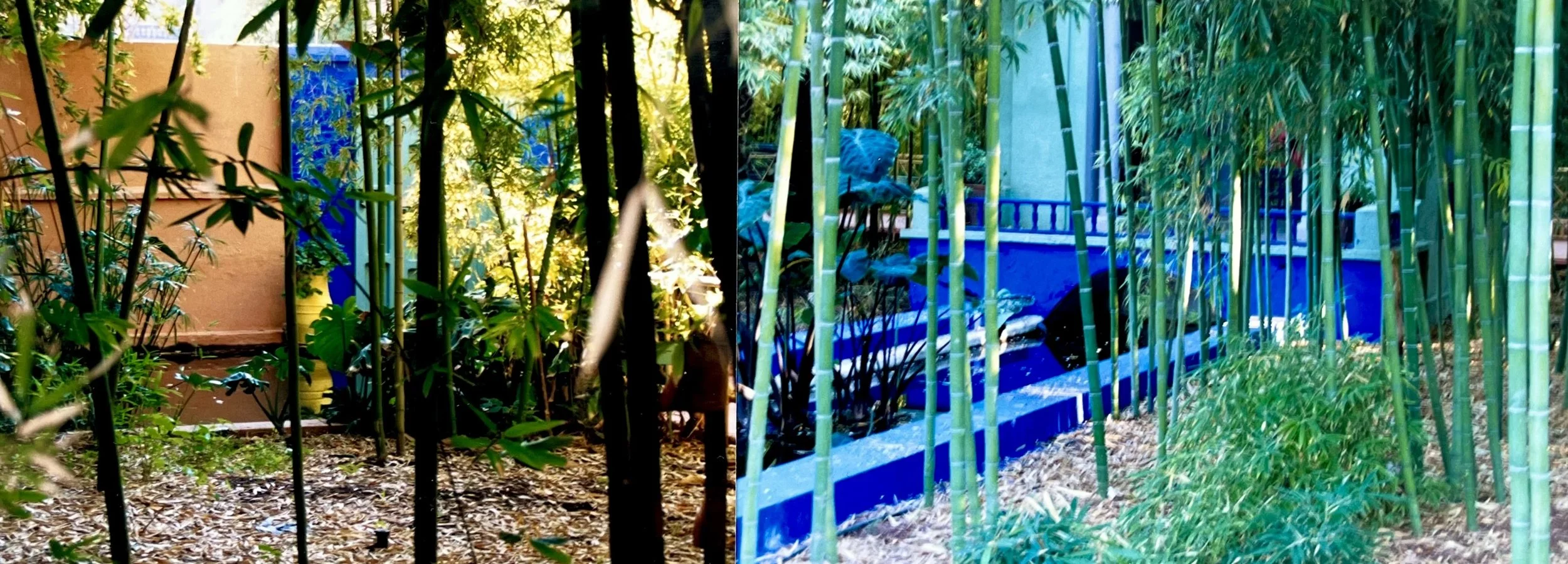
1998 Morocco
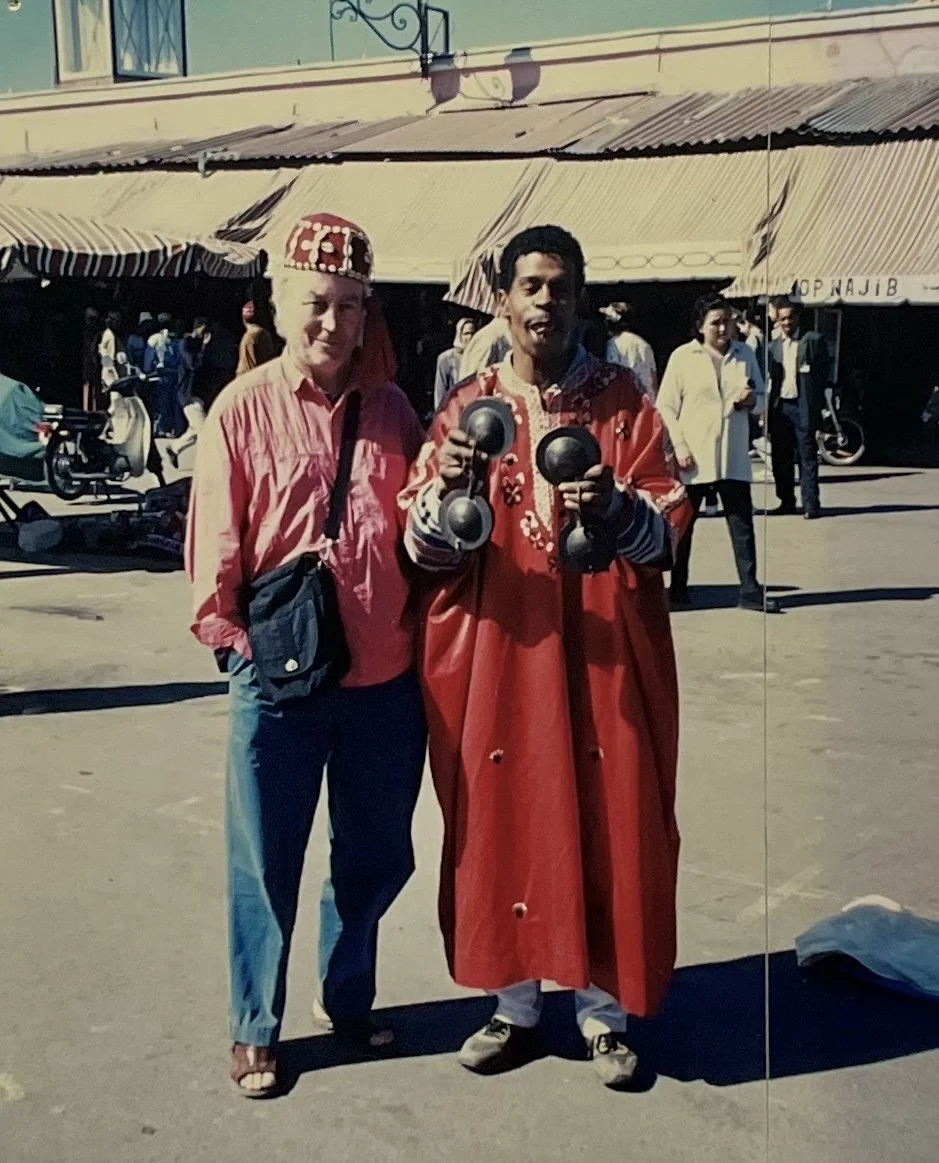
Benjamin and Nancy decided to escape British Christmas by travelling to Morocco for two weeks. Nancy had developed an interest in World Music and Gnawa trance music, which Benjamin was also drawn to. This was an opportunity for them to seek the music in its natural setting. They did this on the very first day when they wandered into Djemma el Fnaa, the vibrant entertainment square at the centre of Marrakesh, where they soon met a dedicated Gnawa, Mustapha Barchi, who was busking for pocket money that day.
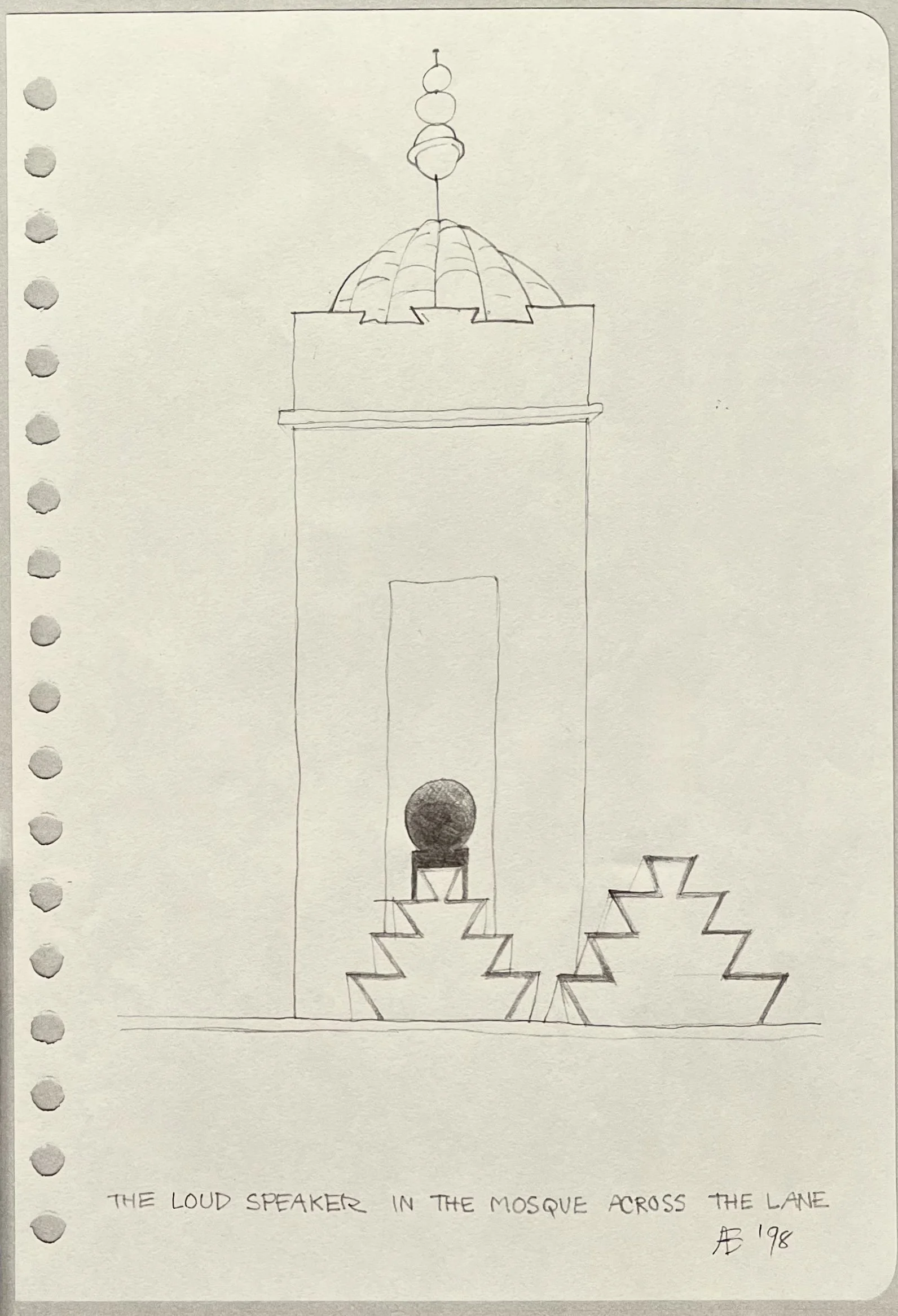
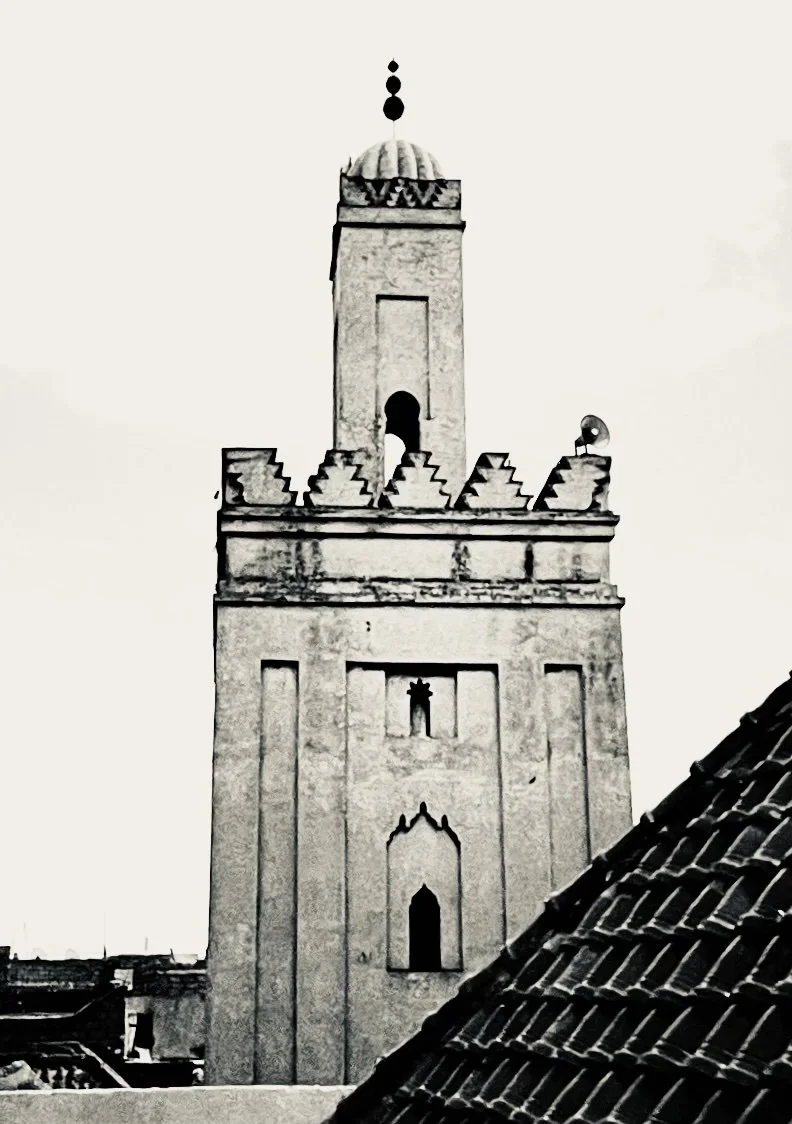
Each morning Benjamin awoke to the sound of the loud speakers in the mosque and the muezzin’s voice calling the people to prayer. He made a drawing of the top of the tower.
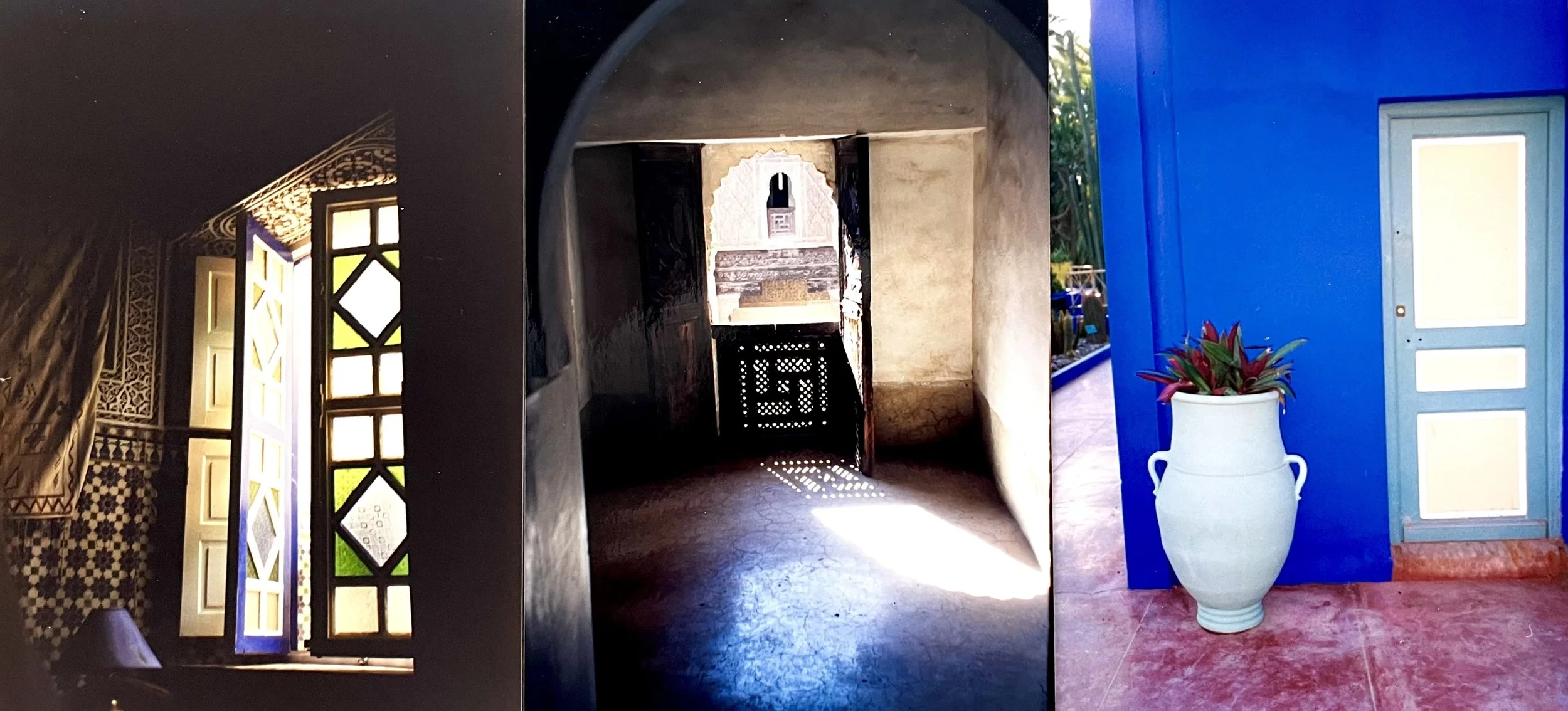
Windows in traditional Arabic buildings seldom face outwards, unlike the windows in most western architecture. Arabic windows usually face inward, onto a courtyard, that is often a garden with a water feature; the inward aspect of the windows also aids the ventilation of the structure, as well as keeping it quieter, safer and more private. Benjamin admired the way the the doorways and windows acted as frames for what was seen through them, and the way the beauty of a view was enhanced by the difference between the shadowy enclosed spaces, and the dazzling bright open areas touched by the warm, often dazzlingly bright light of the sun. One day he said, ‘It might be nice to live here sometimes.’.
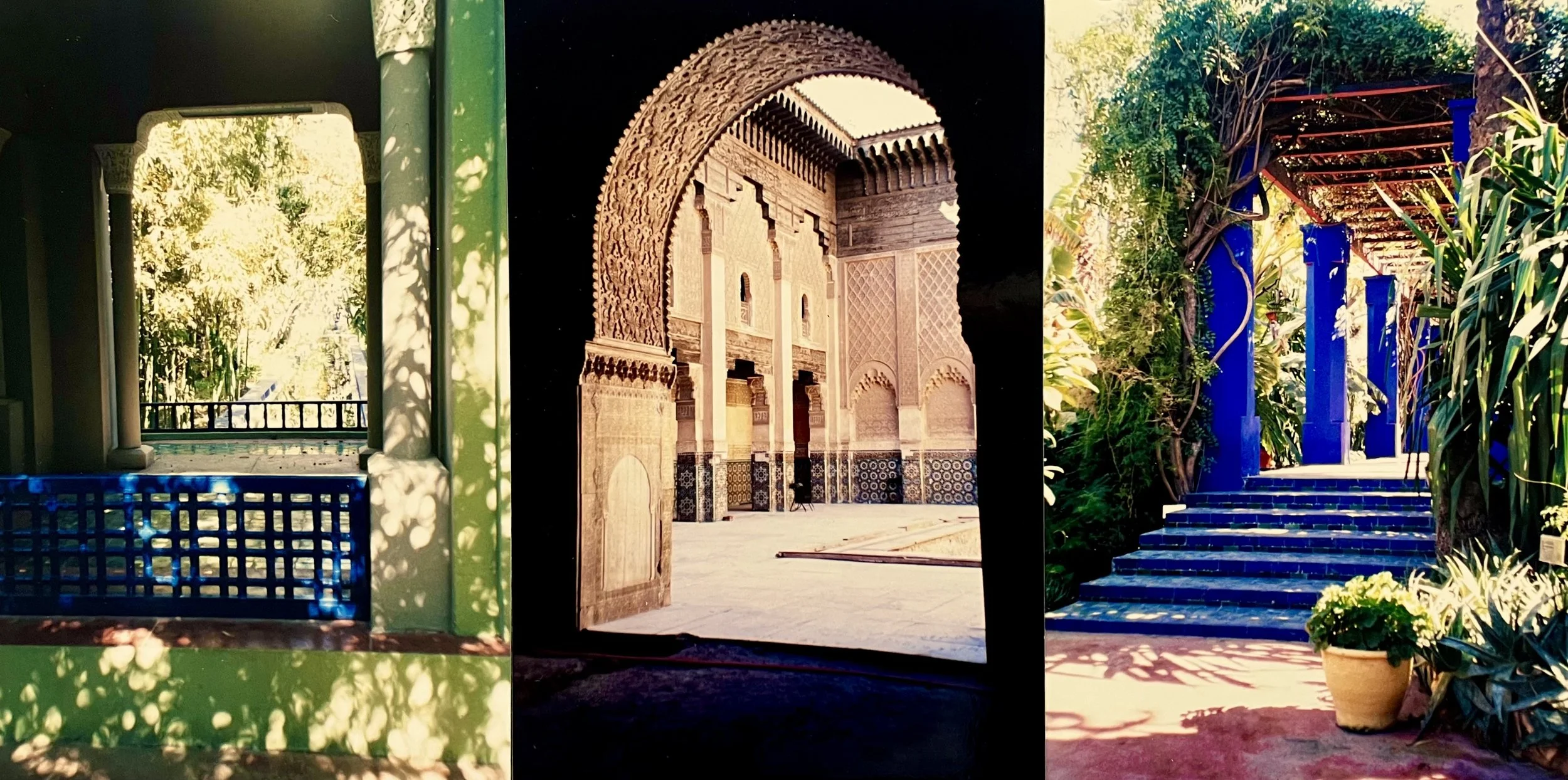
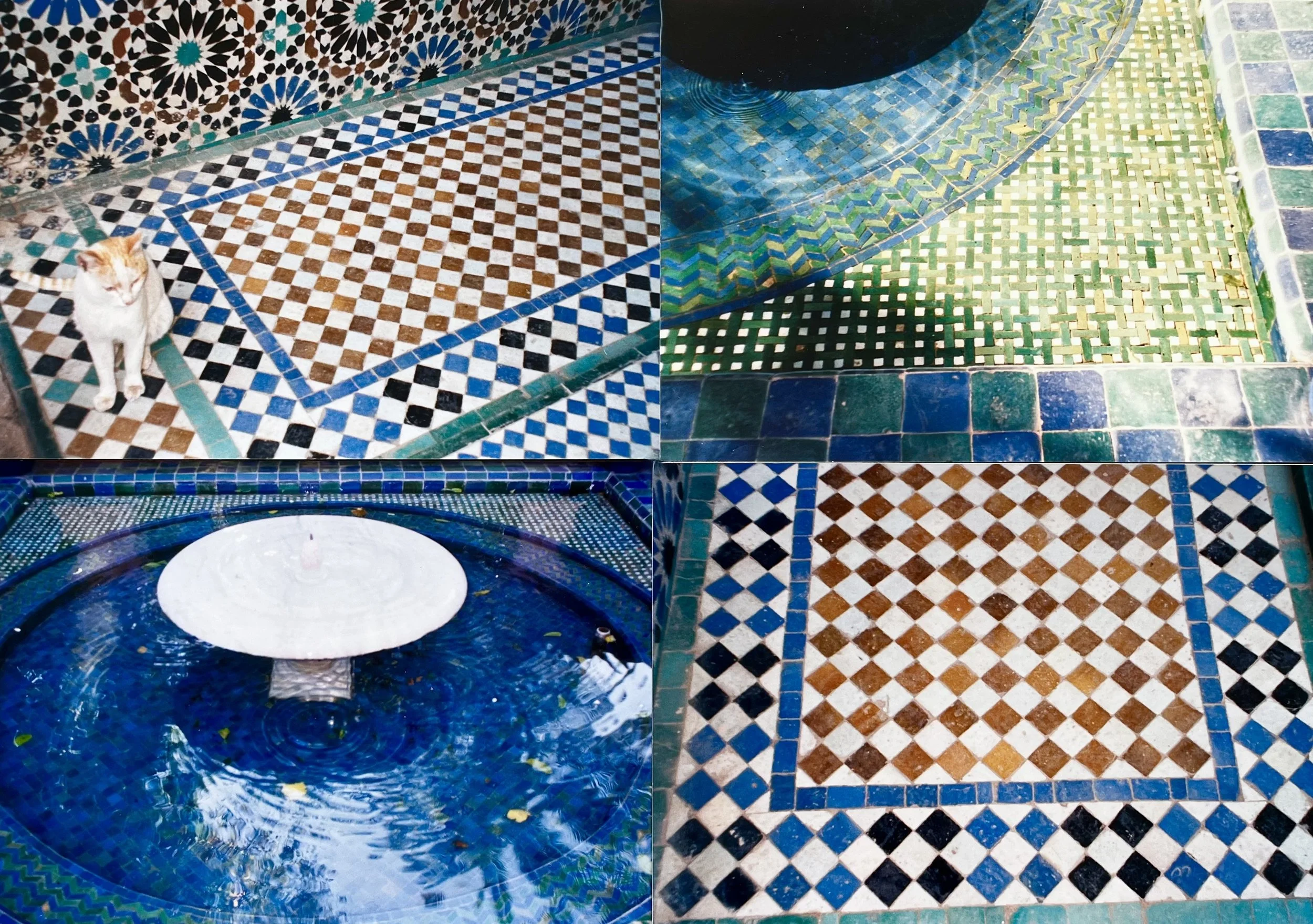
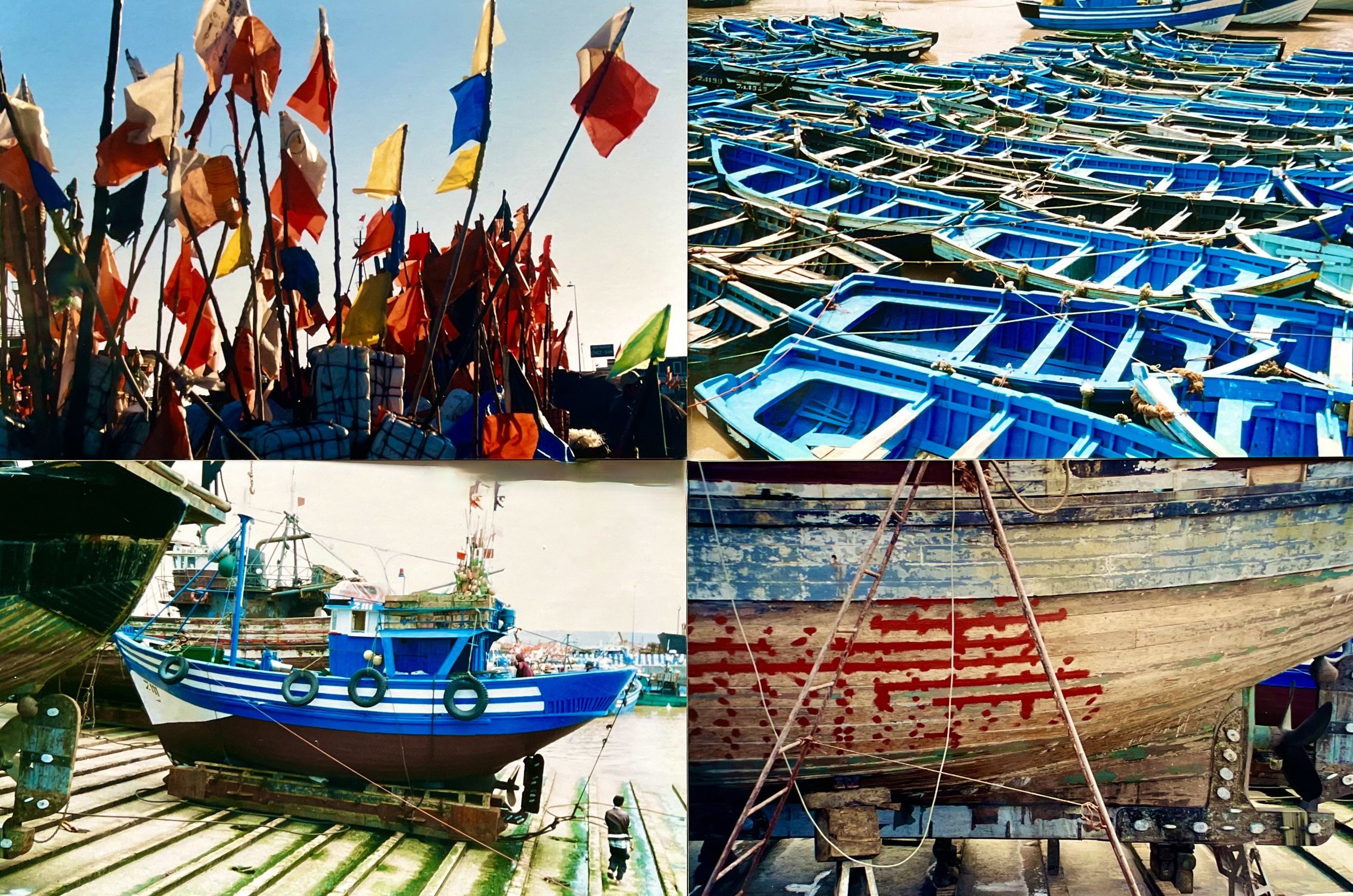
After years of living in a land of subdued hues, where strong tones in the daily surroundings were the exception rather than the norm, being surrounded on all sides by such an array of vibrant dazzling colour that is normal in Morocco, was pure joy for him. Although he was involved in the subtle grey beauty of graphite in the Painting in Pencil series, he had started experimenting with paint and colour, and what he experienced seemed to make it clear that it was time to put his pencils back in the box, open up the paint pots, and reach for his ‘palette’ again.
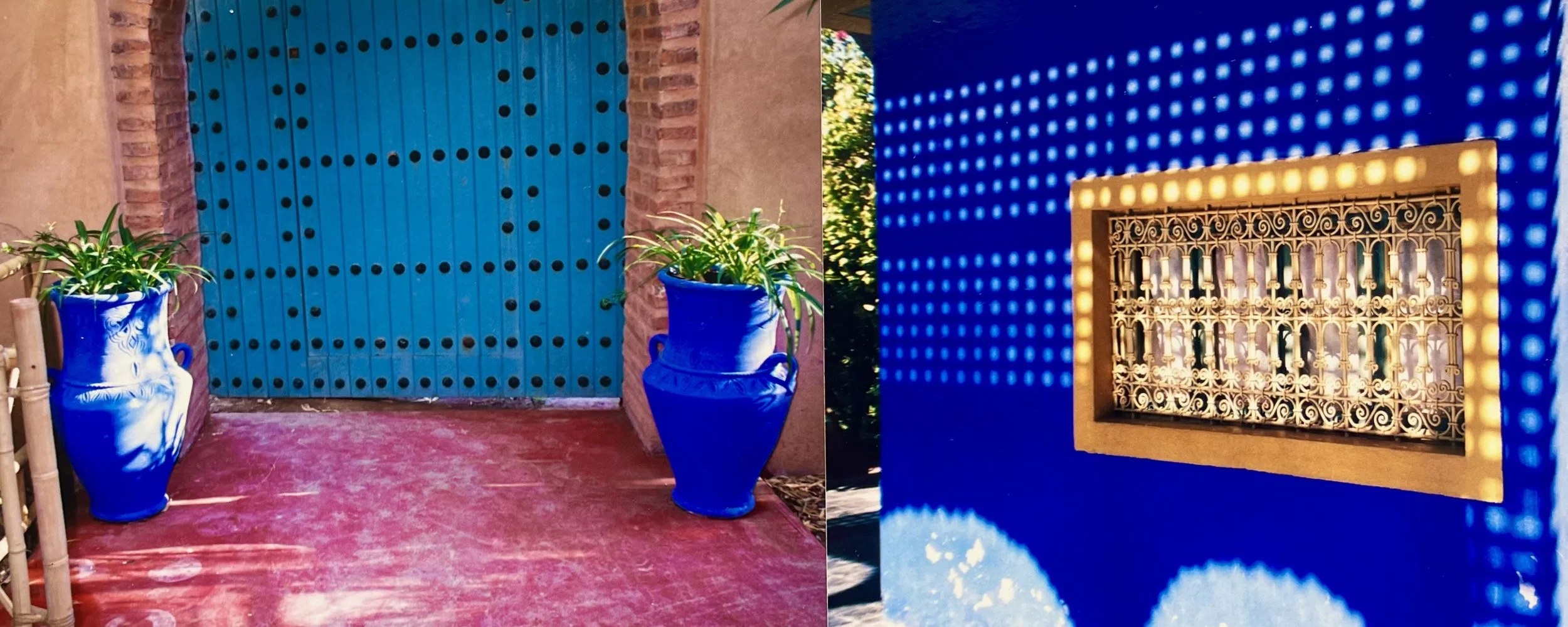
Photos from a day visit to Essaouira. The colours delighted Benjamin.
The morning after the late night homecoming to the Kelling Cottage, Benjamin disappeared up to his new studio and did not return until early evening. The next day he ordered even more large pots of his favourite Lascaux acrylics and was immediately totally involved in the new paintings. His aches and pains seemed to disappear spontaneously, along with the air of fatigue he had carried for a while, as he became even more involved in his painting and much happier than he had been for a very long time.
All photos by Nancy Patterson except for the one above.
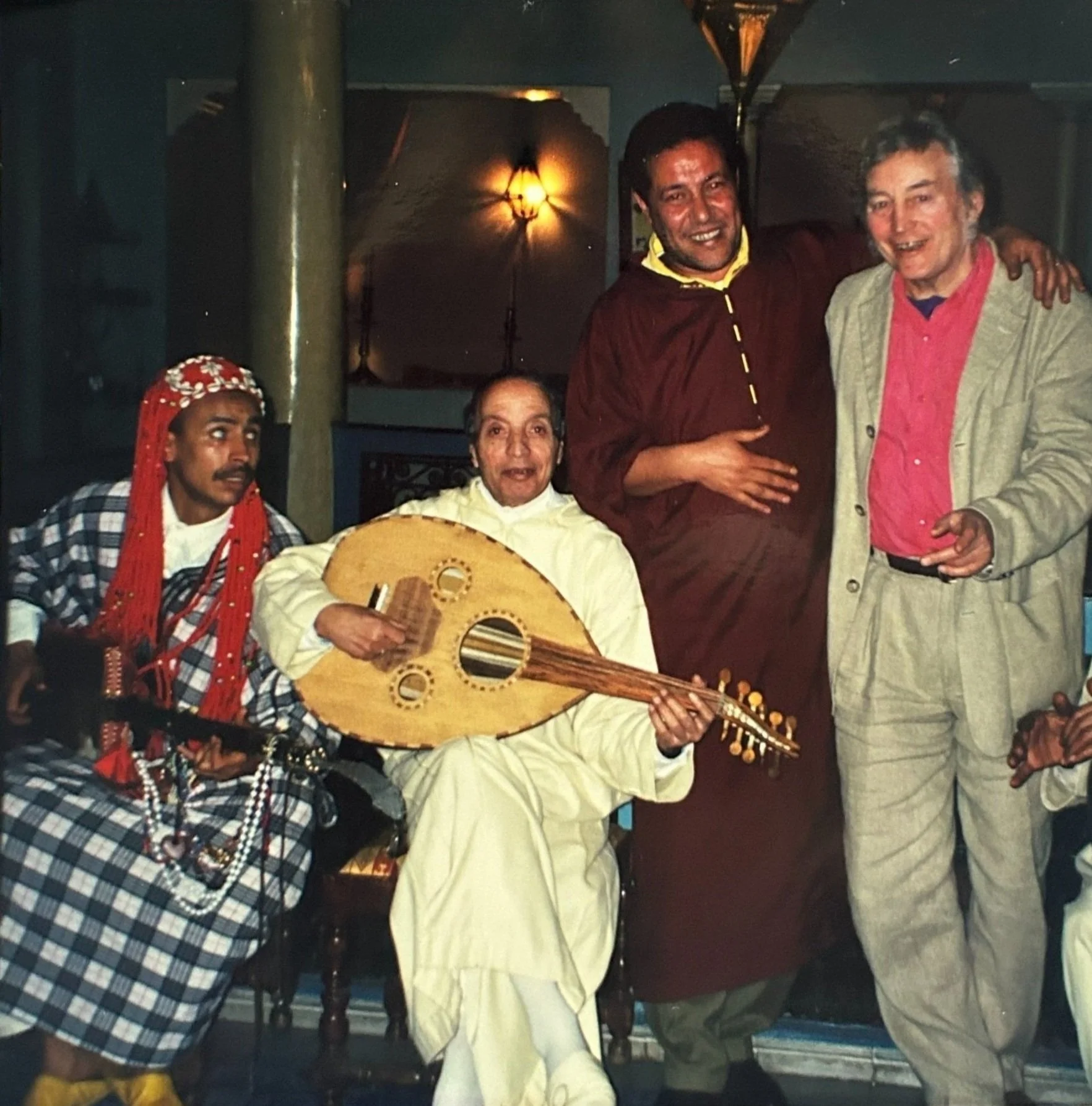
By the end of the week, they were guests at a Gnawa Leila, a Sufi trance ceremony that commences at sunset and often continues until dawn. Each of the seven sections of the ceremony is dedicated to a sacred being and defined by particular music and a colour. The leader, the Mallem or Master, plays a gimbri—an African lute—that has a similar sonic range to a jazz bass, with a warm vibrating sound that can be felt in the body. The others in the brotherhood perform gravity-defying dances and play metal double castanets called krakeb, which produce rattling, galloping rhythms that clear the head and elevate the mood.
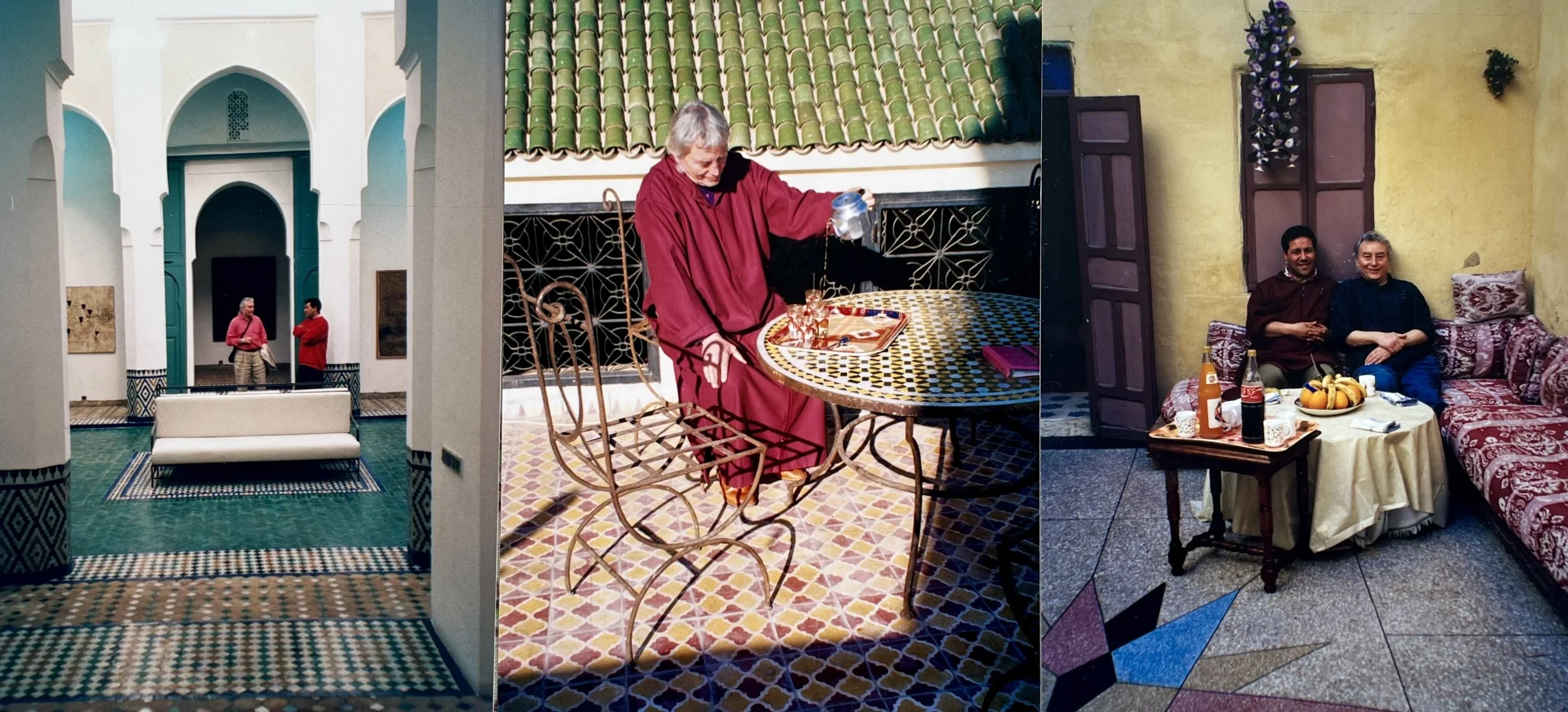
Benjamin’s early training in engineering draftsmanship had given him a deep appreciation of the beauty of pure geometric forms. He also had some knowledge of Arabic architecture that is focused more on enclosed spaces than impressive facades. However, the experience of passing through massive doors in relatively unadorned walls, to be surrounded by the elegant arches, soaring domes, airy courtyard gardens and the calm shadowed spaces of the classic structures, was a defining experience for him.
Benjamin gradually adapted to the local convention of living life on the Inchallah principal, which set him on the path to rediscovering the joy of creativity for the sake of it, rather than needing the motivation of an exhibition with an opening date, then making the art in the time available regardless of unexpected interruptions that might devour his days. Sometimes these resulted in serious compromises, as happened in 1970 in New York.
Marrakesh was not yet the major tourist destination it was soon to become, and the back lanes and souks in the old town (the Medina) were full of busy small workshops producing useful, often beautiful things of metal, wood, glass, ceramic, leather, fabric, as well as all manner of recycled materials—sardine cans to rubber tyres—using more methods and processes than you could imagine. These worker/craftsmen seemed fully focused on whatever they were doing, but the busy places were also full of their cheerful communication, as well as loud mechanical sounds of light industry and distorted music. The atmosphere was vibrant and engaging; Benjamin said he could not wait ‘to get back to painting.’
Several visits to the Majorelle Gardens, followed by evenings roaming about the lively entertainment square—Djemma el Fnaa—and a few days in Essaouira on the Atlantic coast, a centre of Gnawa music and culture, increased his growing enthusiasm for all things Moroccan.
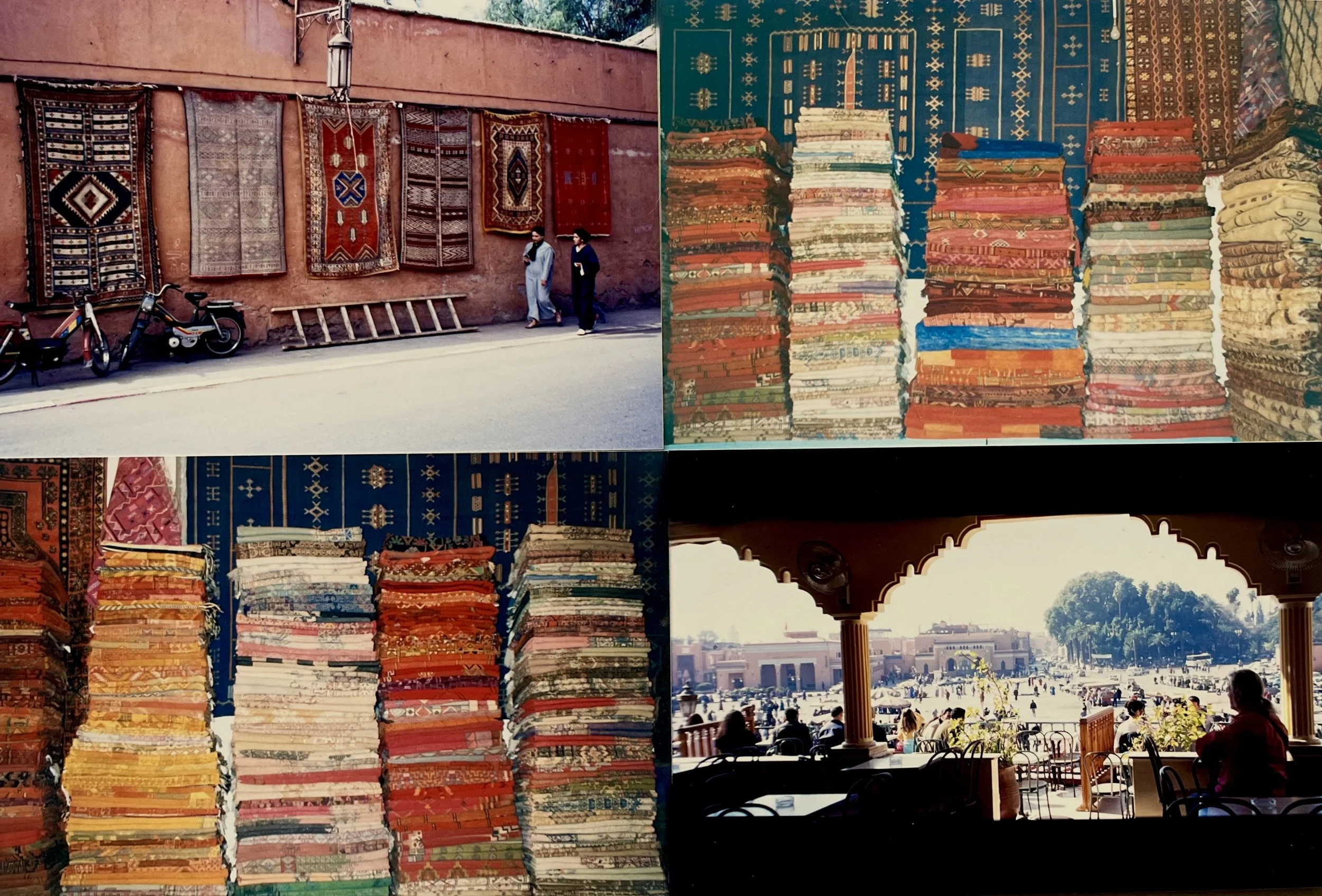
Benjamin in the cafe bar overlooking Djema el Fnaa, 1998
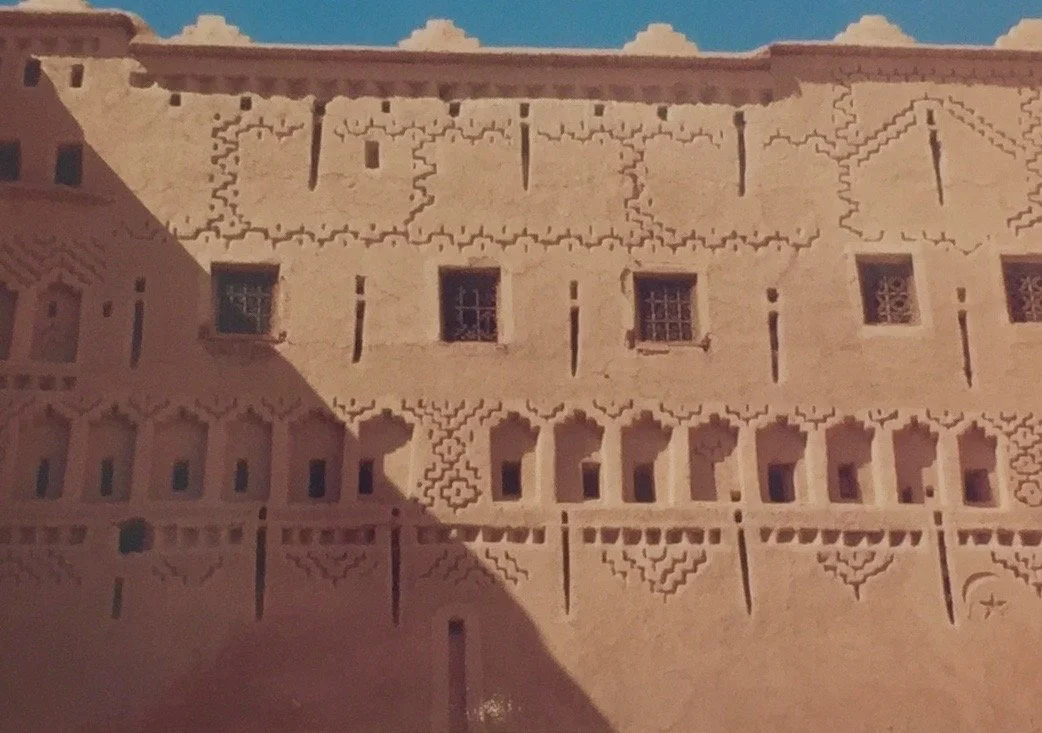
Wall of the Glaoui Kasbah in Ouarzazate.
He was intrigued by frequent use of repeated geometric forms, mainly squares and a few other simple forms to make effective decorative patterns with tiles, metal, and woodwork that were enhanced and magnified by patterns that shadows made, in unexpected ways. He liked the spacial ambivalence and visual engagement that repeat patterns produced when brilliant colours were used.