
1950-1959 St. Ives
In October 1984, David Brown of Tate Britain was organising an Exhibition—25 Years of Painting, St. Ives—1939-1964. He wrote to Benjamin asking, Why did you go to Cornwall?
Benjamin replied:
When I left Art School in 1954, I was determined not to follow the path of my contemporaries, which seemed to be, get a job outside of art (there were no jobs inside in those days) and paint in your spare time. I felt I needed to broaden my work and above all to continue to work at Sculpture and Painting full time. I had already been at work for six years before going to Art School, four years in an engineering apprenticeship, and I was well aware that for me there was no such thing as a part time artist. I therefore decided to leave London and spend a couple of years painting and living as best I could.
My mother died the year before and left me £500 which I paid Sven Berlin for the Cottage in Cornwall. I knew there were artists in Cornwall, but until I went there I had no idea that there was a strong, and at that time, virile school of painting there. I might just as easily have moved to Norfolk; it was just that I hitched down to Cornwall to have a look around and met someone (Peter Lanyon) who said there was an empty cottage in Cripplesease. So I bought it (in 1956 from Sven Berlin) with the £500 from the sale of my mother's house.
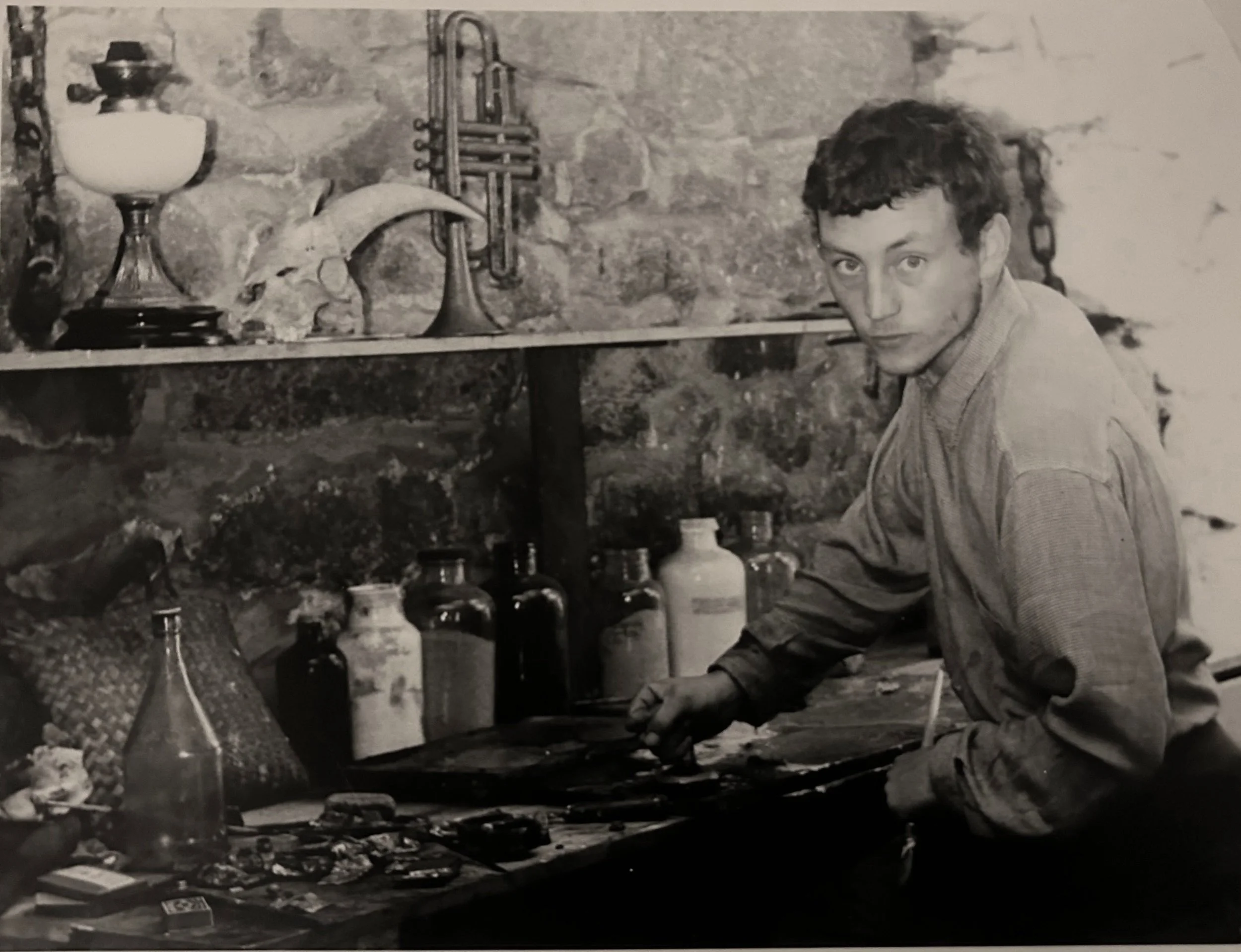
Benjamin in his Barn Studio, Cornwall, 1956. Photo: David Hughes
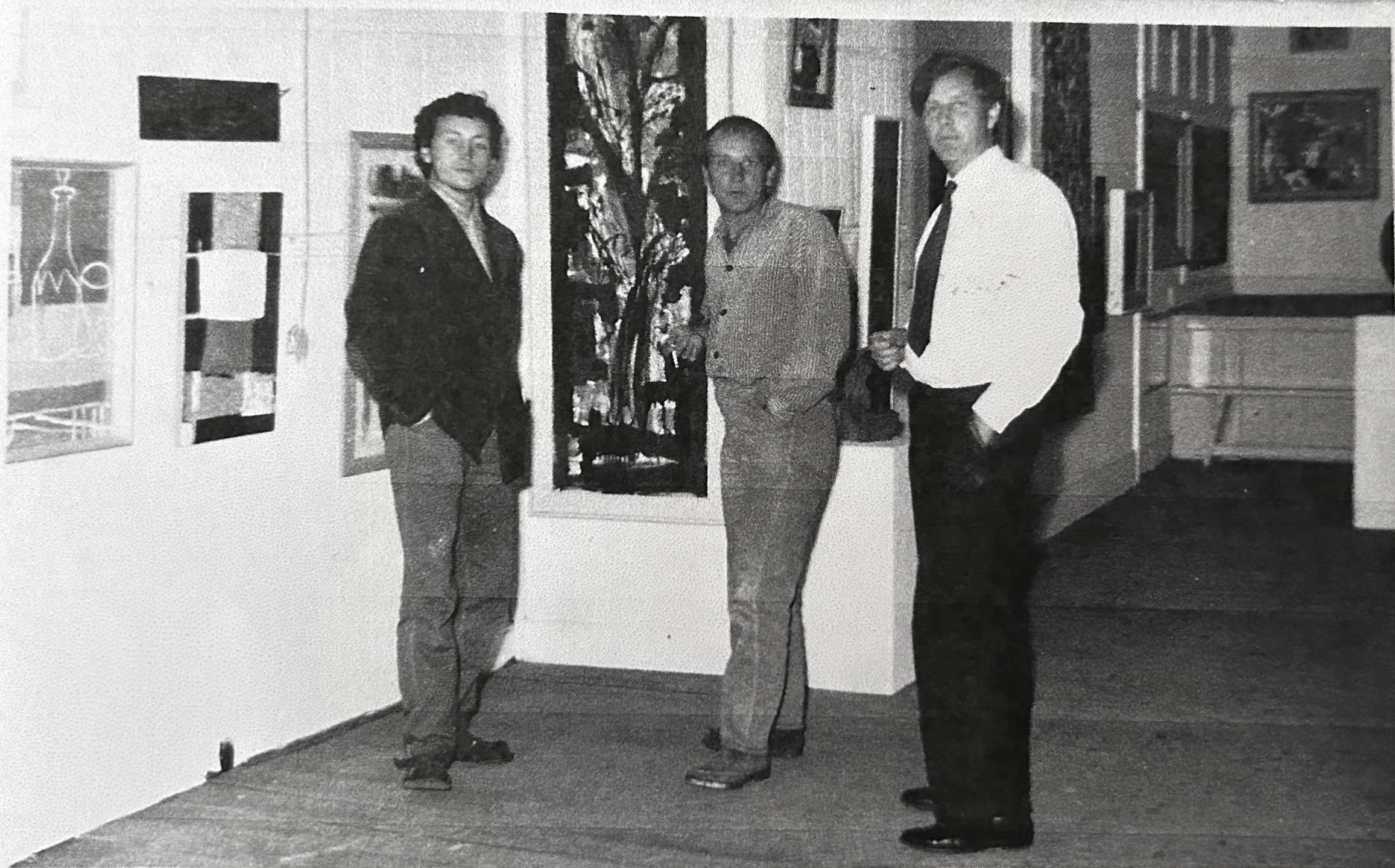
Benjamin, Karl Weschke, and Peter Lanyon, 1956
Sven Berlin wrote: It is a young painter who is buying my place, named Anthony Benjamin. That is really why I am letting it go: an artist should have it and he seems to have that strange fanaticism that goes with good painting and a vision of life. So he will be another one... if there is anything you can do to help this young painter, I wish you would. He may be in difficulties because he is on the run from National Service and they want to 'jug' him. I've an idea they will do it before he gets through this sale and can go to Cornwall.
Fortunately, the sale went through, but unfortunately Anthony was 'jugged' for a substantial sentence in Wormwood Scrubs for refusing to do his National Service as a conscientious objector to all forms of conscription. While not a pleasant experience, his time in prison was a source of hilarious anecdotes that he told with absolute glee, especially the graphic tale of being given the task of scrubbing maggots off of the sides of beef on the way to the kitchen … until he decided to claim that he was a strict vegetarian, and was reassigned to work in the prison library, where he discovered Roman History.
On his return to Cornwall he converted the barn to a studio and became an artist/farmer and got on with his painting, exhibiting locally and sometimes selling a piece. However, his agricultural activities: growing anemones on a granite hillside, raising some elegant but unruly Nubian goats who gave almost no milk, and freedom-loving pigs with Up-standee ears, instead of the more docile variety with Down-floppy ears, as recommended by Freddie Curnow, his friendly farmer neighbour, were even less successful; they were ongoing disasters, as well as the subject for more hilarious stories.
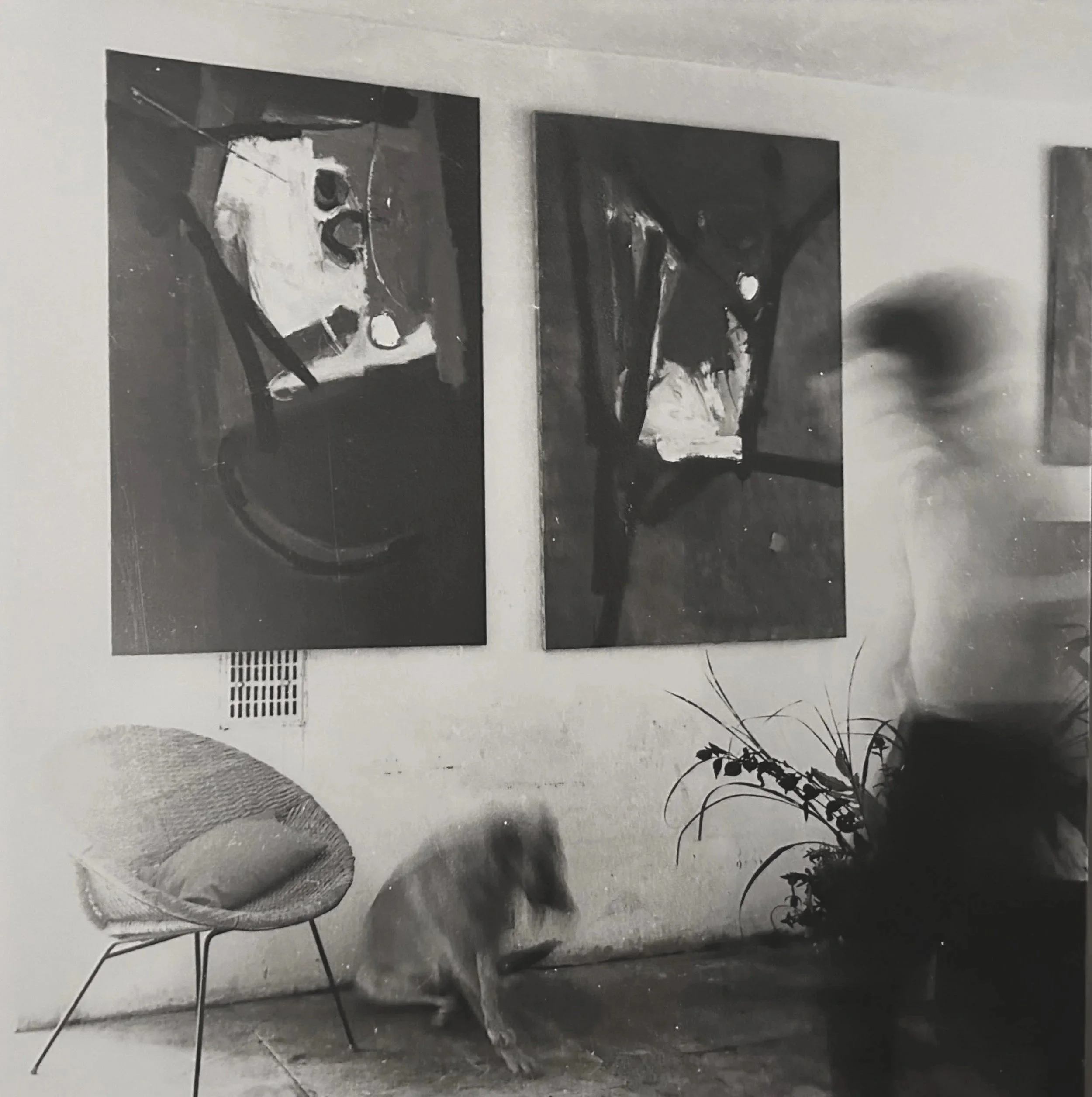
Benjamin paintings, Lower Trewyn House, 1960.
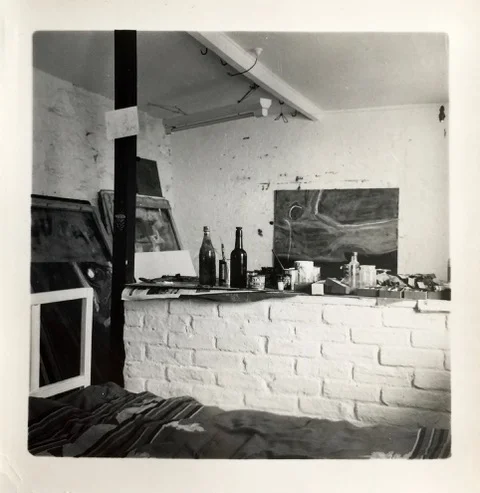
Benjamin’s studio, lower Trewyn House, St. Ives, 1960
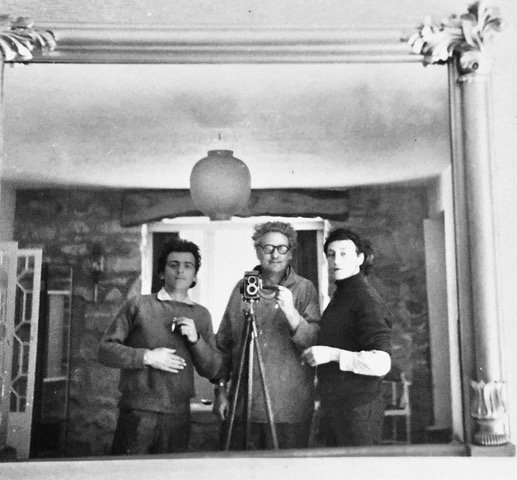
Brian Wall, Denis Mitchel, and Benjamin in Lower Trewyn House, 1960.
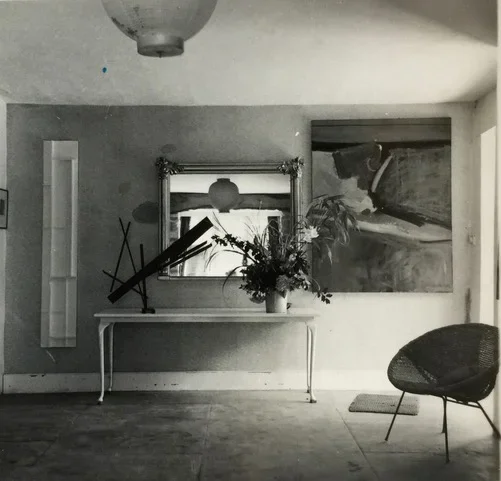
Two Brian Wall’s sculptures on the left; Benjamin painting on the right. Lower Trewyn House, St. Ives, 1960. All photos by Dennis Mitchell.
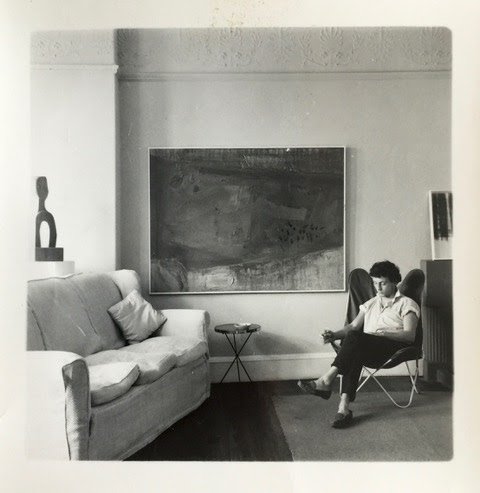
Benjamin with his painting in John Milne’s Upper Trewyn House, St. Ives, 1960
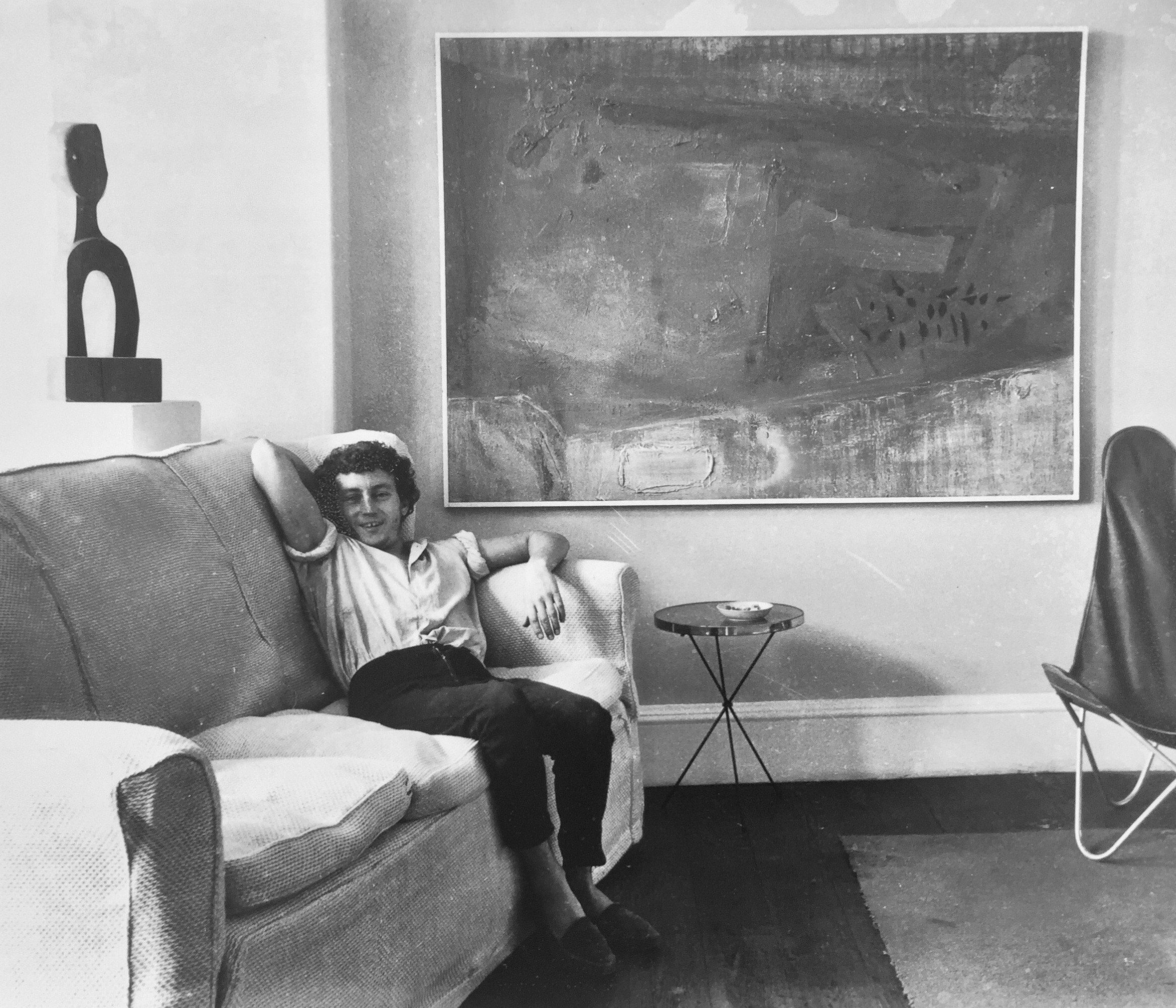
During the time Benjamin was changing from figurative to abstract painting, he made many charcoal sketches out of doors near his home at Cripplesease and the countryside; these were used as the basis for oil paintings in the studio.
David Lewis, St. Ives, 1939-1964, Tate Gallery Publishing Ltd.
He [Benjamin] made firm friends with his contemporaries, who were all somehow cloaked in a certain mystique. There is also a large abstract canvas—very likely by Milne’s friend, Anthony Benjamin, propped against a wall on top of the bookcase. (Confirmed by Nancy Patterson as a Benjamin painting).
Ian Massey, Queer St. Ives, Ridinghouse, 2022
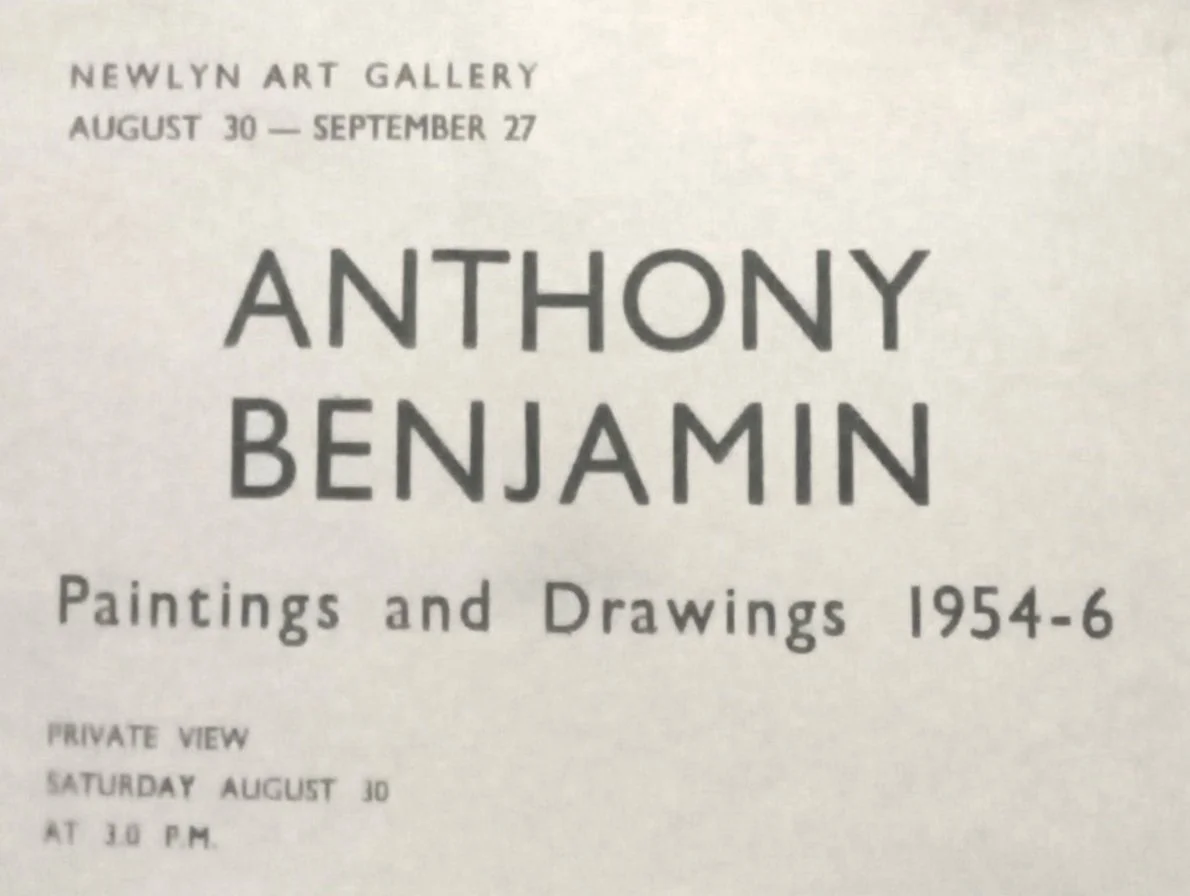
Benjamin quickly absorbed new ideas and his work evolved through his time in St. Ives. In 1958, Benjamin held his first one-man-show at Passmore Edwards Gallery in Newlyn; his work at that time was figurative.
Arts Review, 1960
He held his own with his peers. Painters, Trevor Bell, Keith Lennard, John Forrester and draftsman Anthony Benjamin, all began to show their work with the Penwith Society in the 1950s, and their presence in St. Ives gave added energy and enthusiasm. Painting the Warmth of the Sun, St. Ives Artists, 1939-1975
Tom Cross, The Lutterworth Press
Benjamin like many of his contemporaries in St. Ives, was at the forefront of change in an art community that was exploring hitherto unchartered waters as illustrated by Peter Lanyon who wrote to the Penwith Society: ‘I support and admire the new realist painters because they try to face problems outside the purely aesthetic ones which have concerned my own generation. We stand to gain immeasurably from that approach just as they may also gain from ours’.
Penwith Society, St. Ives 1939-1964, Tate Gallery Publishing Ltd.
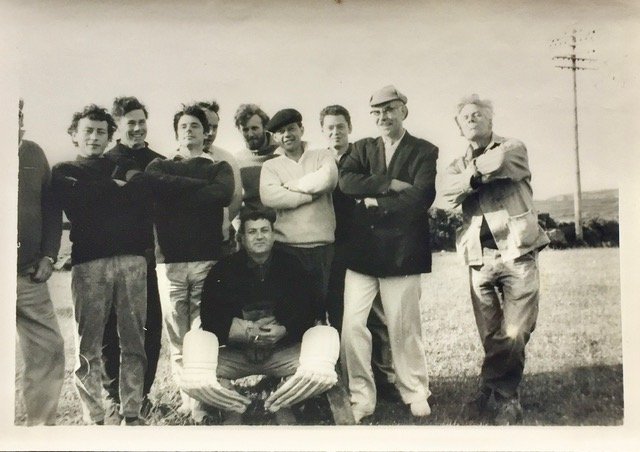
St. Ives Artist’s Cricket Team: Denis Mitchel (half-hidden), Anthony Benjamin, Ronnie Duncan, Trevor Bell, with Patrick Heron (behind), Bob Crossley, John Hoskin (crouching in front), Roger Leigh, Patrick Dolan, Terry Frost and William Redgrave, at the Annual cricket match, Artists versus Zennor Farmers, Gurnard’s Head Pub,1960.
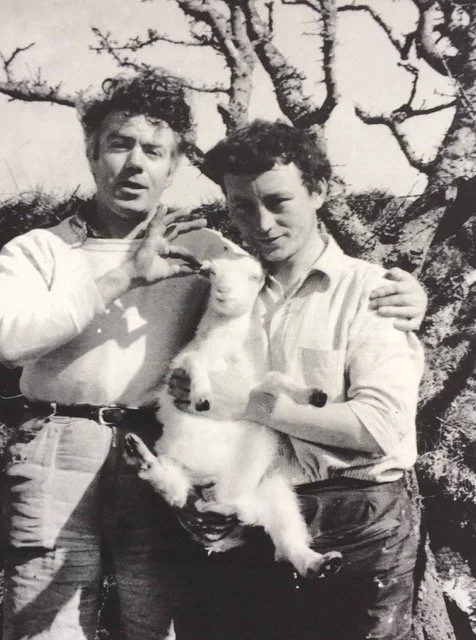
Benjamin was an admirer of the Scottish poet, W.S. Graham, author of The Night Fishing. When he was awarded a French Government Bourse in 1957 to study intaglio printmaking in Paris at William Hayter's studio Atelier 17, he took a copy of Sidney Graham’s book with him with the general intention of producing a suite of etchings to be known as a Homage to the Night Fishing.
The experimental artists, Ossip Zadkine, Krisna Reddy and Pasquale Santoro were there working with Eugenio Tellez, the master printer at the studio, who was experimenting with new methods of inking plates using multi-viscosity inks to enable the printing of etchings with a wider range of intense colours. These exciting possibilities appealed to Benjamin and he produced a suite of unusually vibrant dynamic images. The work was not completed in the time available, but Hayter was keen enough on Benjamin’s project to negotiate a two-month extension to the Bourse. However, the plates were accidentally misplaced when he returned to St. Ives, but fortunately recovered many years later during a studio clear-out. They were printed, then shown at Tate, St. Ives, and added to the permanent collection in1999.
W.S. Graham and Benjamin, 1956. Photo: David Hughes
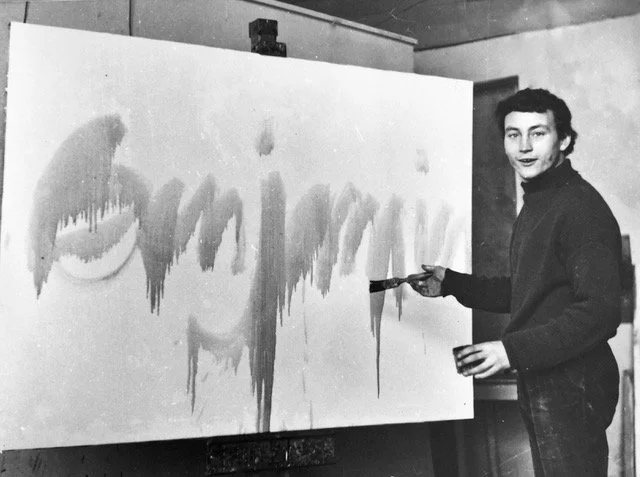
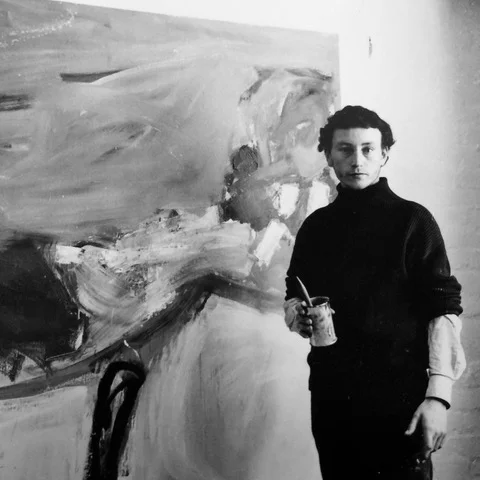
Benjamin in 1960: photos by Denis Mitchell, a sculptor, and part-time assistant to Barbara Hepworth, whose studio was in the coach house of Trewyn gardens.
Moving from London to St. Ives in 1956, at one of the peaks of activity in that now, temporarily, perhaps permanently, defunct art colony in Cornwall, his ardent nature responded to the magnificent light, the dramatic seashore, and the persuasive pictorial fluency of Peter Lanyon and Roger Hilton. But, after a brief flirtation with the landscape-based romantic Tachisme of the Cornish School, he began to introduce certain formal elements, and a particular intellectual control, that rendered his painting unacceptable to the collective Penwith taste.
Kenneth Coutts-Smith, Arts Canada, Spring, 1972