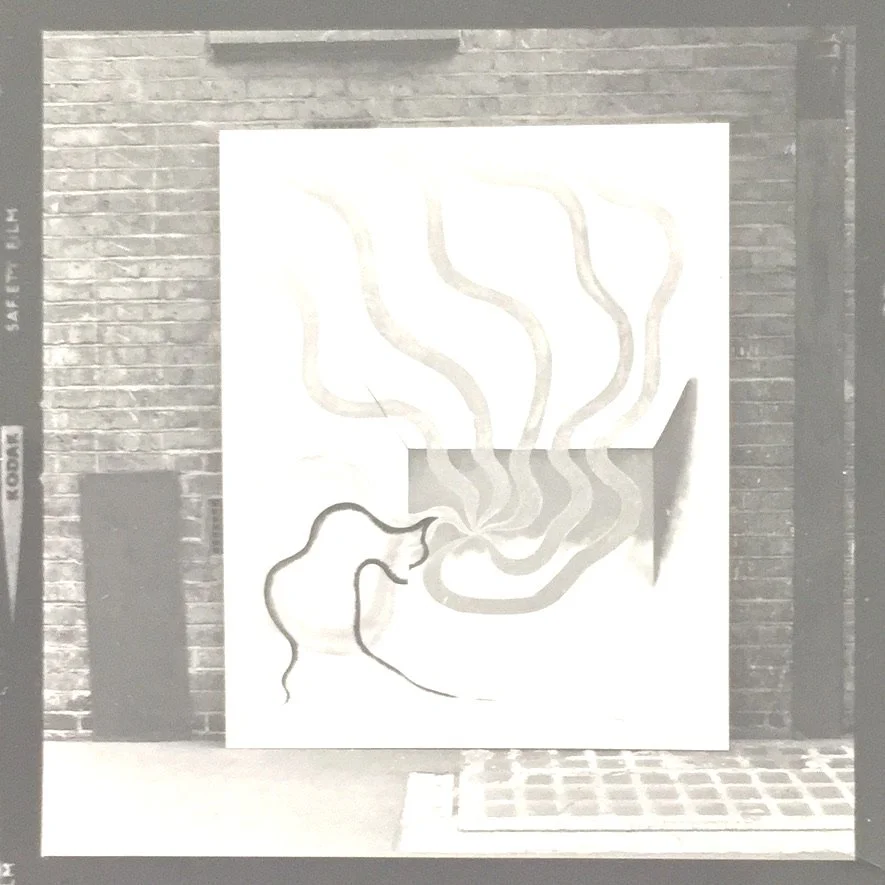
1960s London: Abstract Painting
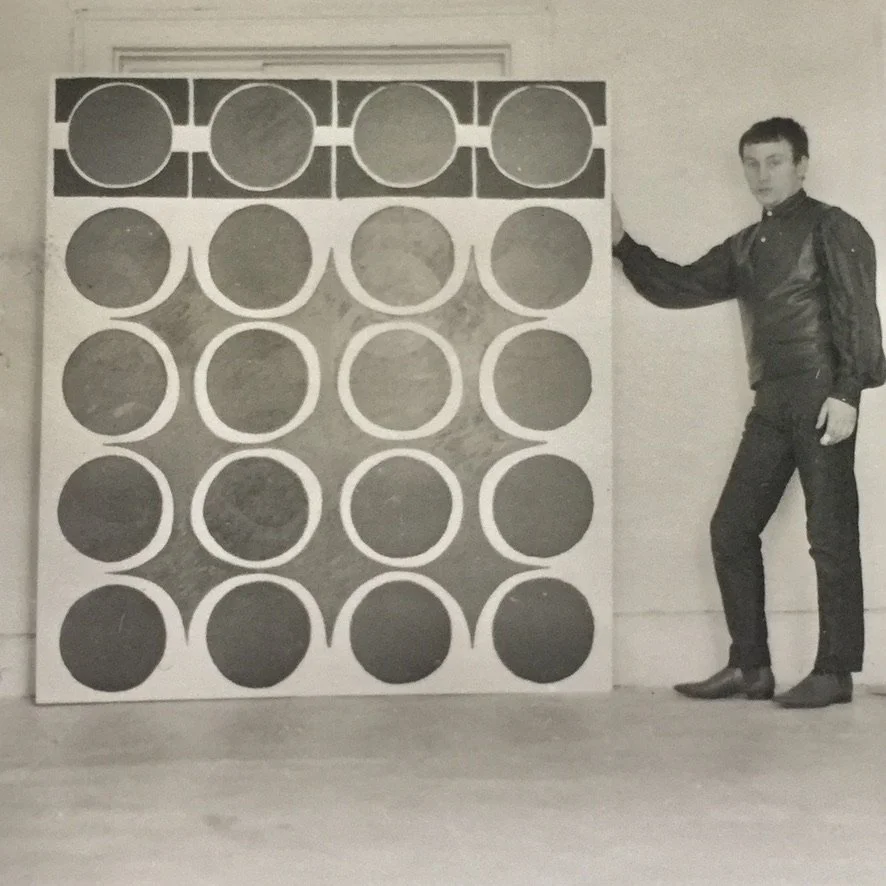
Near the Coram Street studio, 1961. Photos: Lewis Morley
Benjamin and Nancy arrived back in London from Italy in the old jeep with no funds, but within a week they both had interesting employment. He found a teaching position in an art college, and she found a job at CDO (City Display Organisation) as the first woman to join the London Display Trade Union.
Benjamin’s teaching position was on the revolutionary Groundcourse, established by Roy Ascott at Ealing College of Art. The course was focused on breaking down preconceptions concerned with creativity and stripping away accepted procedures, to start fresh, from the ground up. Many brilliant students such as Michael English, Stephen Willets, Marc Chaimowicz, Roger Ackling, Avis Newman and Pete Townsend, amongst many others, attended the course and went on to establish highly creative careers. The tutors included Bernard and Harold Cohen, Brian Wall, R.B. Kitaj, and Peter Startup, as well as Benjamin and unusual guest lecturers such as Cybernetician, Gordon Pask; Auto-Destructive Artist, Gustav Metzger; and Dadaist, Robin Page, an early member of Fluxus who used satire as a weapon. He organised a Guitar Happening at the ICA that involved kicking his guitar along The Mall, possibly an additional influence (along with Metzger) on Pete Townsend’s guitar smashing when he was eventually performing with The Who.
This new and extremely innovative curriculum rattled the bars with the more conservative members of the art establishment, especially the powerful Coldstream Committee who were at the time assessing the art colleges for the new Diploma in Art and Design. Consequently, Ealing was not granted the new DIP AD status, and Ascott and Co. decamped to the art college in Ipswich where both staff and students were keen to experience a more adventurous approach to art education. Robert Lewis, the intrepid traveller, and Brian Eno, eventual pop-pioneer of electronic music, were enthusiastic students for the new regime.
Eno wrote in his bio, That first term was specifically designed to dismantle the damage that had been done by the education that everyone had gone through before. It got rid of the rules that this is possible, and this isn’t, and instead said, ‘We’re not going to tell you what is possible and what isn’t, we are going to teach you techniques for entertaining all kinds of possibilities at all times.’
Brian Eno, On Some Far Away Beach: The Life and Times of Brian Eno
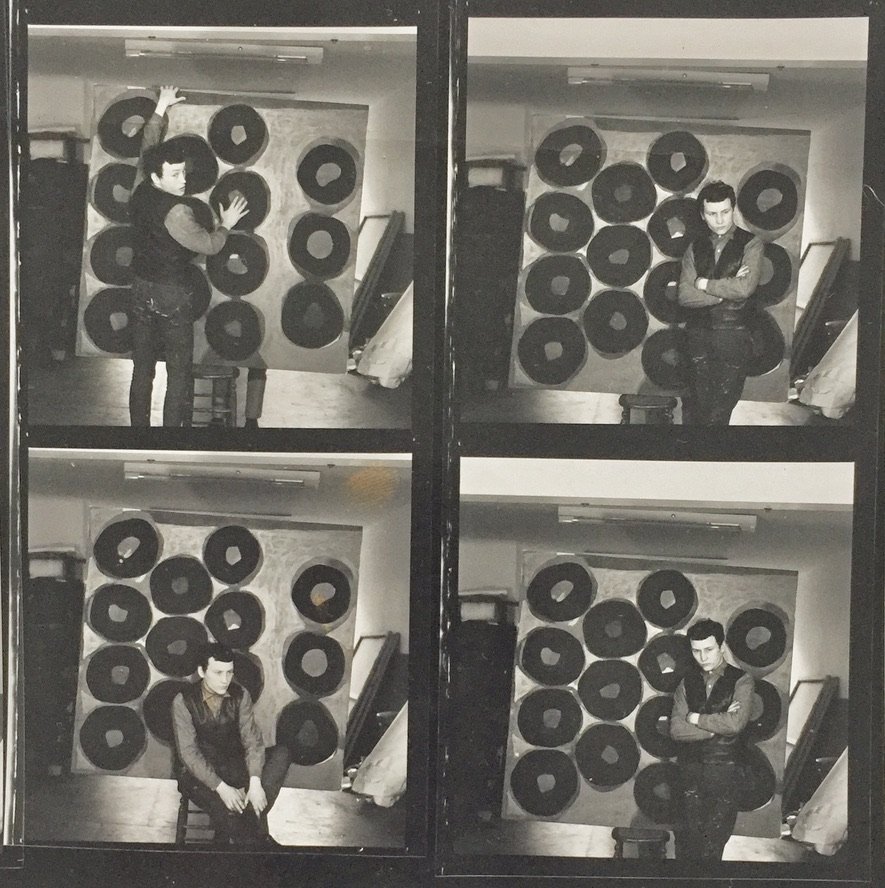
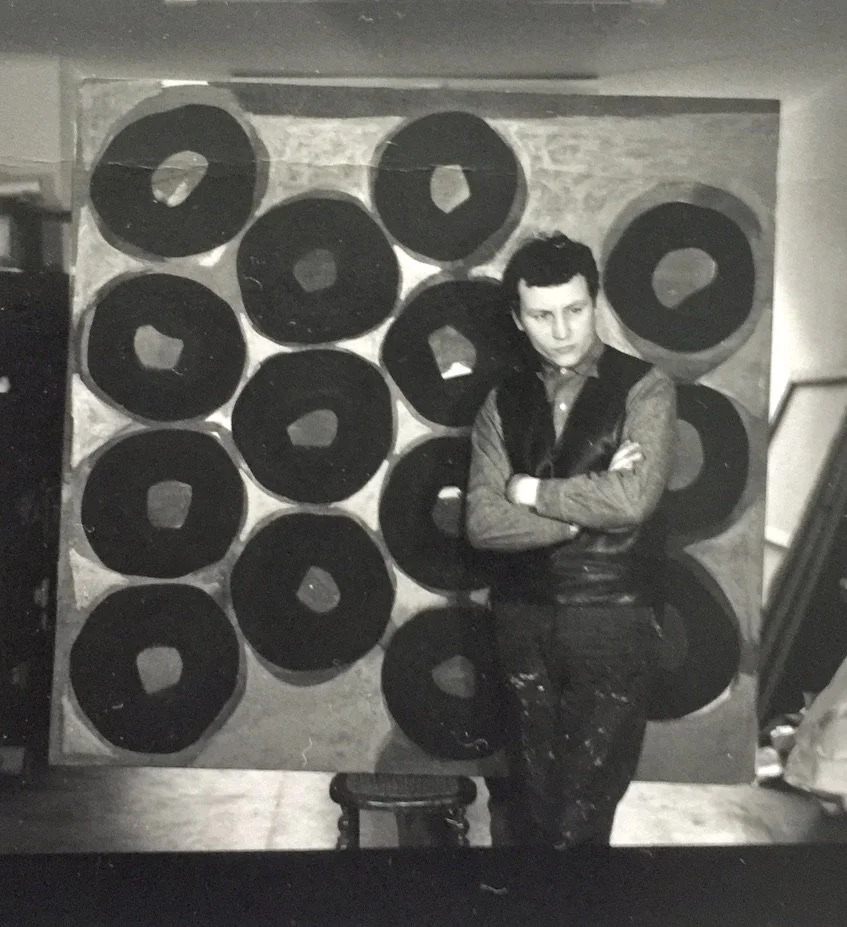
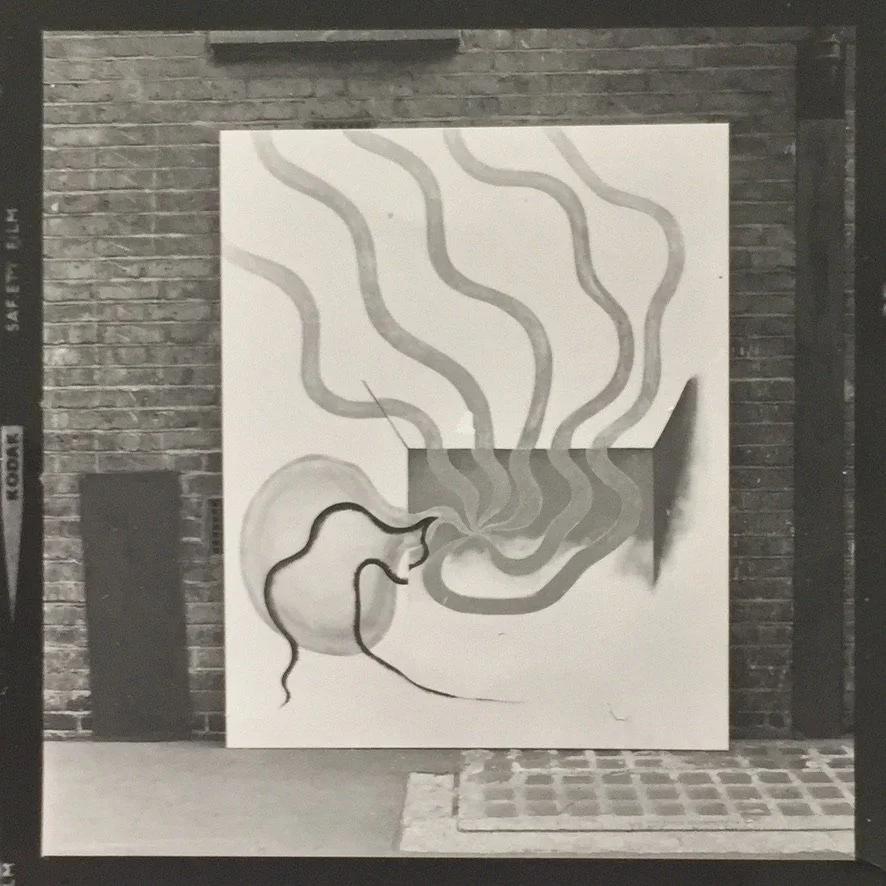
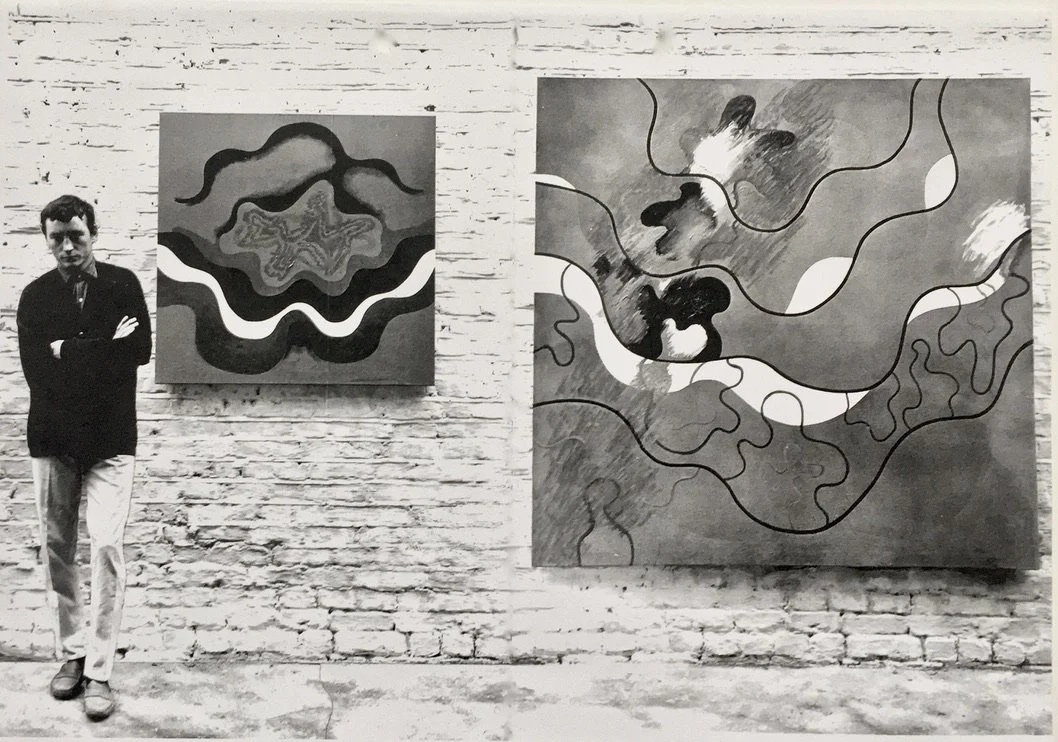
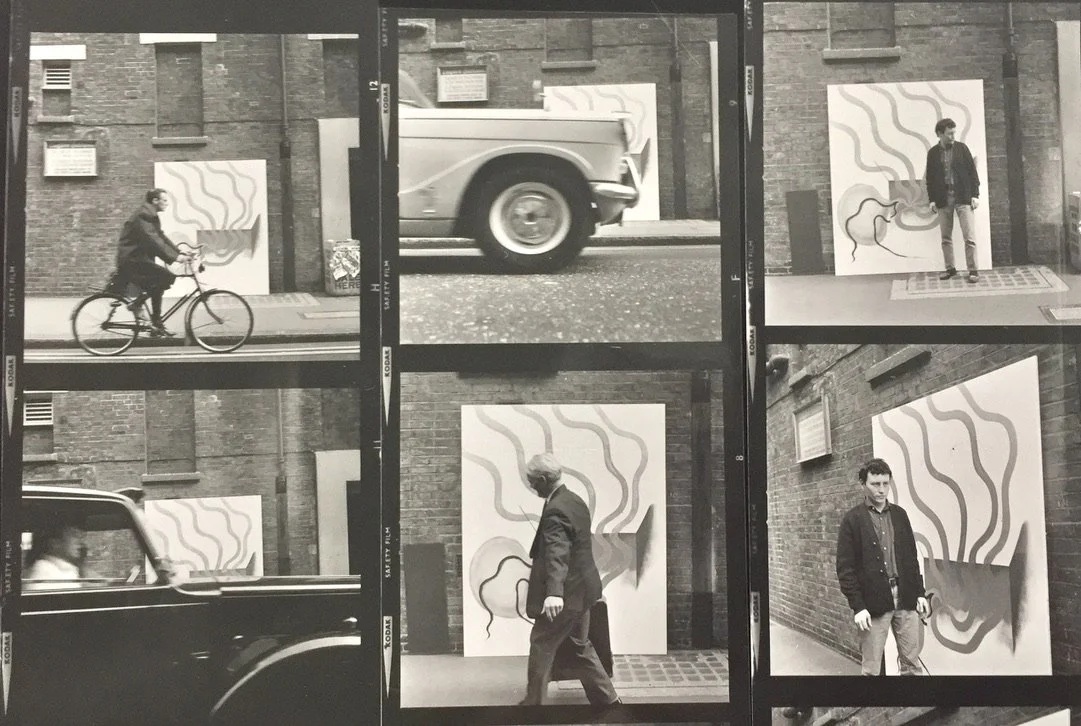
Energized by new directions discovered in Italy, Benjamin was painting prolifically and regularly exhibiting in London at the AIA in Lisle Street; the Obelisk Gallery, Crawford Street; and the Grabowski Gallery in South Kensington, as well as many provincial galleries. Mateusz Grabowski, an avant-garde art lover, was one of the first to exhibit the art of up-and-coming young artists, many from the Royal College, including Benjamin’s friends Joe Tilson and Peter Blake, as well as Richard Smith, Derek Bosher, Pauline Boty, Frank Bowling, Maggie Hambling, David Hockney, Victor Newsome, and Brian Wall. Benjamin met the well-known photographer Lewis Morley who had a studio in Soho over the famed Establishment Comedy Club. He was known for his portraits of theatrical personalities and the provocative semi-nude photo of the rather infamous Christine Keeler, known for her involvement in the Profumo Scandal that rocked Harold McMillan’s Conservative Government in the early 1960s. Over the next few years, Morley took many innovative photos of Benjamin and his work, and were often used in the exhibition reviews and catalogues.
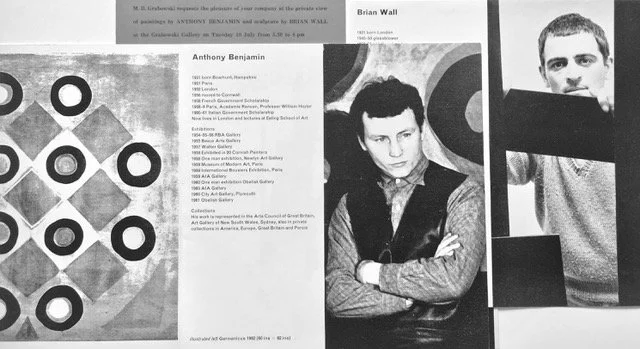
Benjamin had a substantial exhibition with sculptor Brian Wall at the Grabowski Gallery in the summer of 1962. Several of Benjamin’s paintings were sold and Grabowski bought a selection of his drawings for £200 (now in the Lodz Museum, Poland ) enabling Benjamin and Nancy to move out of the Bloomsbury rental flat, to get a mortgage to buy half of a large early19th-century semi-detached house in Islington, with Brian Wall, who was a close friend from St. Ives. Wall lived on the top floors with his wife Jenny and had a studio in the mews stable, while Nancy and Benjamin lived on the lower floors, initially using the ground floor as a studio, then later building a studio in the long garden.
Untitled, 1964
Logomachy (as above), 1963
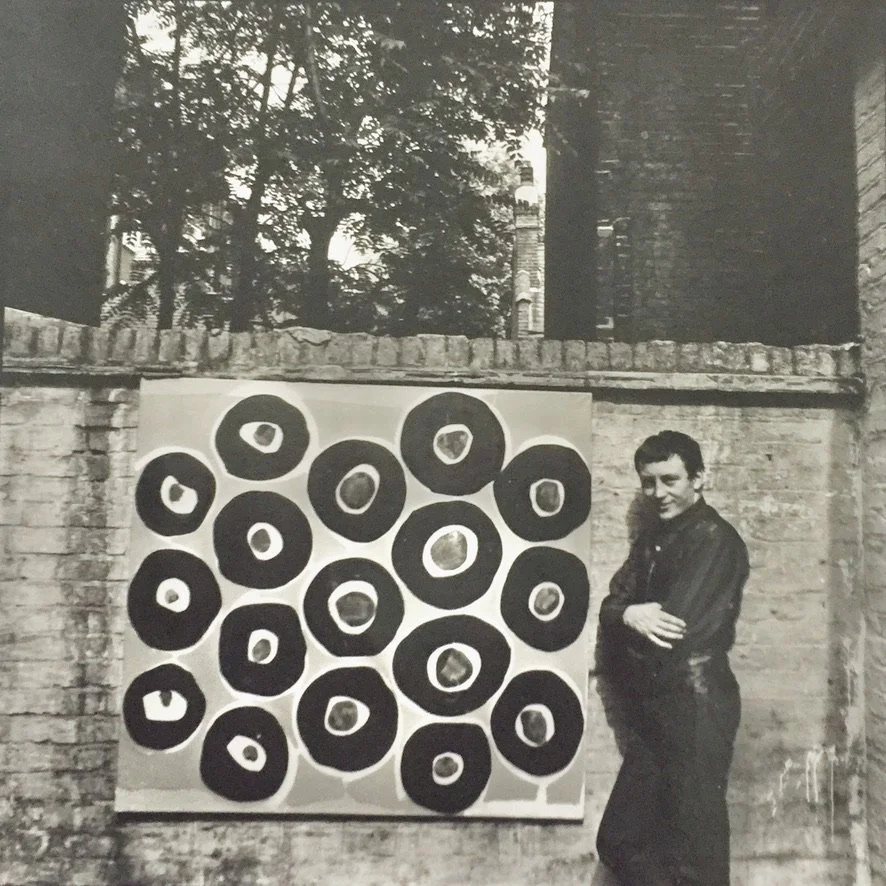
Dioristic, 1963 (left); Logomachy, 1963 (right). In the yard of the Coram Street flat, Bloomsbury, 1964. Photos: Lewis Morley
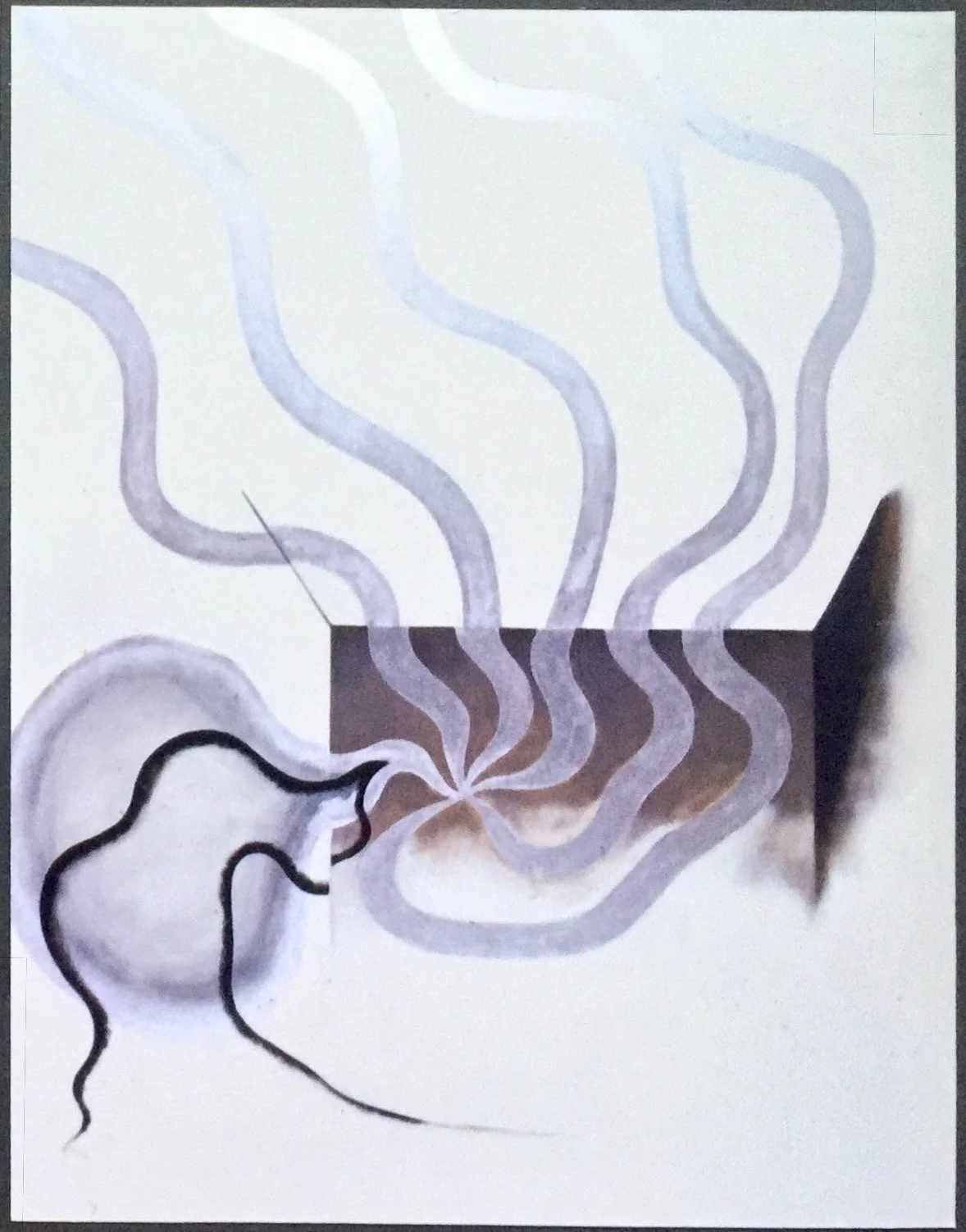
Benjamin and Wall, Catalogue for Grabowski Gallery Exhibition, South Kensington, 1962
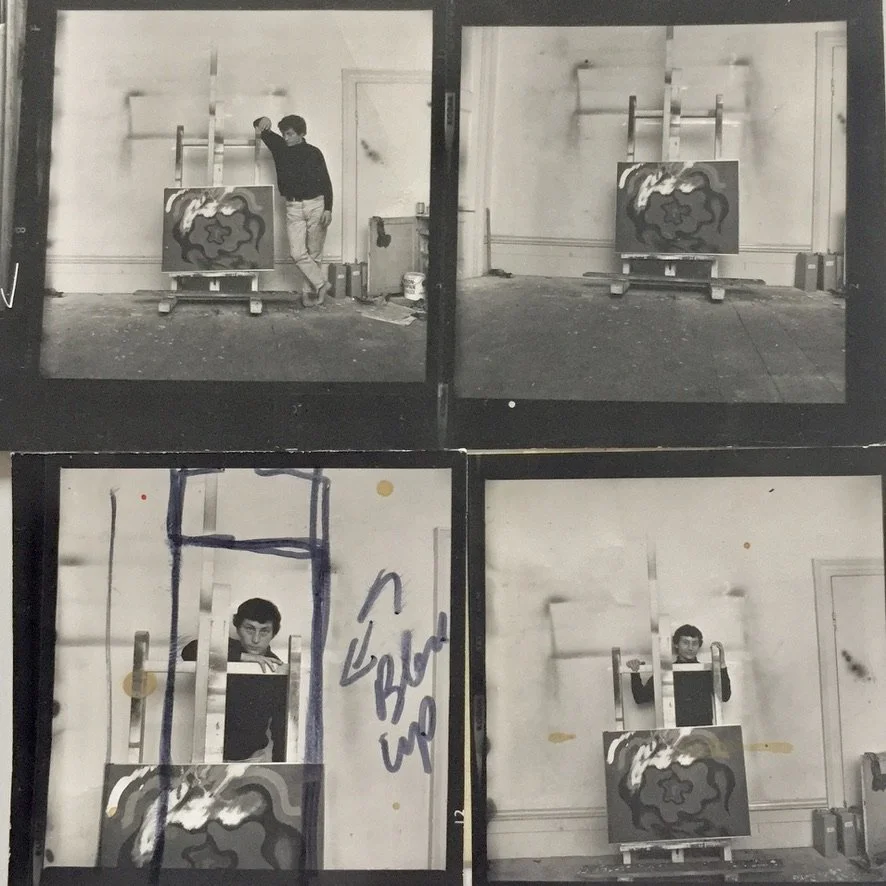
Near the Coram Street flat, 1961. Photos: Lewis Morley
Exhibition: Anthony Benjamin, painting and Brian Wall, sculpture, Grabowski Gallery, South Kensington, London, 11 July - 11 August, 1962
Benjamin’s recent paintings and Wall’s sculptures, although unrelated stylistically, are demonstrations of one artistic attitude characteristic of our age as well as evidence of each artist’s qualities and development … What is characteristic of the art of today, and what may well give it its historical importance, is its refusal to burden itself with the ideological and stylistic disputes of the resent past and its persistence in demolishing the frontiers of concept and nomenclature that our predecessors established by the sweat of their wrinkled brows. In their different ways, Benjamin and Wall are both significant examples of this.
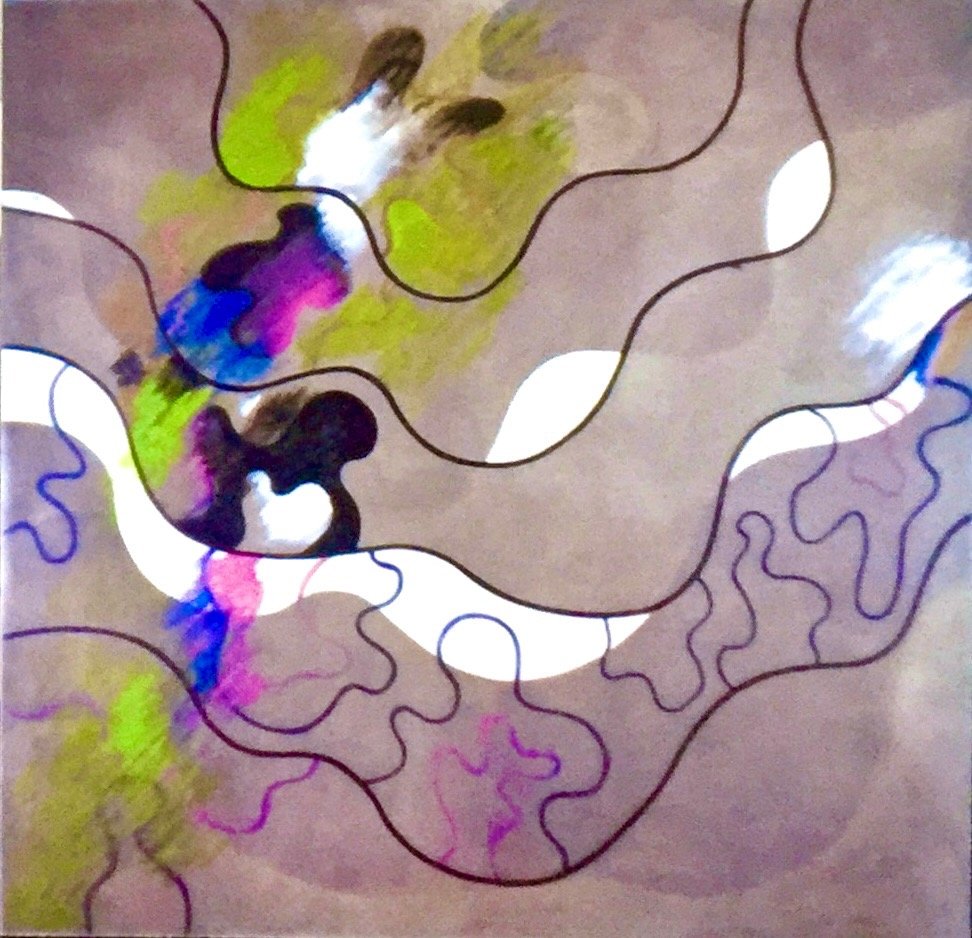
How could we classify Benjamin’s paintings, using inherited terminology? Non-figurative it certainly is and has been for years, yet anyone familiar with Benjamin’s development will not have mistaken the far from abstract expressions of an individual libido. Expressionist then? His paintings of two years ago might have fitted that label, but his present work is much more impersonal and cool.
Norbert Lynton
Norbert Lynton also wrote in a 1962 Grabowski Gallery Catalogue, Anthony Benjamin painting and Brian Wall sculpture—
In 1960-61, Benjamin spent several months in Italy. He was captivated by qualities and methods of Italian late Byzantine and Gothic art, particularly the Maesta of Duccio as well as Simone Martini. What struck him was the preciousness and aesthetic unity of such paintings as entireties—painted images, carved frame or painted border, the scale of the whole and its internal relationships of scale—and the rhythm and expressive power inherent in the repetition of almost identical forms … Here was a tradition in which the decorative and the expressive were thoroughly and unselfconsciously synthesized do that the whole pattern/image/object became one vehicle of communication … In Benjamin’s paintings there is this balance of subjective and objective, this sense of ease within self-erected, undogmatic barriers, which in its results attracts both the sensuous and the intellectual resources of the spectator.