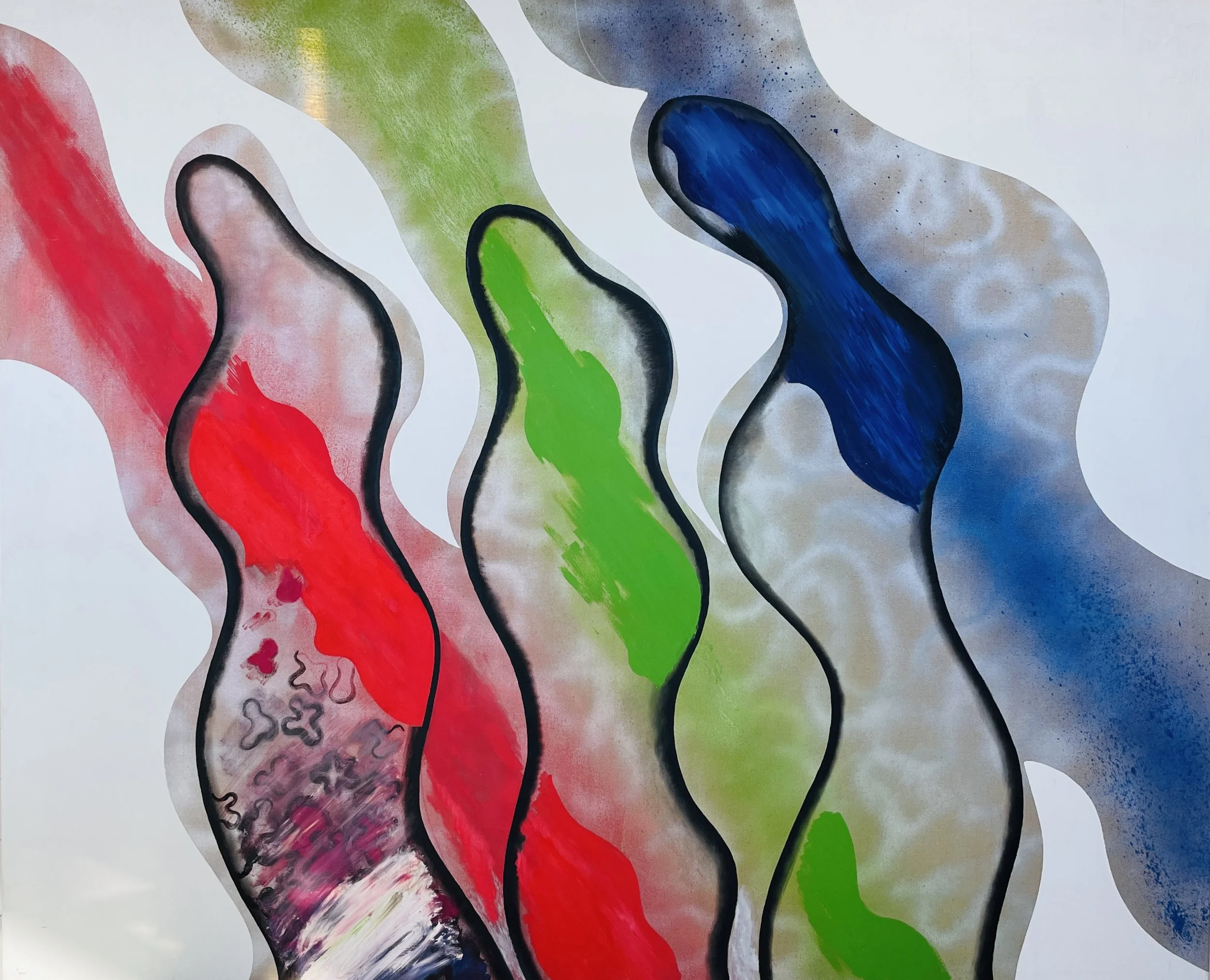
1960-1961 Italy
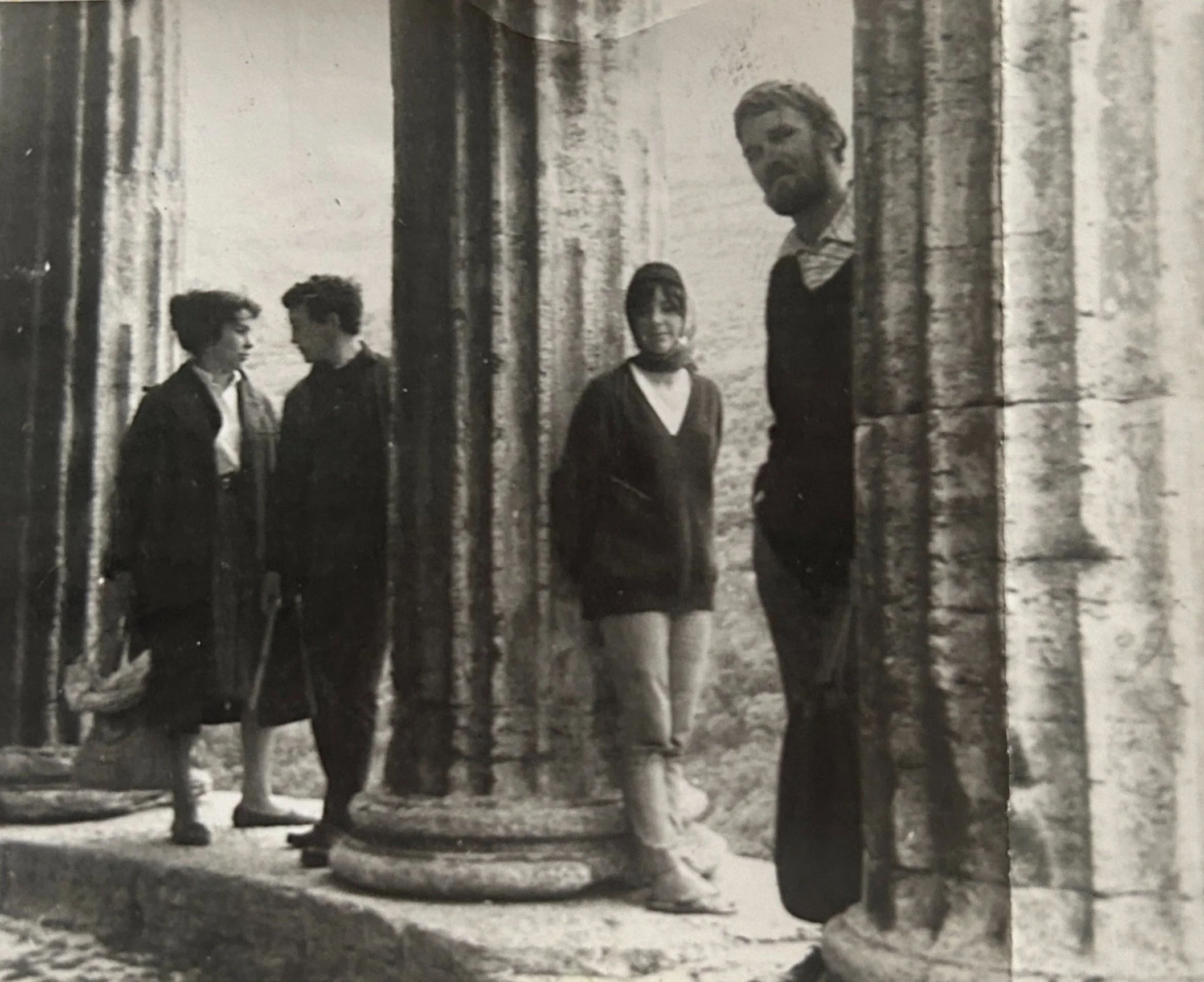
Temple of the Sybil, Tivoli. Nancy, Anthony, Eve and Richard Allen, 1960. Unknown photographer.
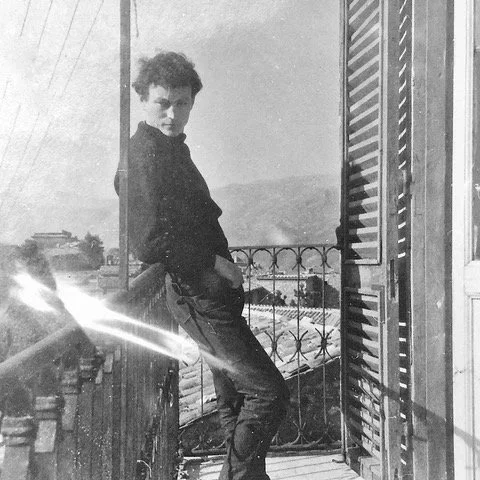
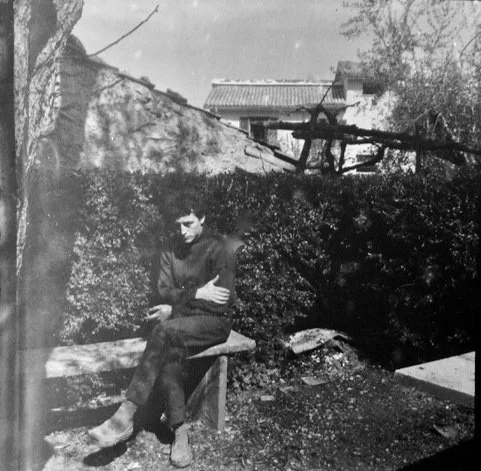
Benjamin in Anticoli, 1960. Photos: Nancy Patterson
Benjamin applied for an Italian Government Scholarship, which he was awarded in September 1960. While doing his time as a conscientious objector in the Wormwood Scrubs, he gravitated to the History section of the prison library where he read Gibbon’s Decline and Fall of the Roman Empire. This interest remained with him and he purchased a full set of Roman History in Penguin Paperbacks. His adventures in Paris fed his latent wanderlust, adding to his growing dissatisfaction with the St. Ives art scene and the art he was producing.
He bought an old American Army Jeep and took off with Nancy Patterson, a Canadian art school grad, on a substantial travel scholarship. She had stayed with friends working at the Leach Pottery in St. Ives, and then at Eagle's Nest, in painter Patrick Heron's spectacular house near Zennor. They travelled in the draughty jeep through the wet autumn weather in France and Italy, and headed toward Perugia, a town famous for its Etruscan antiquities where he was required to take an intensive language course at the Universita Italiana per Stranieri. They met up with friends, Brian Young and Richard Allen, who were on similar awards.
On completing the course, they headed off toward Anticoli Corrado, a spectacular Medieval hilltop village in the Abruzzi mountains about 50 kilometres from Rome. It was a charming place that was a destination for Italian artists since the Middle Ages and recommended by British artists Peter Lanyon, Joe Tilson, and Heinz Inlander, who had a house and studio there. There were several houses with studio rooms and inspiring views, available for very modest rentals, and they moved into one at Casa Piselli. The time Benjamin spent in Italy was his introduction to early Renaissance Art, an important turning point in his career and development.
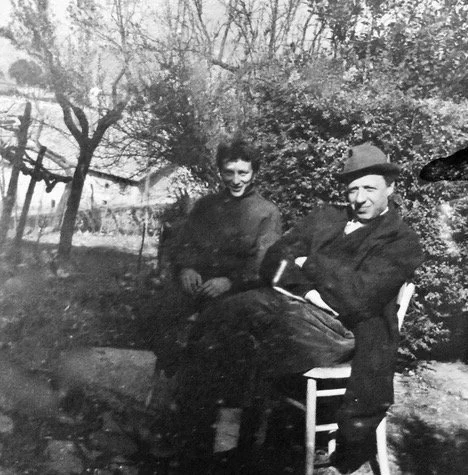
Benjamin and Heinz Inlander, Anticoli
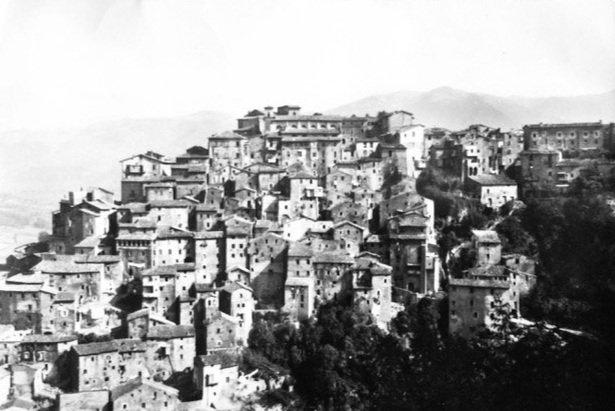
Postcard of Anticoli: Edicola, Muzi Onelio
In 1960-61, Benjamin spent several months in Italy, captivated by the qualities and methods of Italian late Byzantine and Gothic art, particularly by the Maeste of Duccio and Simone Martini. What struck him was the preciousness and aesthetic unity of such painted images, carved frame or painted border, the scale of the whole and its internal relationships of scale, and the rhythm and expressive power inherent in the repetition of almost identical forms, as in the heads and haloes of the saints in the Duccio. Alloway once wrote that ‘ever since Art, Nouveau artists have made decorative arts expressive, and expressive arts decorative!’, but here was a tradition in which the decorative and the expressive were thoroughly and unselfconsciously synthesised so that the whole pattern/ image/object, became one vehicle of communication.
This would have meant very little to Benjamin had it not harmonized with some of the concerns motivating his early work, but generally it counteracted what residues remained of the two or three years spent in the St. Ives ambience. His work, no longer dominated by an over reliance on vigorous personal ‘statements’. The canvas is no longer merely the ‘arena’ where action records itself, to which Pollock and Co., undoing Mondrian, had demoted it. The authoritarian attitude of action painting has been succeeded by stylistic egalitarianism and a degree of self effacement and suggestion of moral overtones. Perhaps we are witnessing a breaking-down of the barriers not only between plastic concepts, but also between plastic and moral concerns.
Norbert Lynton, catalogue for Grabowski Gallery Exhibition, London—Anthony Benjamin, painting, and Brian Wall, sculpture, 11 July to 11 August, 1962.