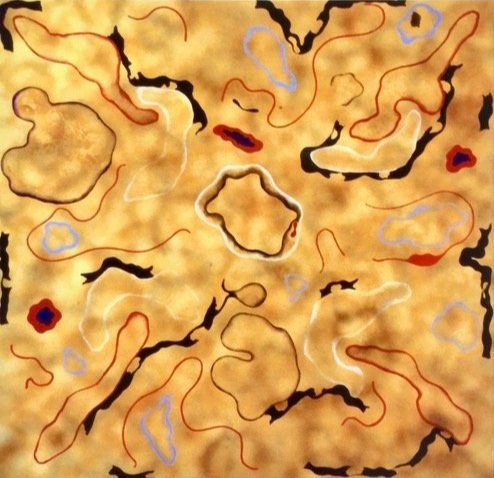
Gates of Eden, oil on canvas
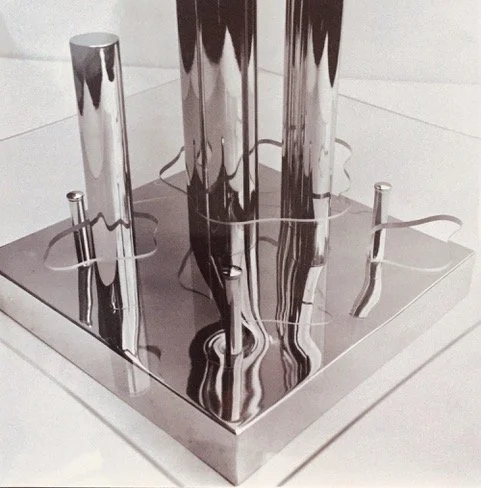
Carnaby II foreground, Epic behind. Painting on the wall: On the Edge (Arts Council Collection)
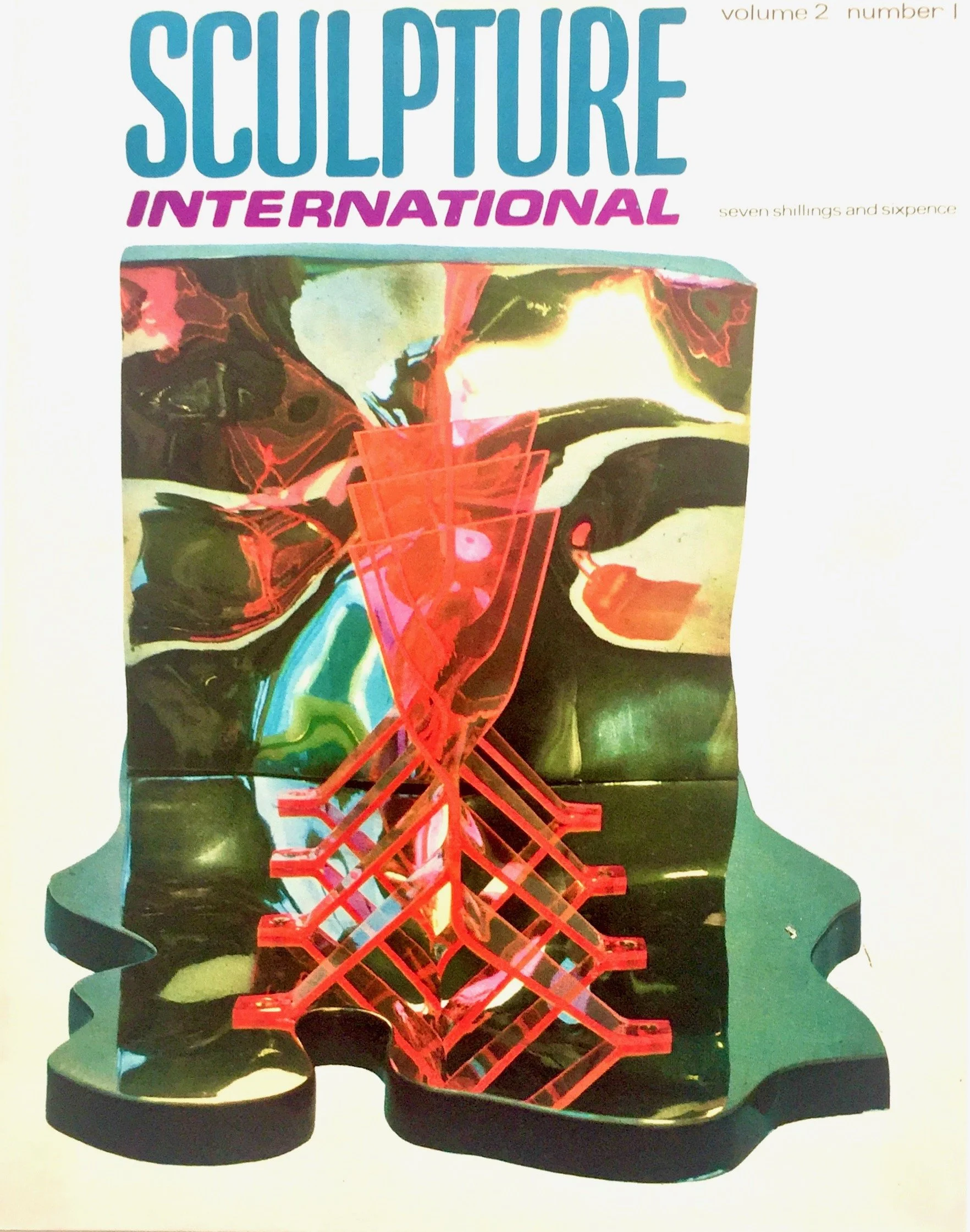
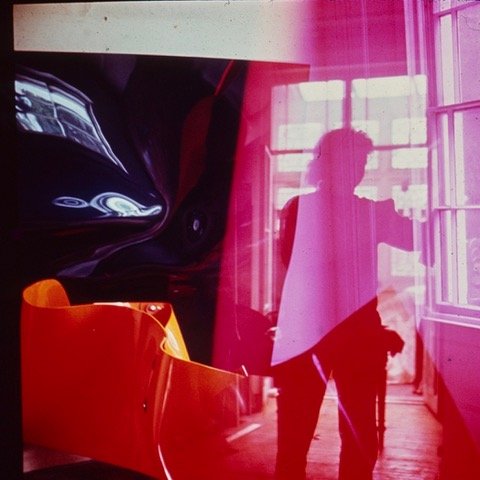
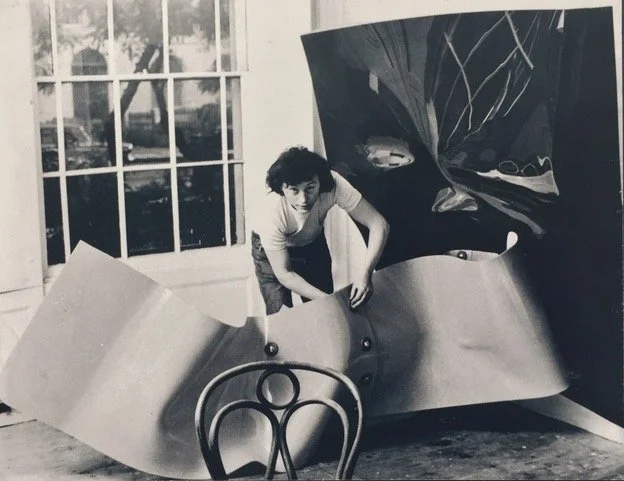
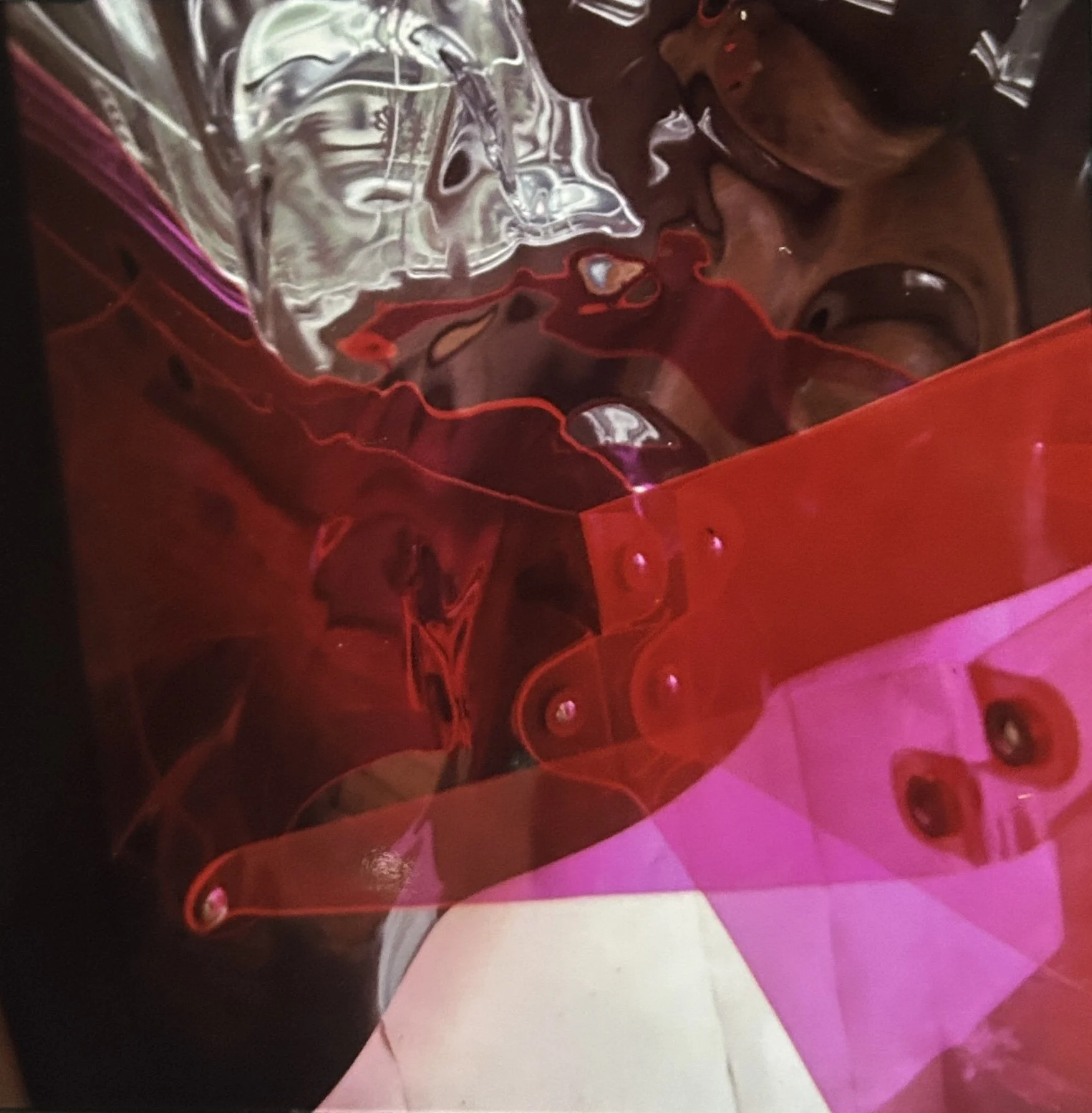
Detail of Epic, which appeared on the covers of Sculpture International and Art International (illustrating Norbert Lynton’s review in TheGuardian). Photo: Lewis Morley, 1966
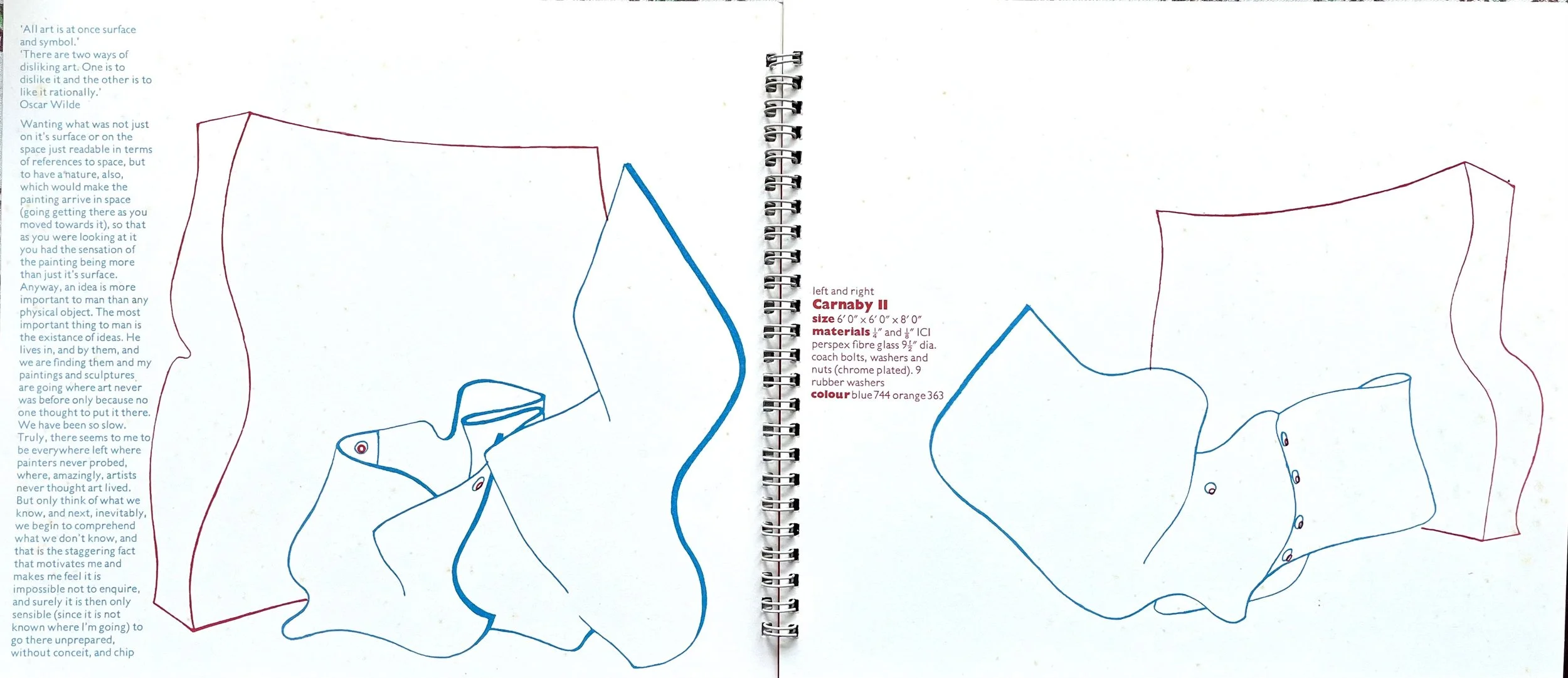
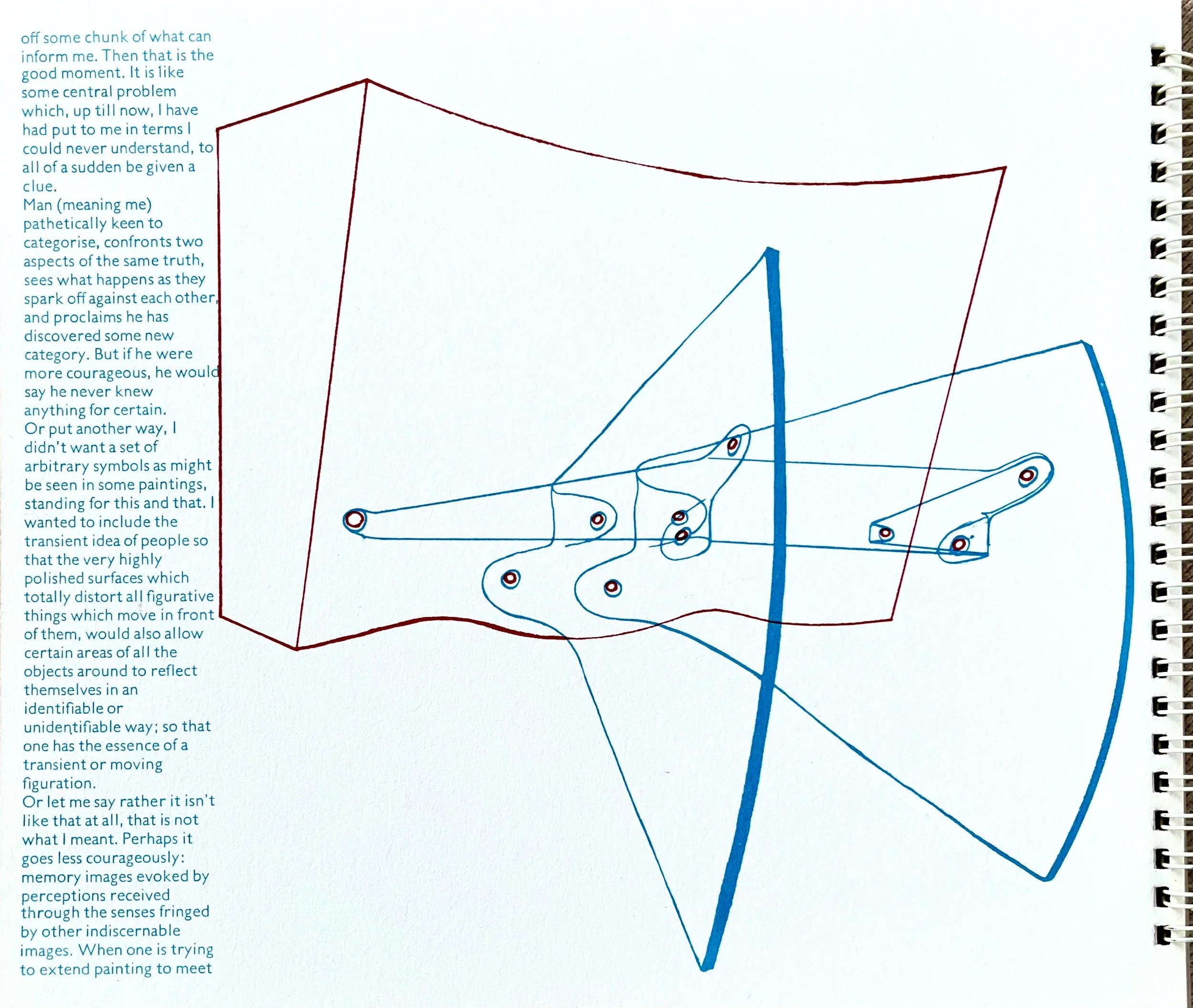
Drawing of Carnaby II from ICA catalogue
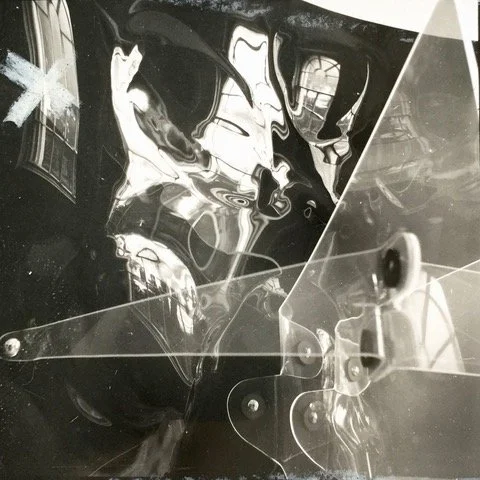
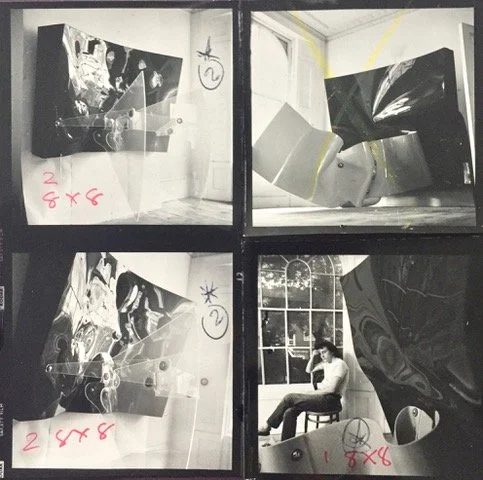
Working on Carnaby II, 1966. Photos: Lewis Morley
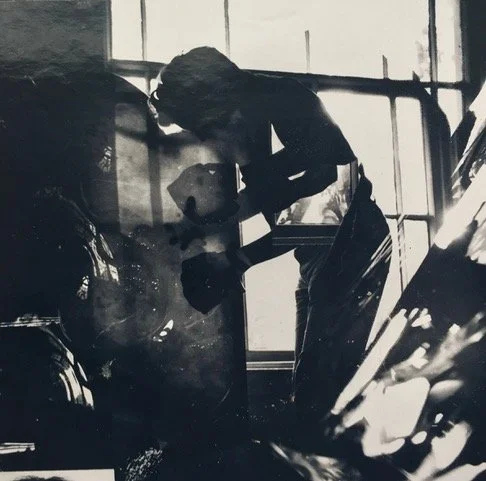
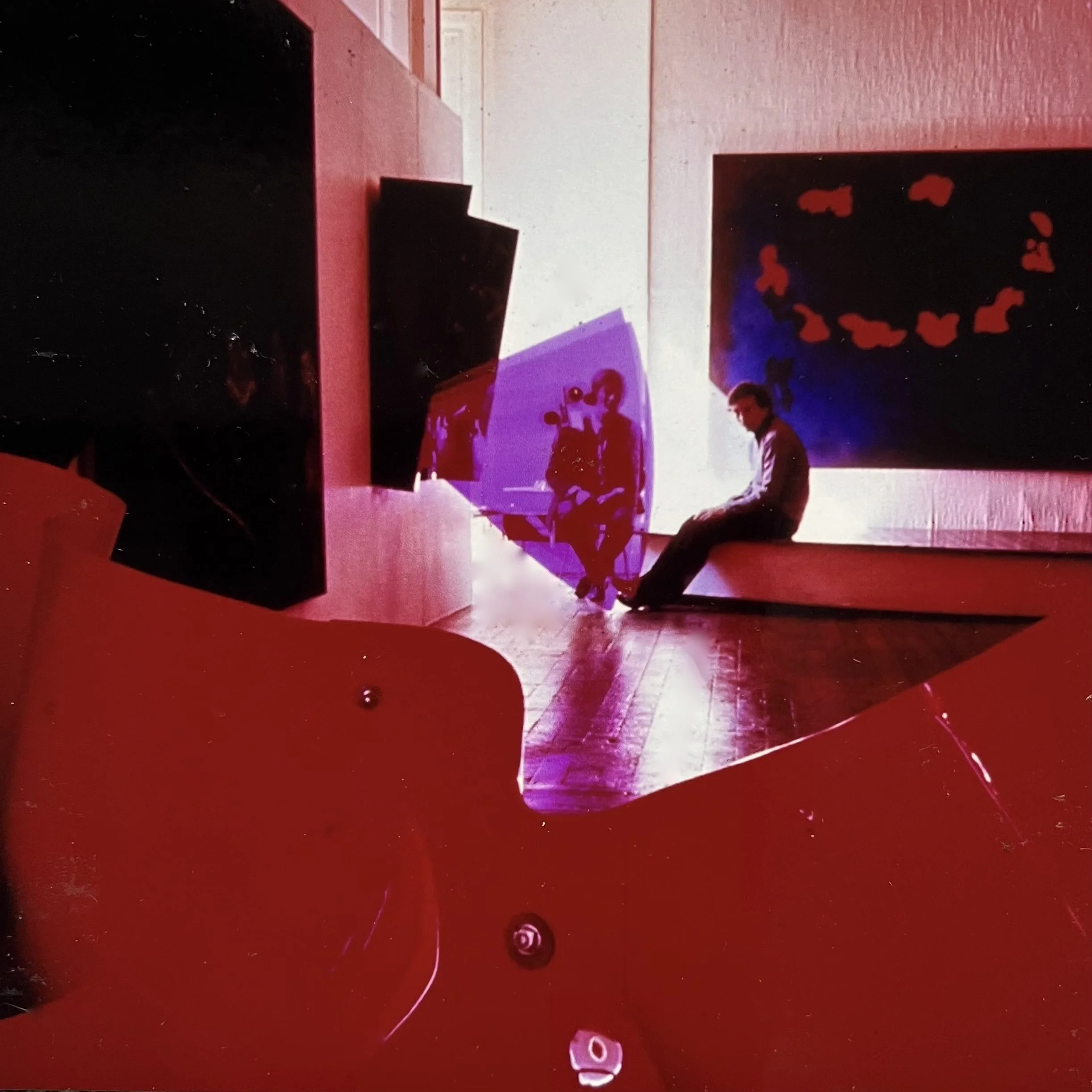
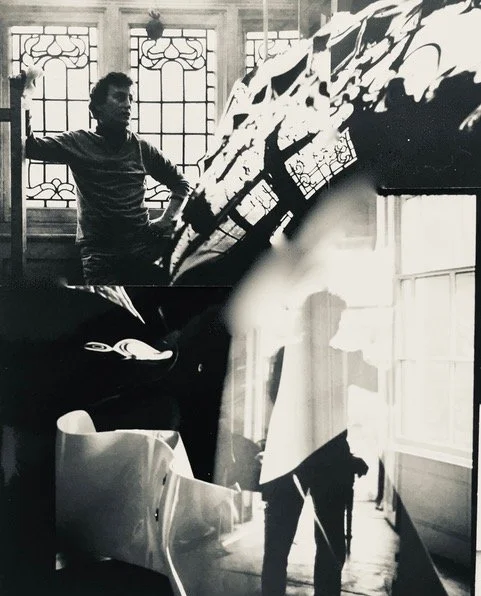
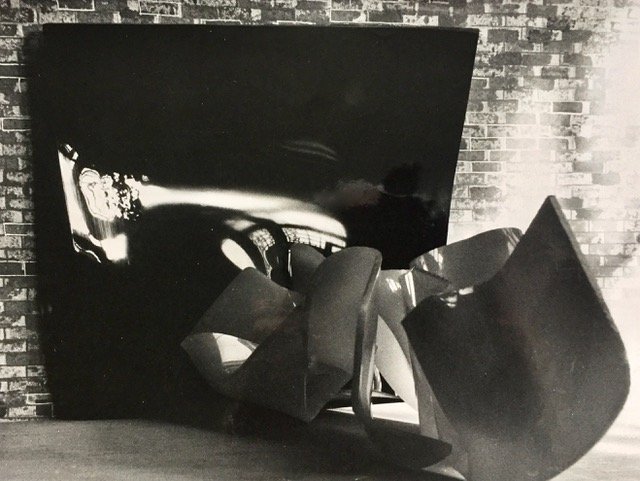
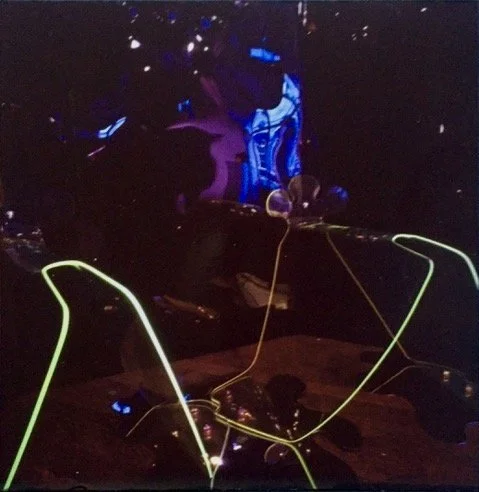
Photos: Lewis Morley,1966
There is no need to speak of the beauty of Anthony Benjamin’s most recent work. As the advertisements say, it just needs to be seen. One tends to assume that all works of art need to be seen, but in fact the twentieth century has been exceptionally rich in art objects in which the concept is commensurate with, or even bigger than the artefact, so that to know the work (possibly through reproductions) is enough … Benjamin’s work is emphatically visual, yet conceptual elements play leading roles in it. He is amongst the most articulate and philosophical of British artists and for years his painting has been predominately concerned with giving pictorial form to art.
Norbert Lynton, Studio International, September 1966
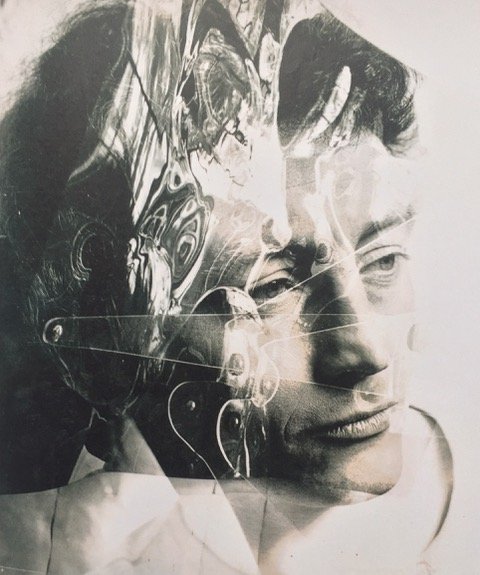
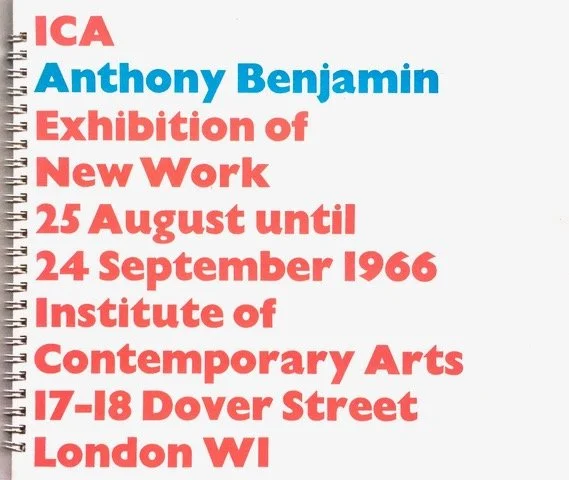
Drawing of Epic from ICA catalogue
Benjamin had enthusiastically engaged with the vibrant colour and sculptural possibilities of Perspex when Nancy took a selection of off-cuts of the material from her model-making work to show him. She knew how to work with the beautiful but fragile, shiny plastic—cutting it with an electric jigsaw, gently heating and bending it into the desired undulating forms, then filing, sanding and polishing the cut surfaces. The 4 ft by 8 ft sheets of Perspex were either opaque, transparent or translucent; the highly reflective material, interacted with the immediate surroundings. Working together, they made experimental small pieces and maquettes. When these were brought to the attention of Roland Penrose, Director of the ICA, by his PA, Julie Lawson, he offered to stage an exhibition of sculpture, paintings, prints and drawings at the ICA’s Dover Street Gallery.
The 1966 exhibition broke boundaries between the various media, and the show was viewed with enthusiasm by the public, as well as art critics. Penrose, who was also a Surrealist painter, and Benjamin, got on very well together. He and Nancy occasionally stayed with Julie Lawson in a cottage she had the use of on Penrose’s country estate, Farley Farm. His wife Lee Miller, the glamorous but intrepid war photographer was there, but seldom appeared socially; although she had made most of the delicious food, she kept a low profile.
Laura Williams, Art Dealer
1966 London: ICA, Painting and Sculpture
For many young artists today the dividing line between painting and sculpture is an unnecessary limitation for the projection of ideas about visual phenomena. Anthony Benjamin, a considerably gifted painter has been unable to resist the tempting possibility of letting his ideas take shape in sculptural form … In the process of making his vast sheets of Perspex take on a rhythmic formation of his ideas, Benjamin came to terms with this material in such a way that the interacting response between the artist and material is not forced or falsified … The basic formation of his constructions are either wall-hanging or free standing forms consisting of large vertical, undulating Perspex sheeting in areas of six by six feet with projected ribbon strips, also in Perspex, coming out from the centre, or lower centre, by at least six or eight feet.
The two large Carnaby 1, and Carnaby 2 constructions were developed from maquettes which started off Benjamin’s realisation that he could come to terms with Perspex as a viable medium for his larger projects. The attraction of Perspex for Benjamin is its lustre, reflective sheen and the luxurious depth of coloured light which filters through its surface—or catches at its edges. All this forms part of the selected glitter and style of the Carnaby Street scene, the pop group beat and sex twist in films and advertisements. It is an attempt to ‘hipsterise’ art, releasing it from preconceptions about form, and in an uninhibited way but not without sophistication, Benjamin has succeeded in this adventure.
Denis Bowen, The Arts Review, 1966
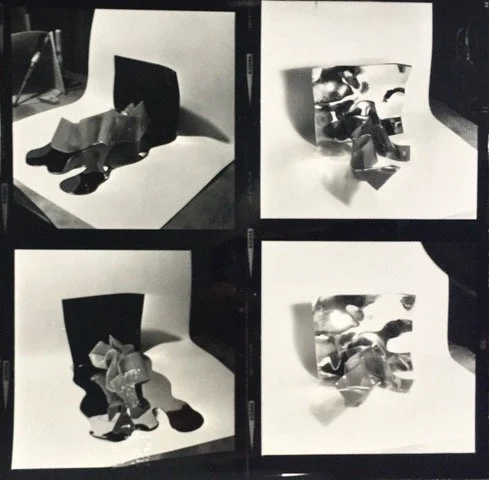
Maquettes. Photos: Lewis Morley
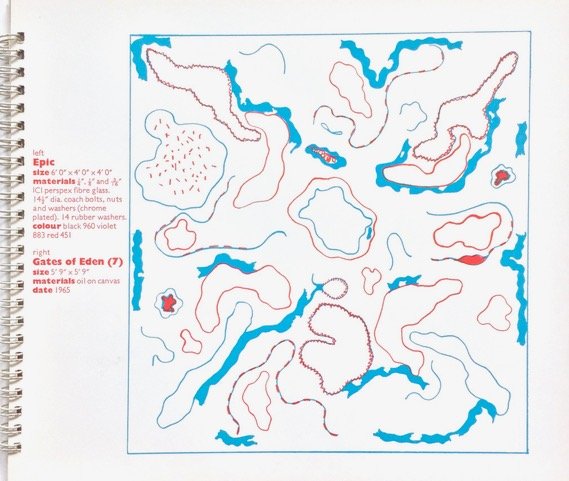
Diagrammatic drawing of Gates of Eden painting
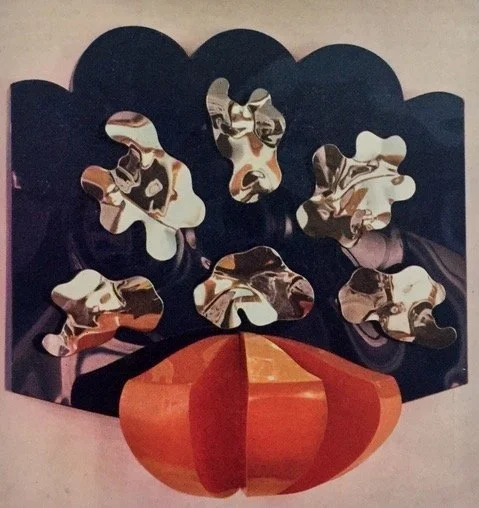
Tolmer, 1966
The visual language Benjamin has been developing for himself is of greater complexity than one might think at first glance. Its technical constituents themselves cover a wide range and his idiom embodies many influences of disparate kinds, from science as well as from high and low art. The most striking thing about it, however, is its coherence, within its variety. Benjamin’s time in Italy, 1960-61, has obviously functioned as the essential turning point in his development. The work done in the last six years has changed continuously with the same sorts of pictorial structure, using the canvas as the location for mysterious, brief but somehow necessary encounters, but even his more detailed formal elements recur over the years. In the most recent pictures I have even noticed a return to images which I had thought belonged to his pre-1960 period. But why would I be surprised by this? It is never wise to write finis to any phase of an artist’s working life, and in his particular case, where experiential factors are so important that one could aptly speak of an autobiographical art, we must expect to find a non-chronological use of material as in remembering and dreaming.
Norbert Lynton, Studio International, September 1966
Photos: Lewis Morley,1966
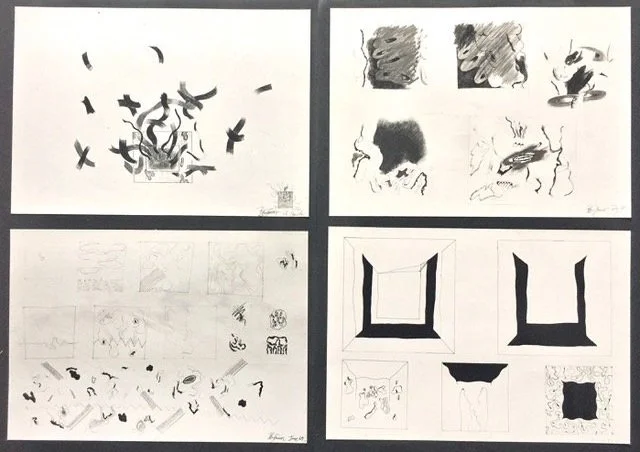
Mixed media drawings, 1966
In the ICA Catalogue of 1966, Anthony Benjamin stated,
… I don’t want a set of arbitrary symbols as might be seen in some paintings, standing for this and that. I wanted to include the transient idea of people, so that the very highly polished surfaces which totally distort all figurative things which move in front of them, would also allow certain ideas of all the objects around to reflect themselves in an identifiable way… When trying to extend painting to meet conceptual needs, technique also has to be extended. My work had to change it’s form; I see it as having extended the language that I was dealing with in painting into three dimensions out of necessity, not out of the concern with sculpture. A visual work remains outside words, as does music, and some profound experiences are diminished by reducing them to a relatively comprehensible level.