
1968-70 Calgary, Alberta, Canada: Sculpture and Conceptual Art
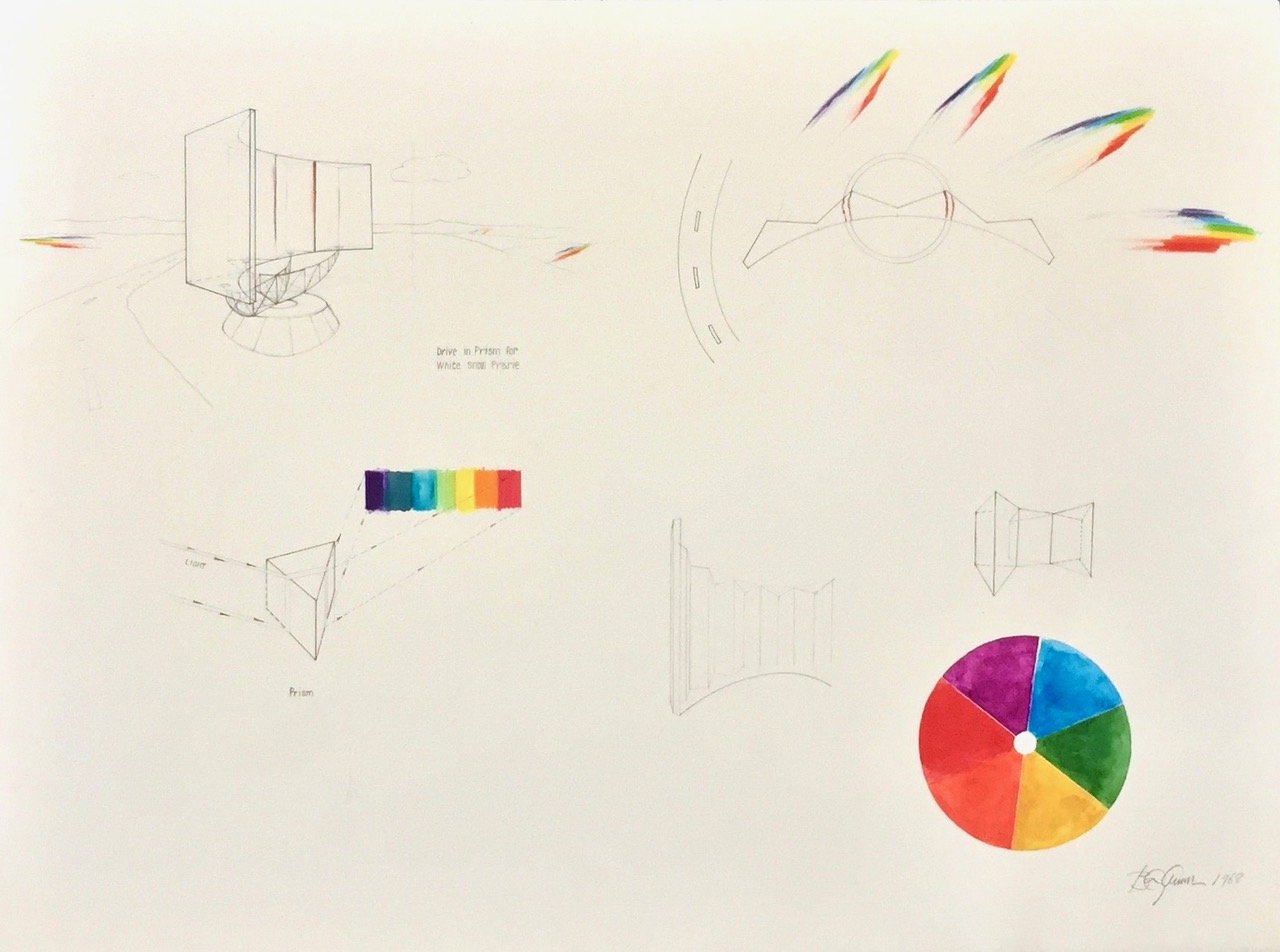
There are in existence detailed plans for monumental light projects. One such is the cast acrylic prism the size and form of a drive-in movie screen; it is to be placed on the open prairie and to be motorized by a light-sensitive mechanism to be always at a prime angle to the sun. The curve of its reflective surface would take into itself the entire landscape, yet cast its kinetic and prismatic refraction of the natural light over a 100 square mile area …
These drawings were executed at the time of Benjamin’s first arrival in Canada, under the visual impact of the city of Calgary which seem gratuitously, almost temporarily, placed down on the enormous prairie and dominated by a towering and continually mutating sky and the looming backdrop of distant mountains.
Art as a technique of knowing: The work of Anthony Benjamin, Kenneth Coutts-Smith, artscanada, Spring, 1972
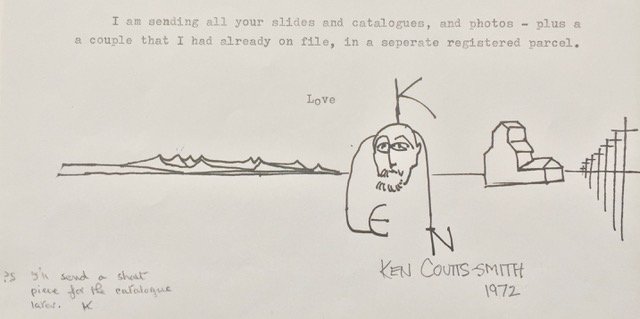
Ken Coutts-Smith had worked with artist and art dealer Dennis Bowen at the New Vision Gallery (1956-65 ), one of the first London venues (along with Grabowski) to show innovative work by young artists, especially those from the Royal College. Inspired by Benjamin’s move to Calgary, Ken also went to Canada to work as an art history professor and a critic. His signature KEN Prairie Portrait image (above), contains the Rocky Mountains, a Grain Elevator and Telegraph Poles disappearing in sharp perspective beside rail tracks. He had known Benjamin in London, and wrote with considered insight about his work.
Pete Townsend, who was a student of Benjamin’s on the Groundcourse, and also present at Metzger’s Ealing Art College lecture, did take on the creative destruction concept at the Soho, Marquee Club’s basement venue, when he swung his guitar up to the low ceiling … and smashed it to the floor, then repeatedly rammed it into the shrieking amp. Anthony and Nancy were there in the crowd, watching on freebies Townsend had given them. However, it is doubtful that Pete’s guitar smashing was the kind of Destruction that Gustav had in mind, as it soon became a regular feature of The Who performances.
But, something of what Benjamin heard from Metzger stayed with him, and he spoke enthusiastically about conceptual ideas, regarding environmental issues that popped into his head in a playful way, involving the sky, sun, moon, clouds, smoke plumes, prisms, neon, light projection and refraction …
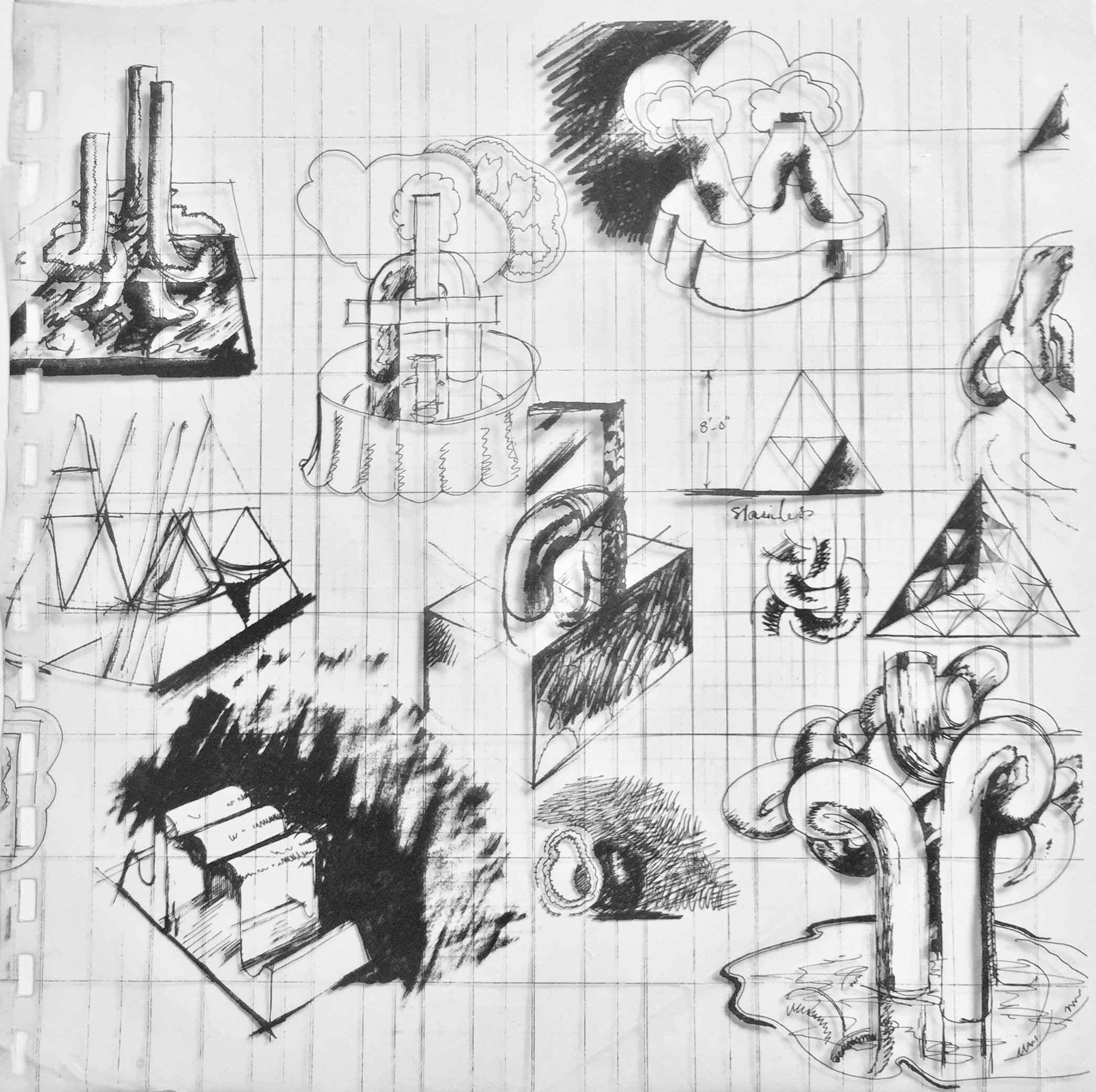
Drawings for conceptual projects, Prairies and Rocky Mountains,1968-70
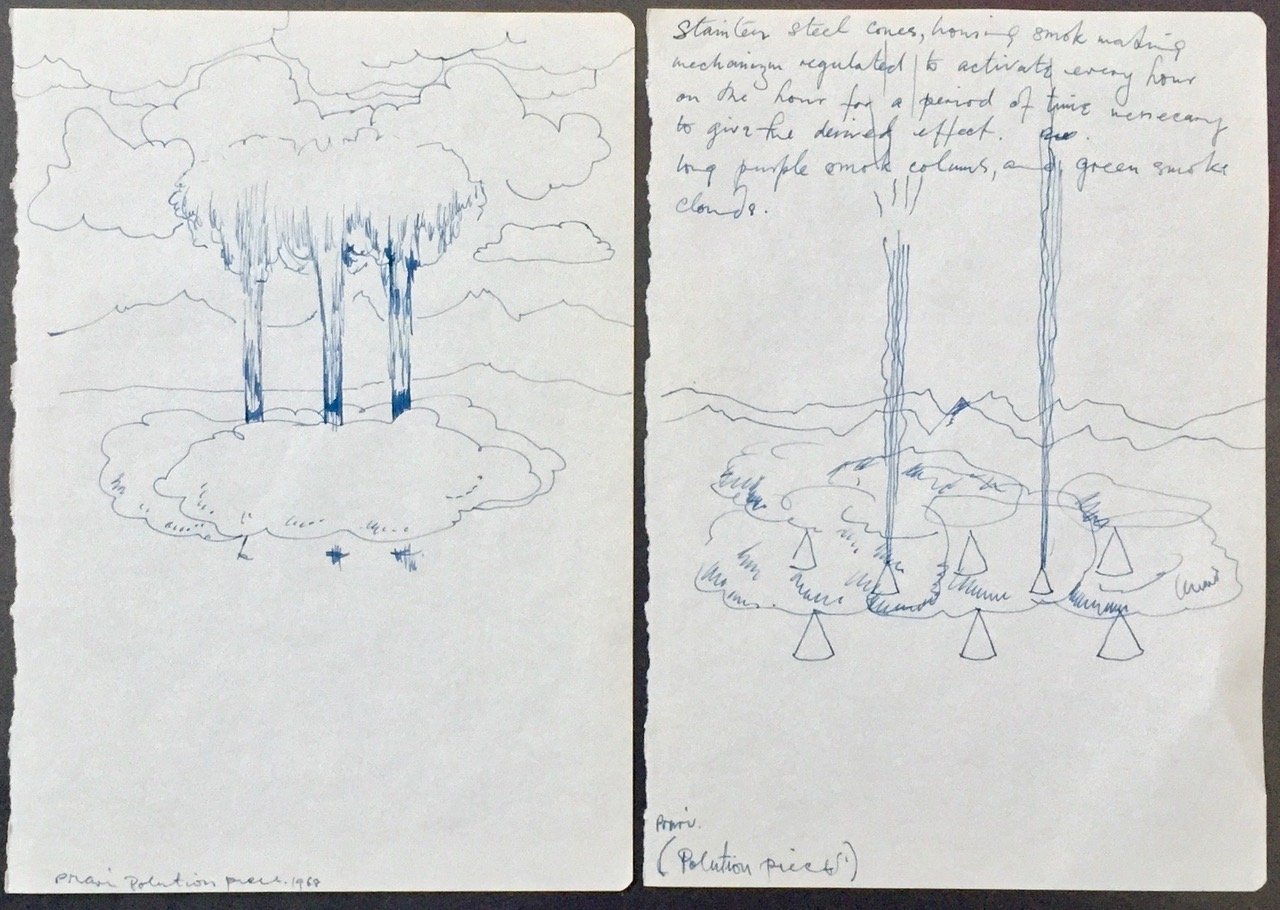
Stainless steel cones, ‘smoke mashing mechanizm’ regulated to activate every hour on the hour for a period of time necessary to give the desired effect … Long purple smoke columns and green clouds.
Handwritten by Benjamin on the drawing, Prairie Pollution Piece, 1968.
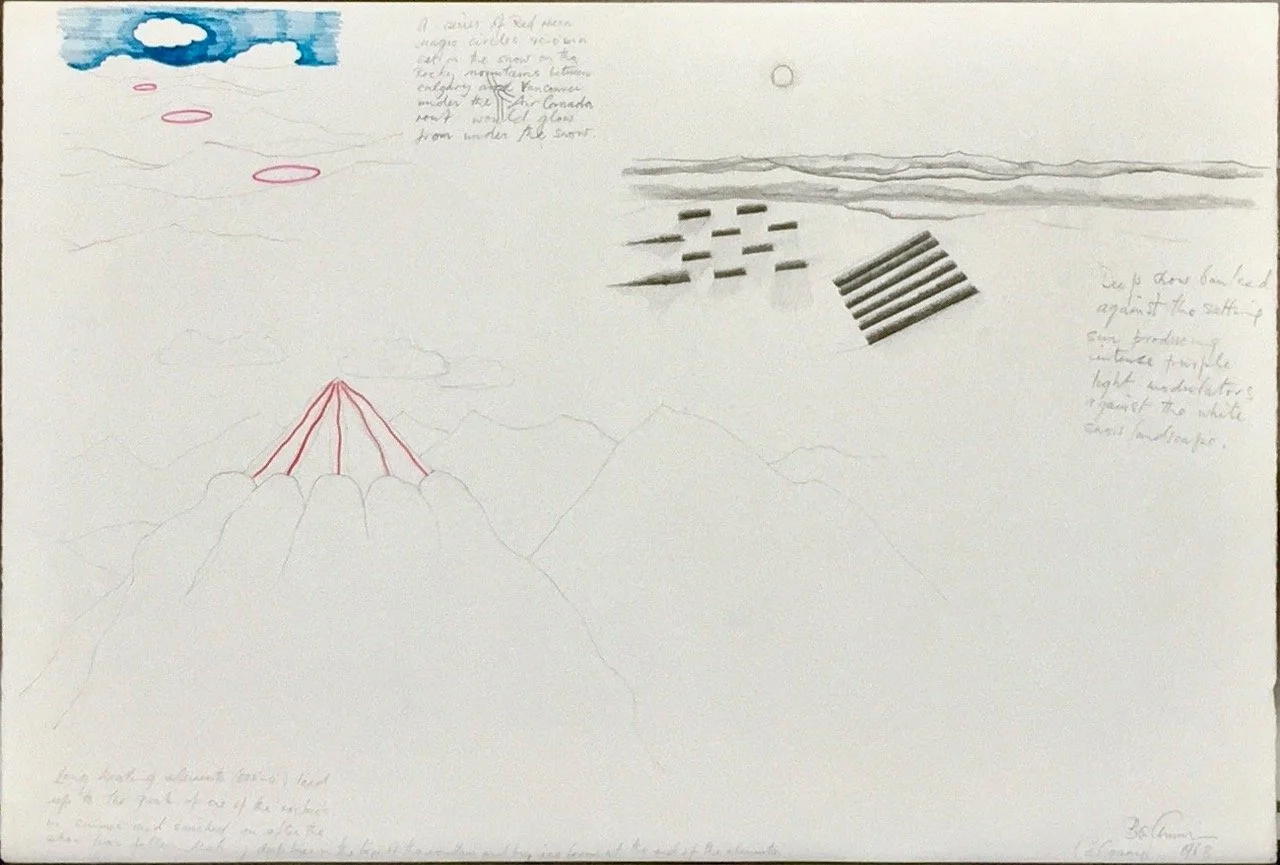
Drive in Prism, Prairie piece, 1968, pencil and watercolour (described below)
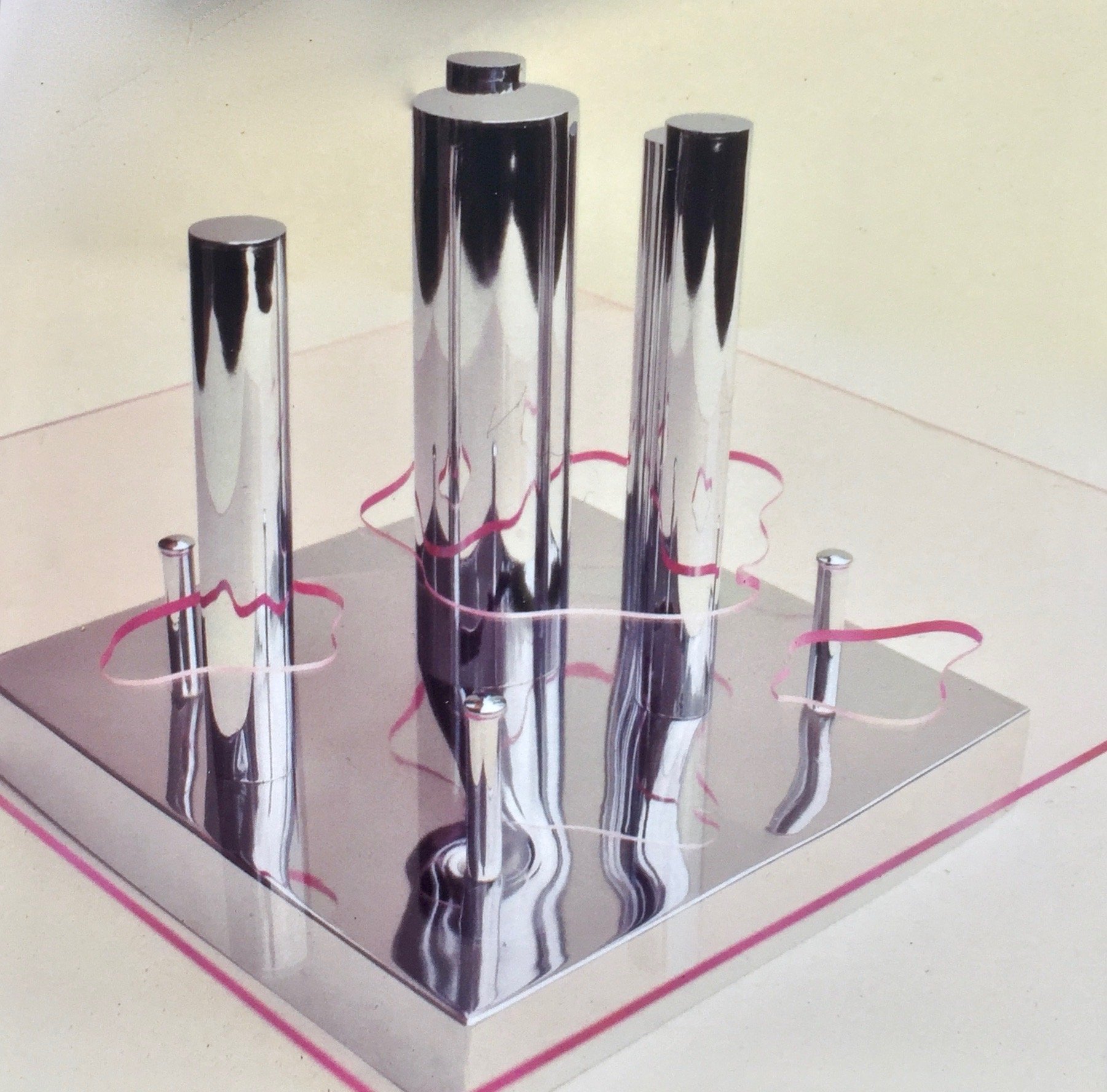
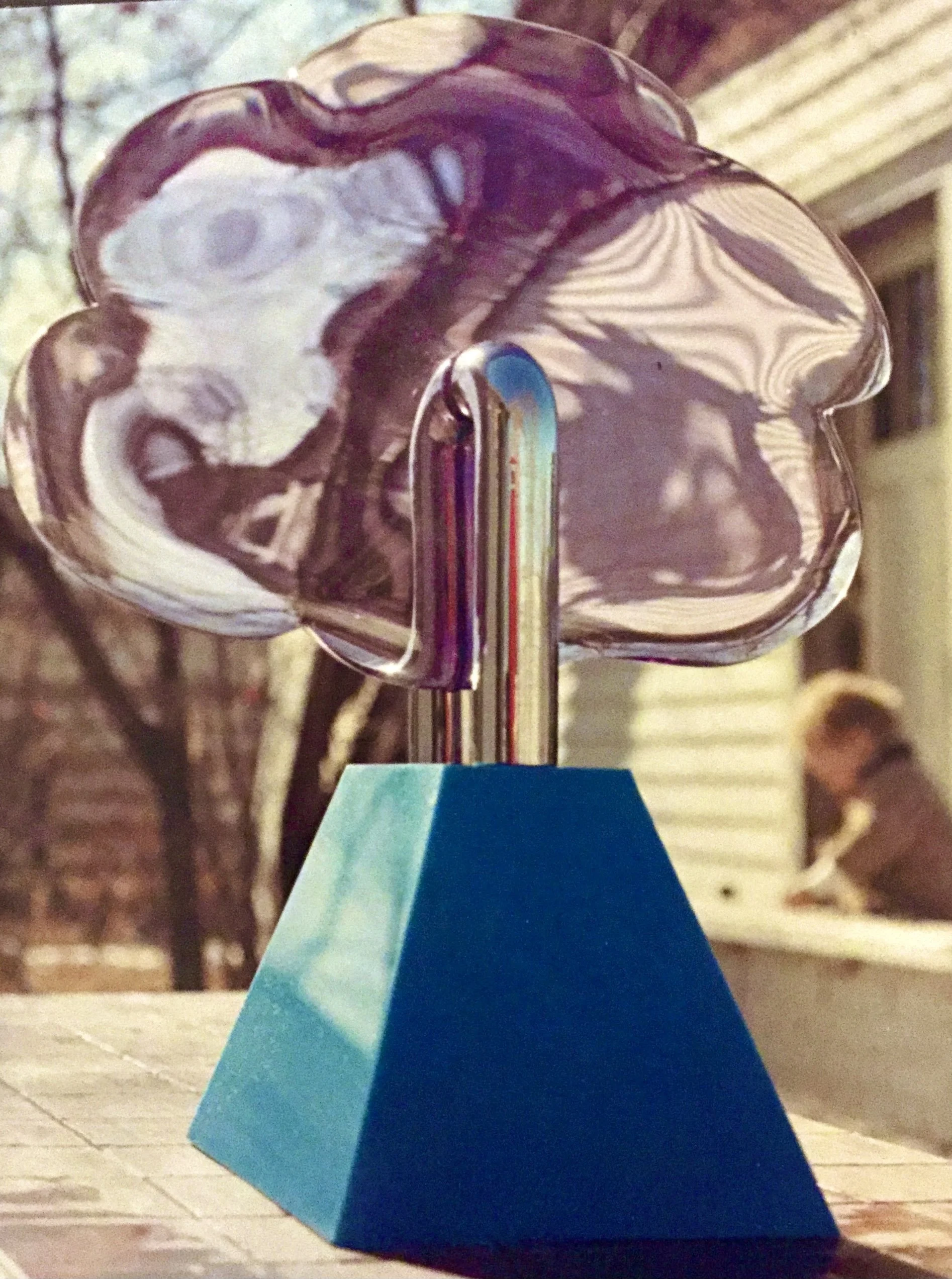
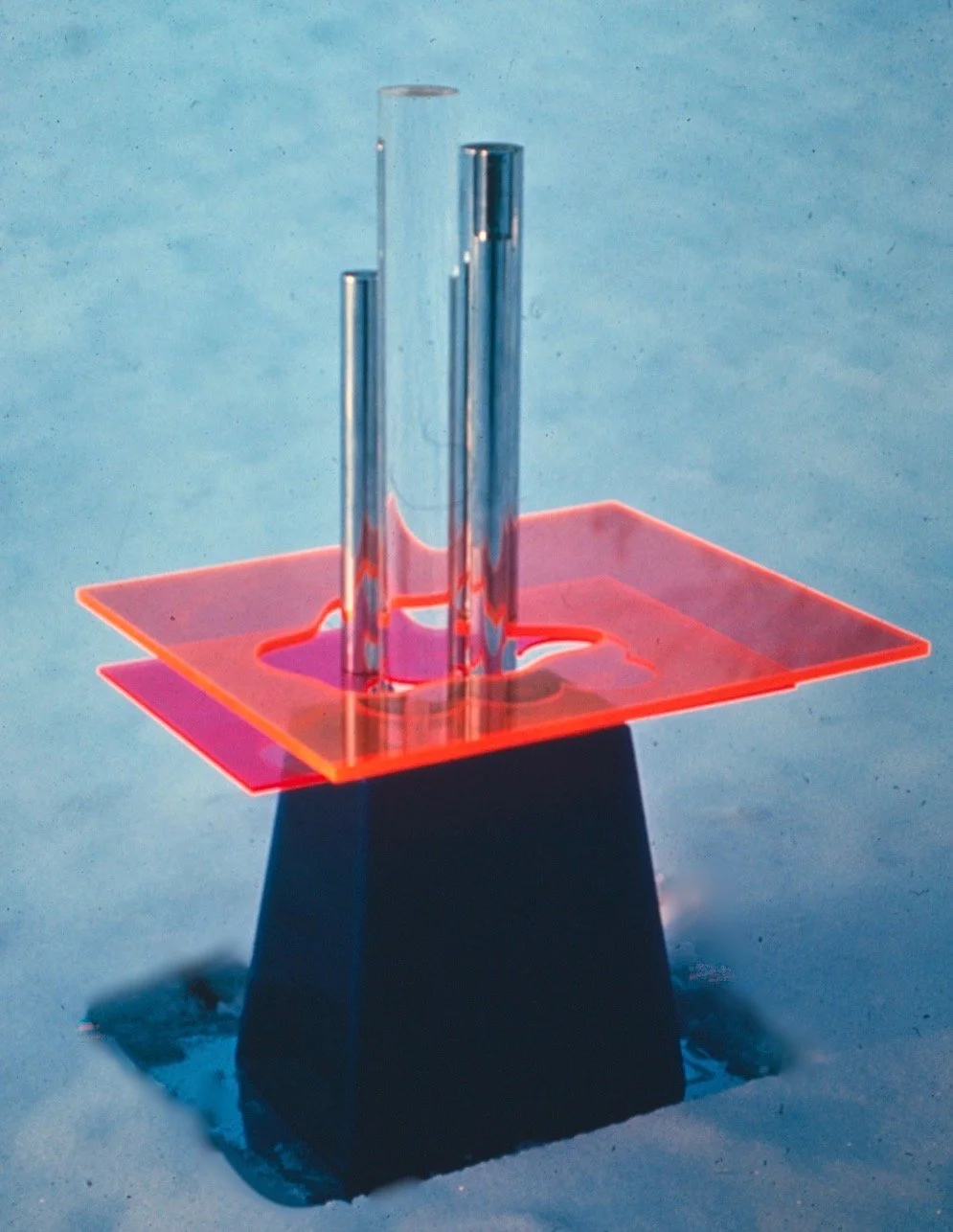
Nimbus V, 1970, Perspex and stainless steel (Hirshhorn Museum Collection, Washington, DC)
In Canada Benjamin encountered the extraordinary landscape of the Prairies and witnessed the intrusions of man-made structures and the damage caused to the environment. ‘I was aware’, he recalled, ‘of the impermanence of man and the ultimate permanence of earth’.
From the book Anthony Benjamin 1931-2002 by Chris Stephens
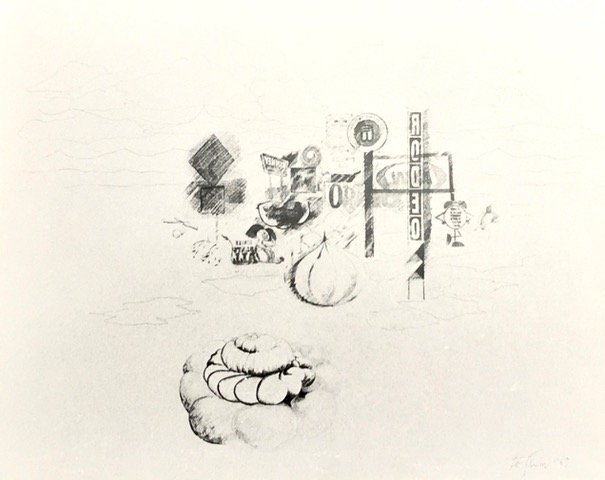
Pencil drawing, 1969
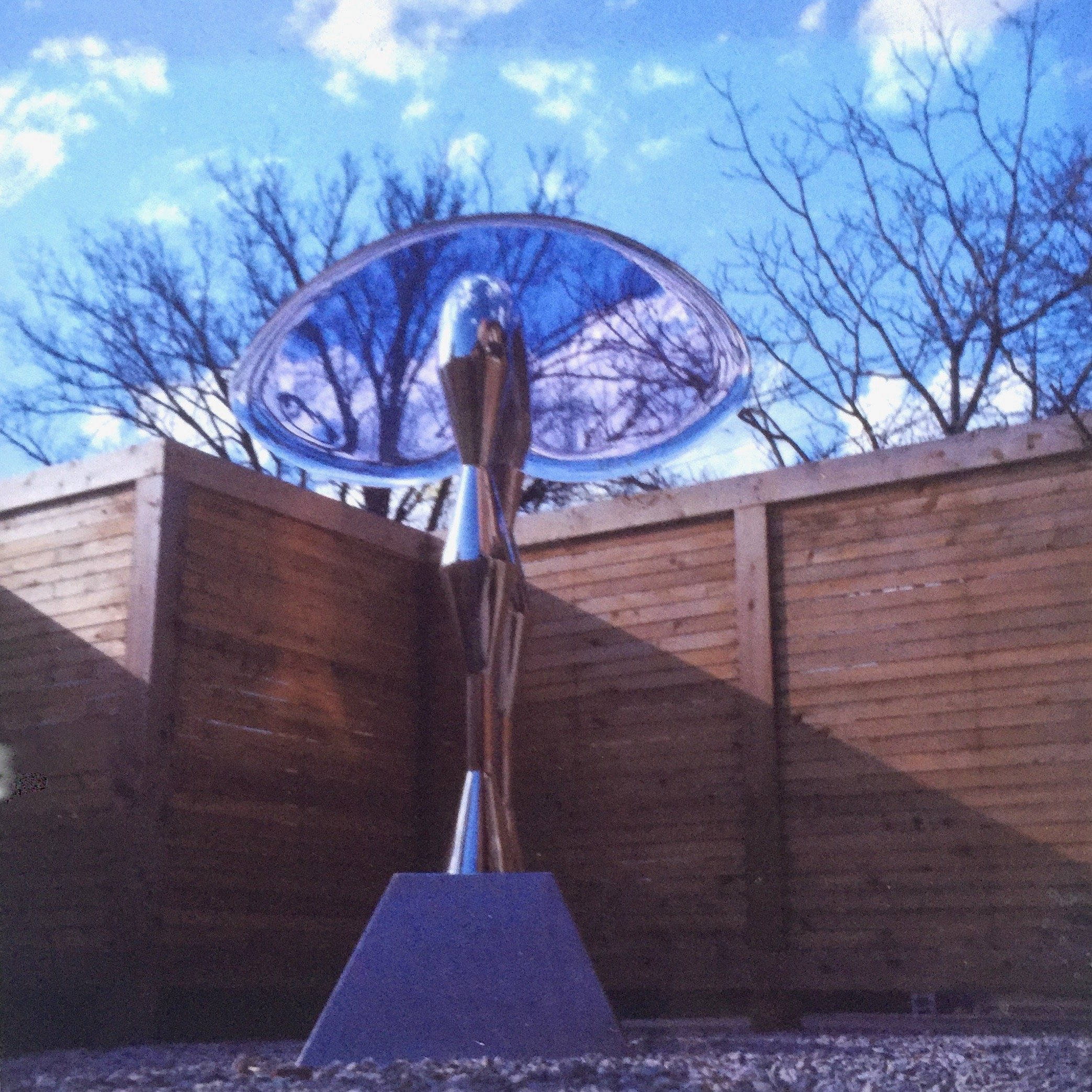
District Series, 1969
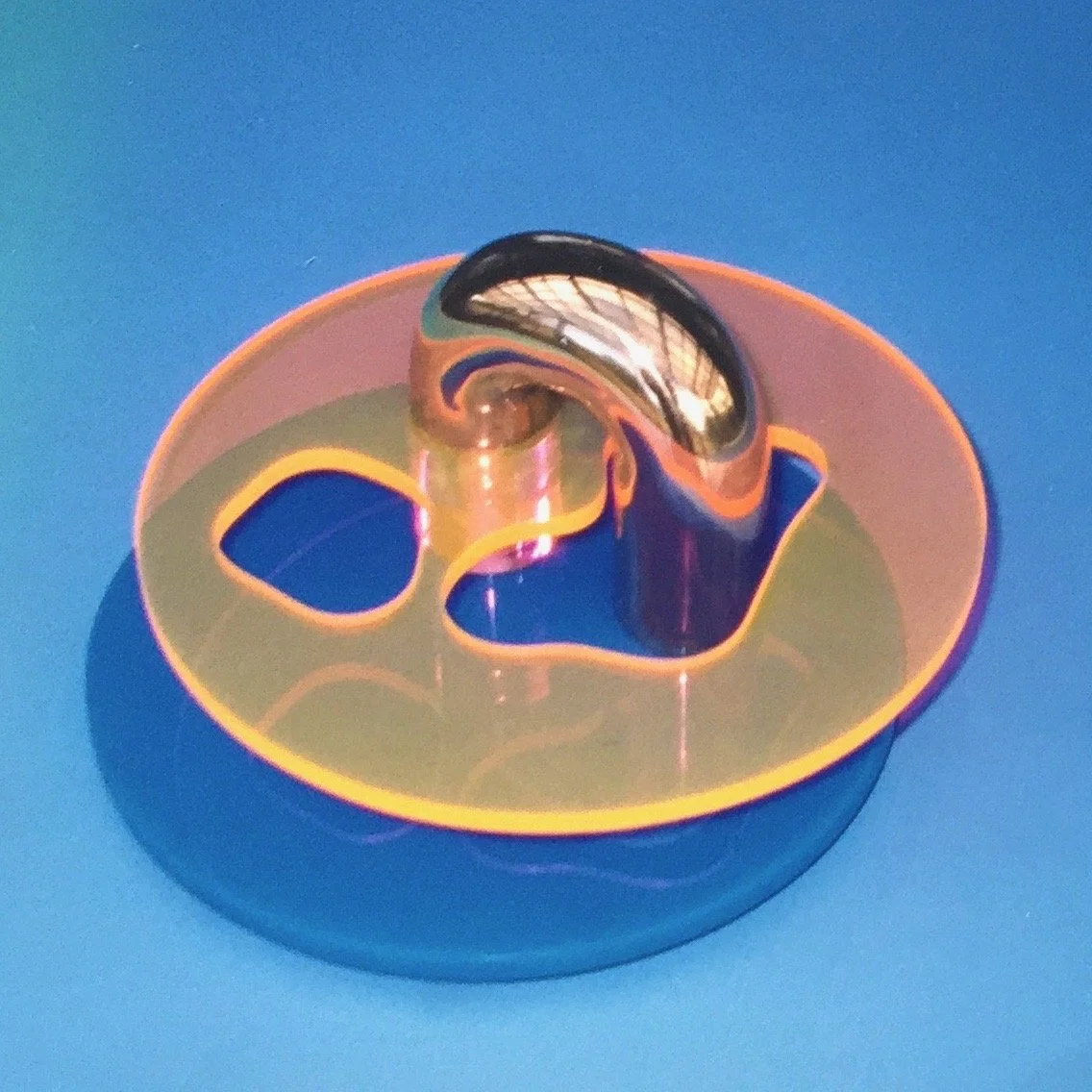
Arch Series, 1969
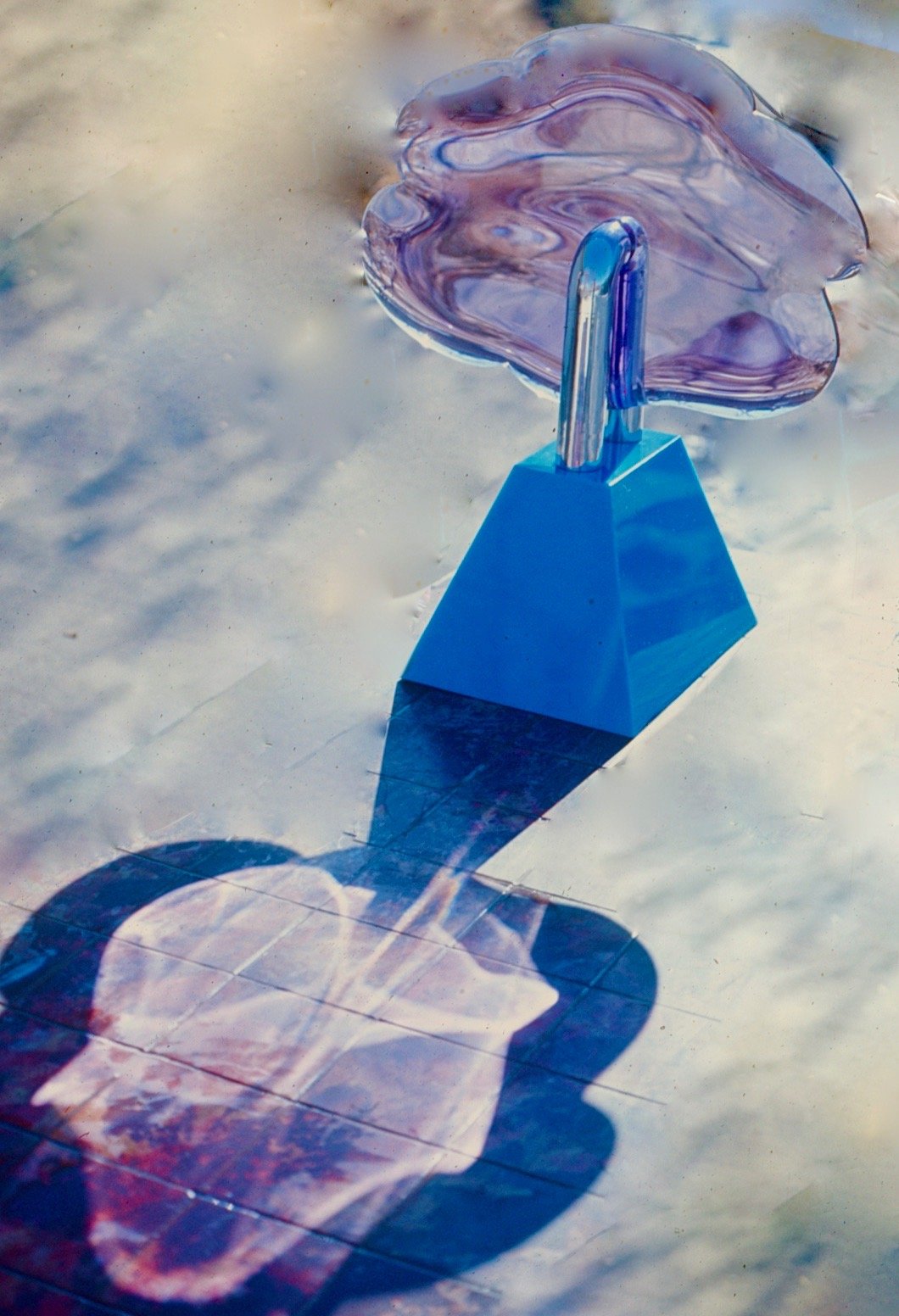
Nimbus Arch, 1969
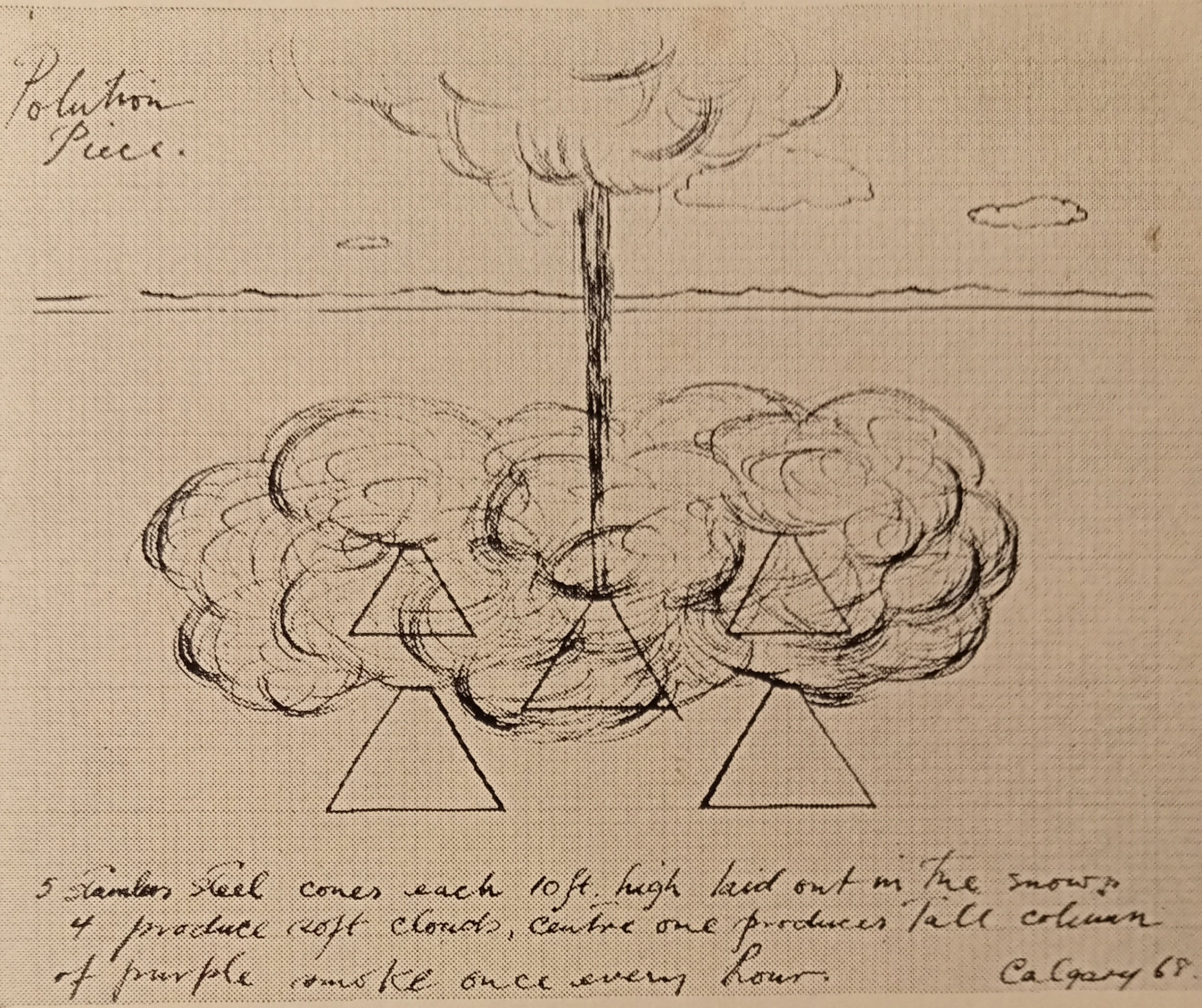
Pollution piece, 1968, pencil
When Benjamin arrived in Calgary to take up his teaching position in the art department at the university in the autumn of 1968, he was struck by the natural beauty of the majestic Rocky Mountains that stood in dramatic contrast to the man-made banality of the Oil, Wheat and Cowboy Town, he was stuck in until the end of the term. It was not what he had been expecting, but he started thinking of how to make visual statements that expressed what he felt.
Benjamin’s fascination with the beauty of the spectacular landscape on the Canadian western horizon did not just manifest in his etchings and drawings, he had ideas for architectural size installations that would take the principals of reflection and refraction; he was exploring in Perspex and polished metal sculptural pieces he was making at the time.
Ken Coutts-Smith, artscanada, Spring 1972, p. 58.
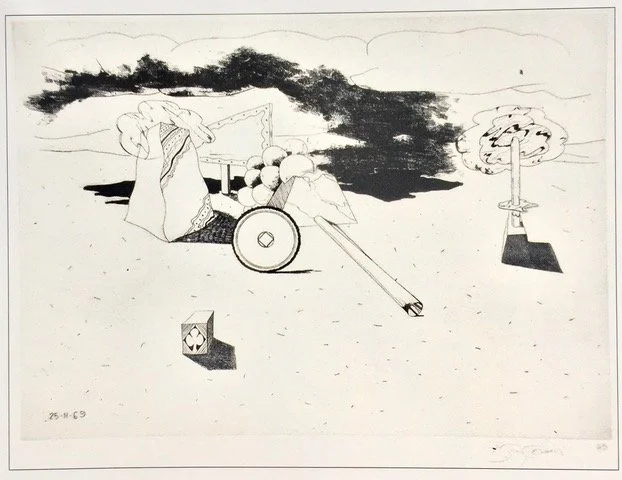
Etching, 1969
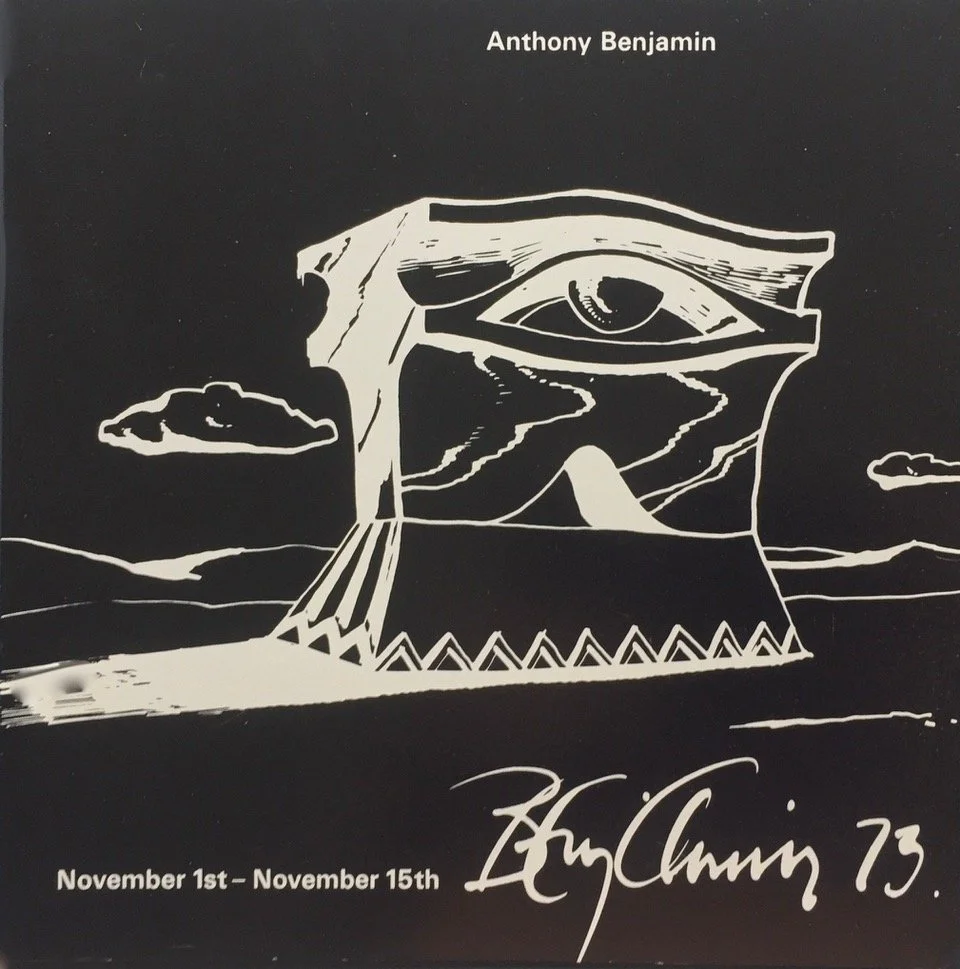
Catalogue, Gorner and Millard, London Exhibition of Art done in Canada
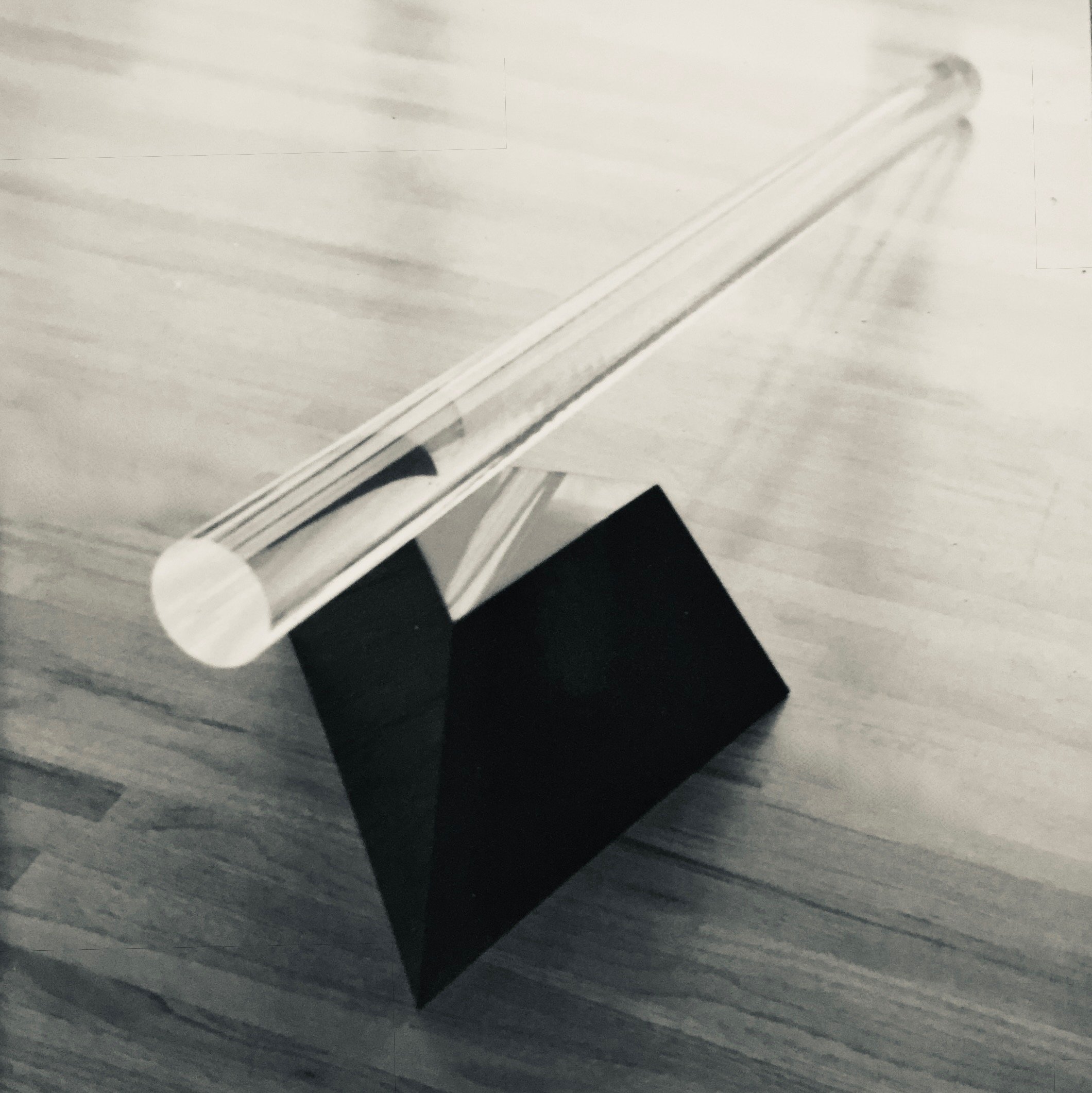
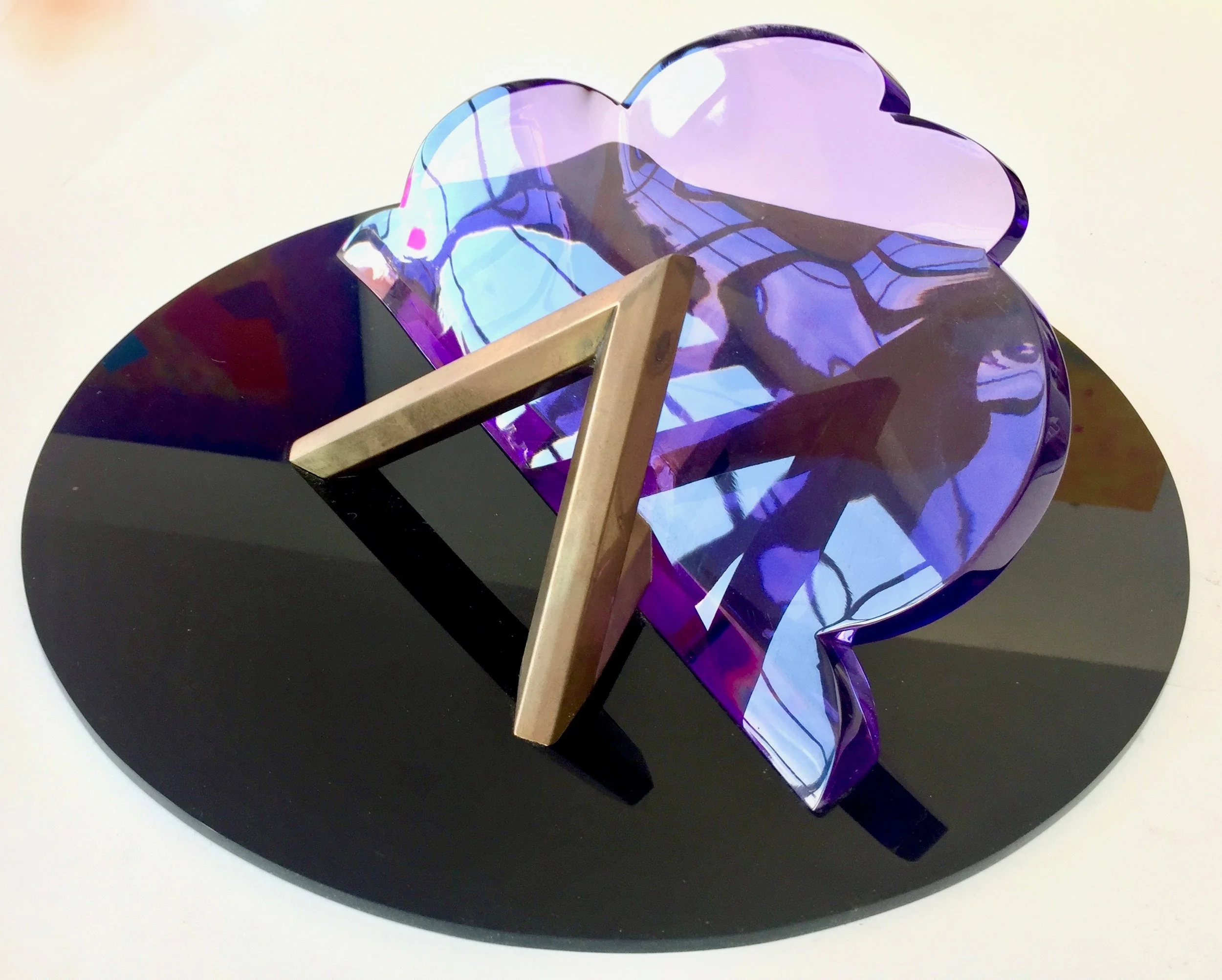
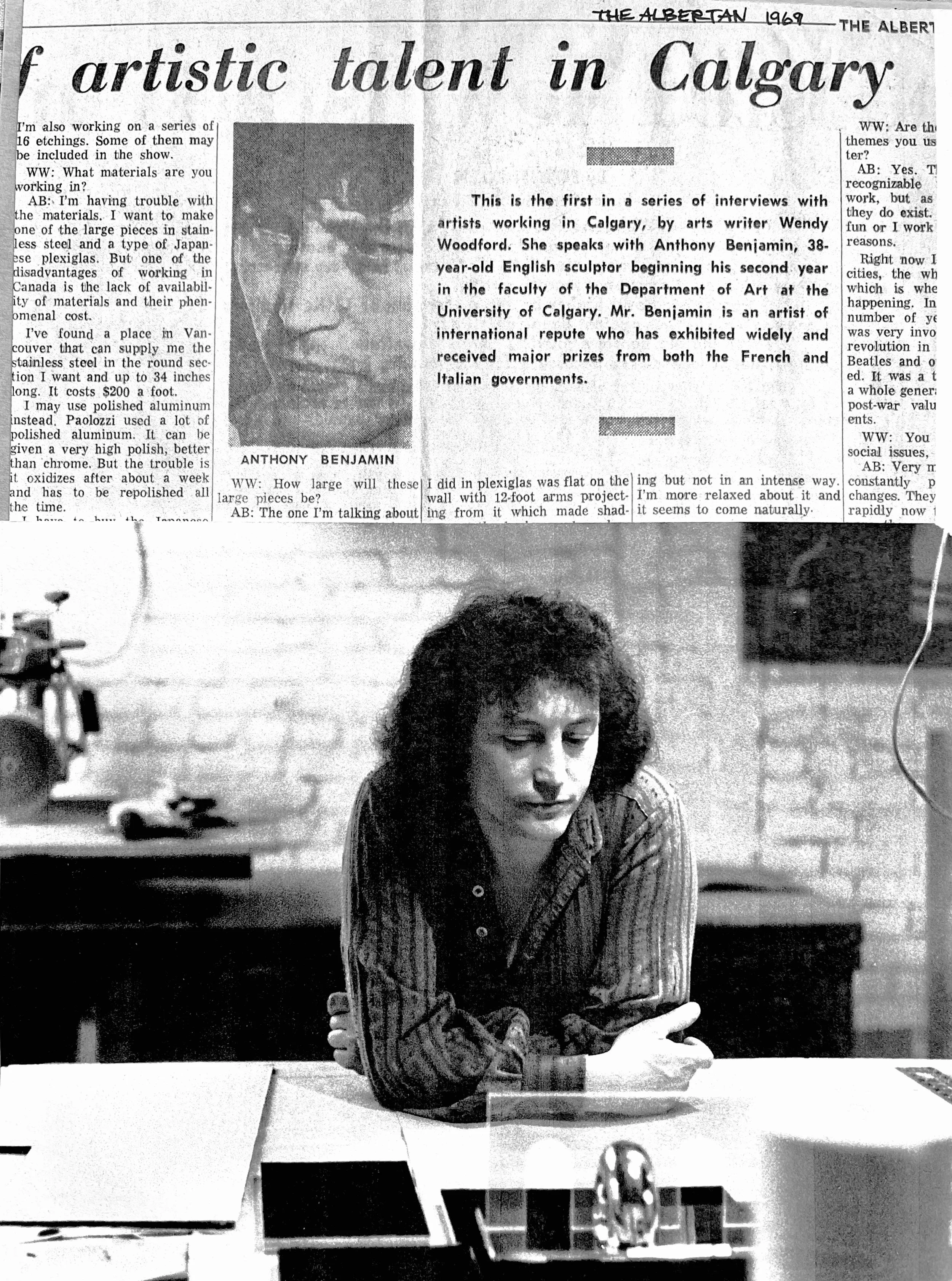
1968-70: Calgary, Conceptual Art for the Prairies
When Benjamin was involved in Roy Ascott’s ground-breaking Groundcourse at Ealing Art College in the early1960s, a series of special guest lecturers were invited to speak to the students; one of these was Gustav Metzger, a dedicated activist who was closely associated with Fluxus, an international movement that carried an anti-materialist political message. He painted on plate glass that was pushed over to shatter when it was ‘finished’… and with acid on fabric that disintegrated as he worked. He maintained that the role of the artist in society should not be restricted to just creating things to hang on walls, stand on plinths, and increase in value. He was acutely aware of the dangers of capitalistically controlled media, and believed that artists should create ideas and concepts for the improvement of all life on earth, as well as destroy useless material commodities, and accept destruction as a valid part of creation.
Small Arch, 1969
1. A series of Red Neon magic circles 40’-0” dia set in the snow on the Rocky Mountains between Calgary and Vancouver under the Air Canada route would glow from under the snow
2. Deep snow banked against the setting sun producing purple light modulators against the white snow landscape
3. Long heating elements (500’-0”) laid up to the peak of one of the Rockies in summer and switched on after the snow has fallen, shaking deep lines in the top of the mountain and big ice forms at the ends of red elements. Handwritten on the drawing.
Unfortunately, Benjamin was too involved in the chaotic turmoil regarding the curriculum at the university and the serious problems he was having getting the Perspex and chrome sculpture made in time for the March 1970, New York, Gimpel & Weitzenhoffer Exhibition to take his conceptual ideas any further.
Nimbus and District Series Perspex and Polished Metal, 1969
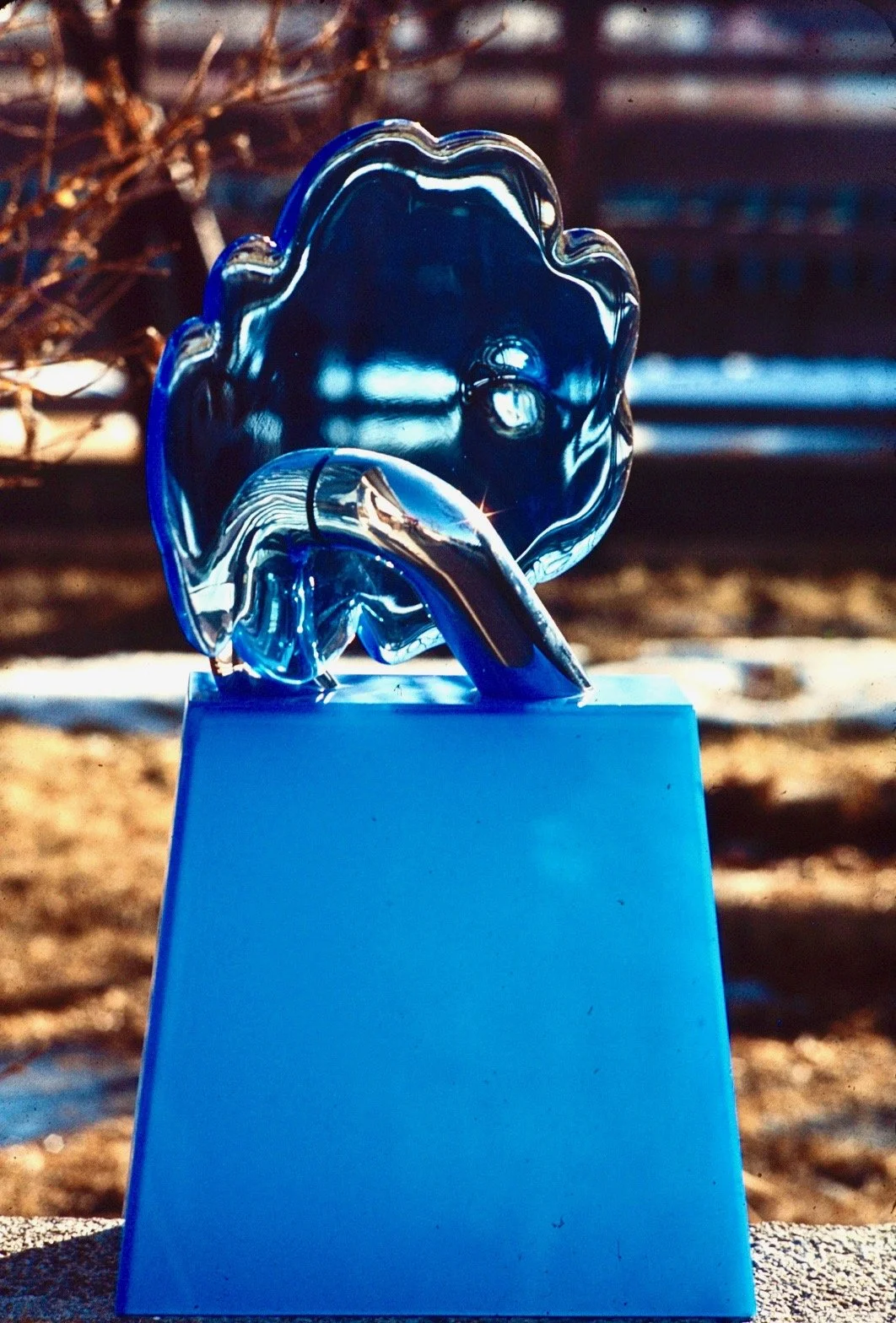
Nimbus Series, 1969
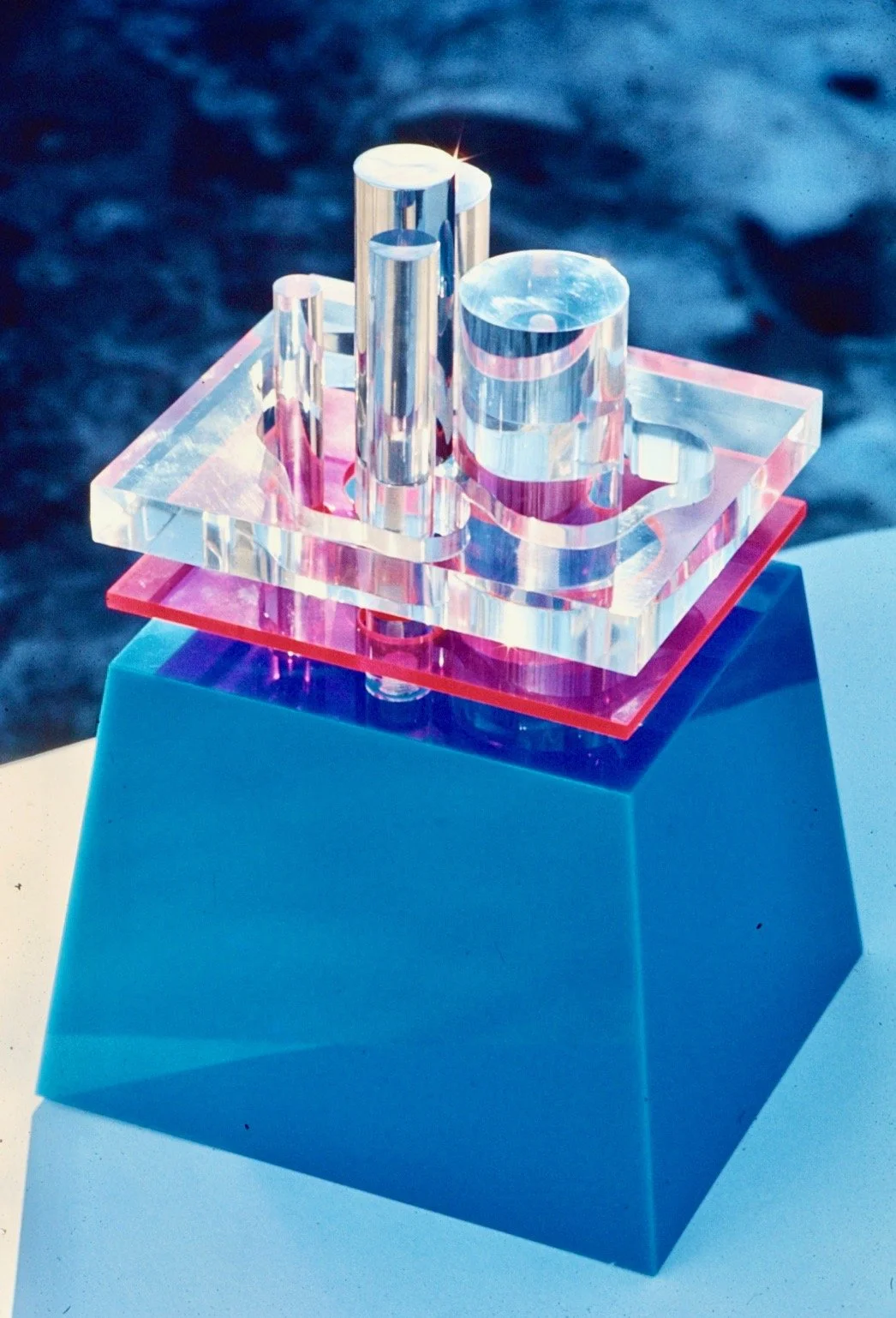
District Series, 1969
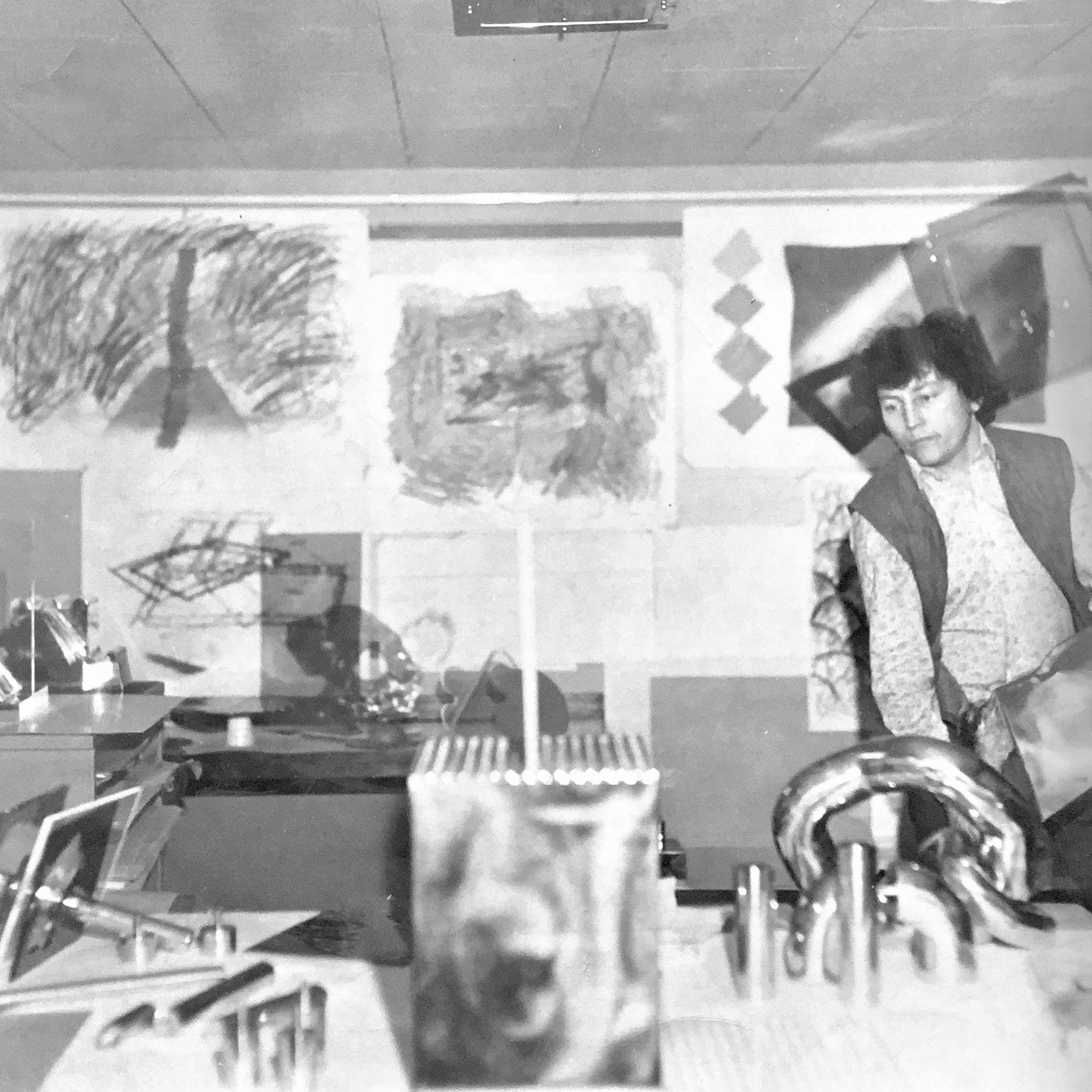
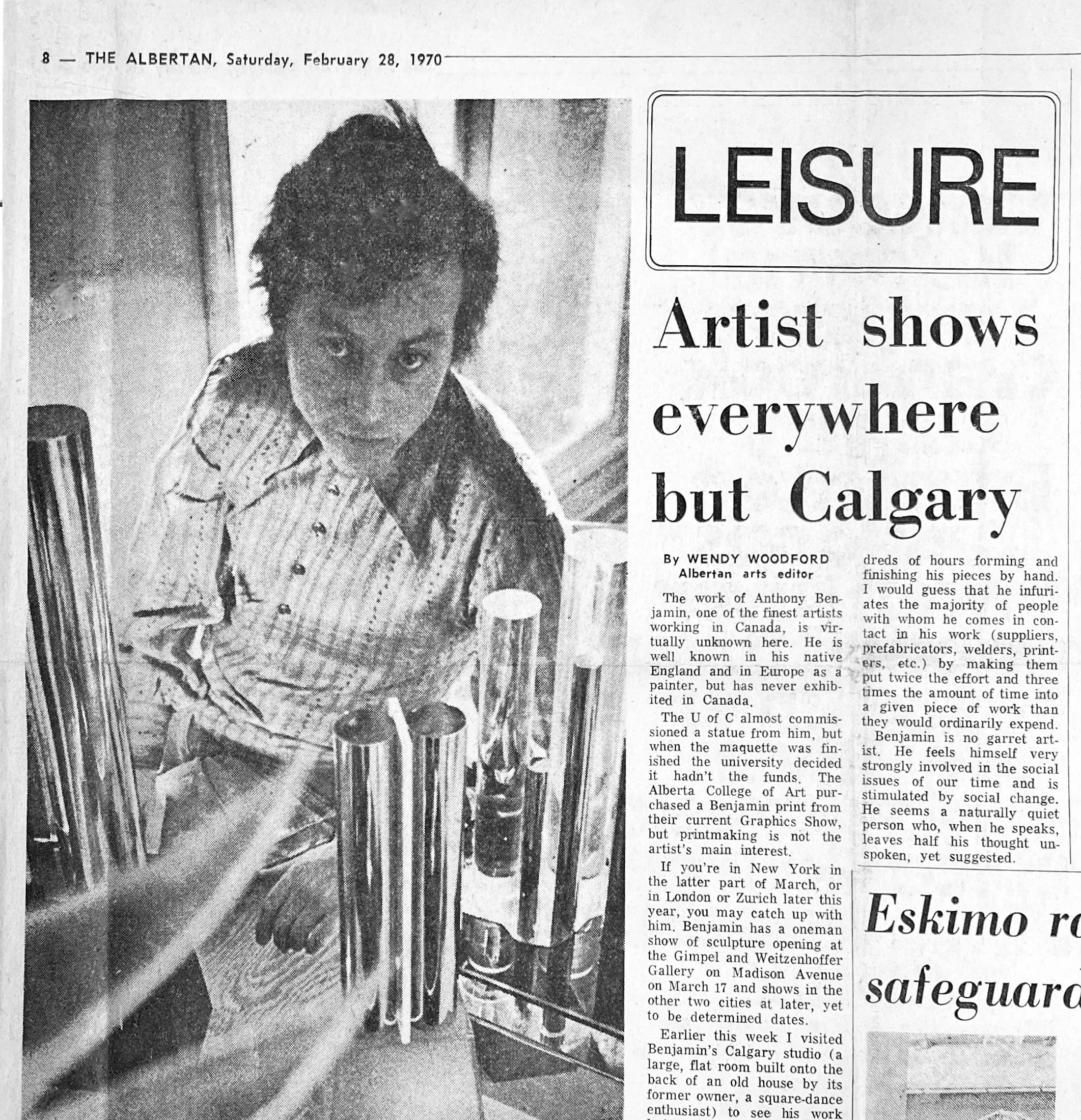
Benjamin working in his Calgary studio, 1969
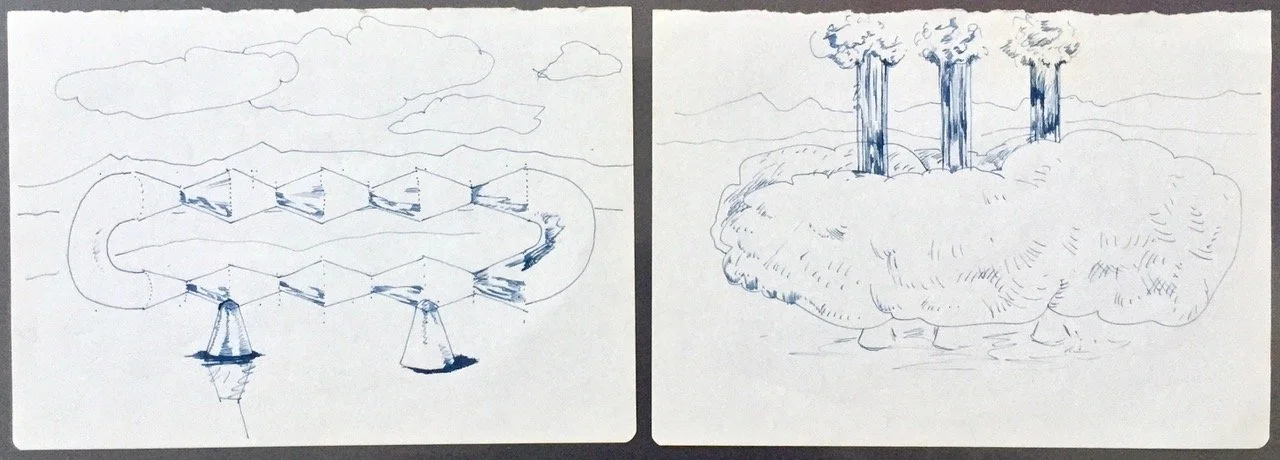
Benjamin discussed his ideas, made notes and detailed drawings: a Drive in Prism, Red Neon Magic Circles, Snow banked light modulators, Long heating elements laid up to the peak of one of the rockies, a Snow Piece—Giant Neon Cube, a Pollution Piece, 12 ,1 mile diameter, stainless steel convex and concave disks, designed to always reflect the sun at maximum intensity; and in a different direction.