1931-1955 Social Realism
When Anthony Benjamin lived in London during the 1950s, he was concerned with the human condition, which he expressed through ‘Social Realist’ drawings and paintings focusing on subjects that came under the term ‘Kitchen Sink School’. He was always exploring beyond known boundaries, and in the late 1950s moved into ‘Abstract Expressionism’.
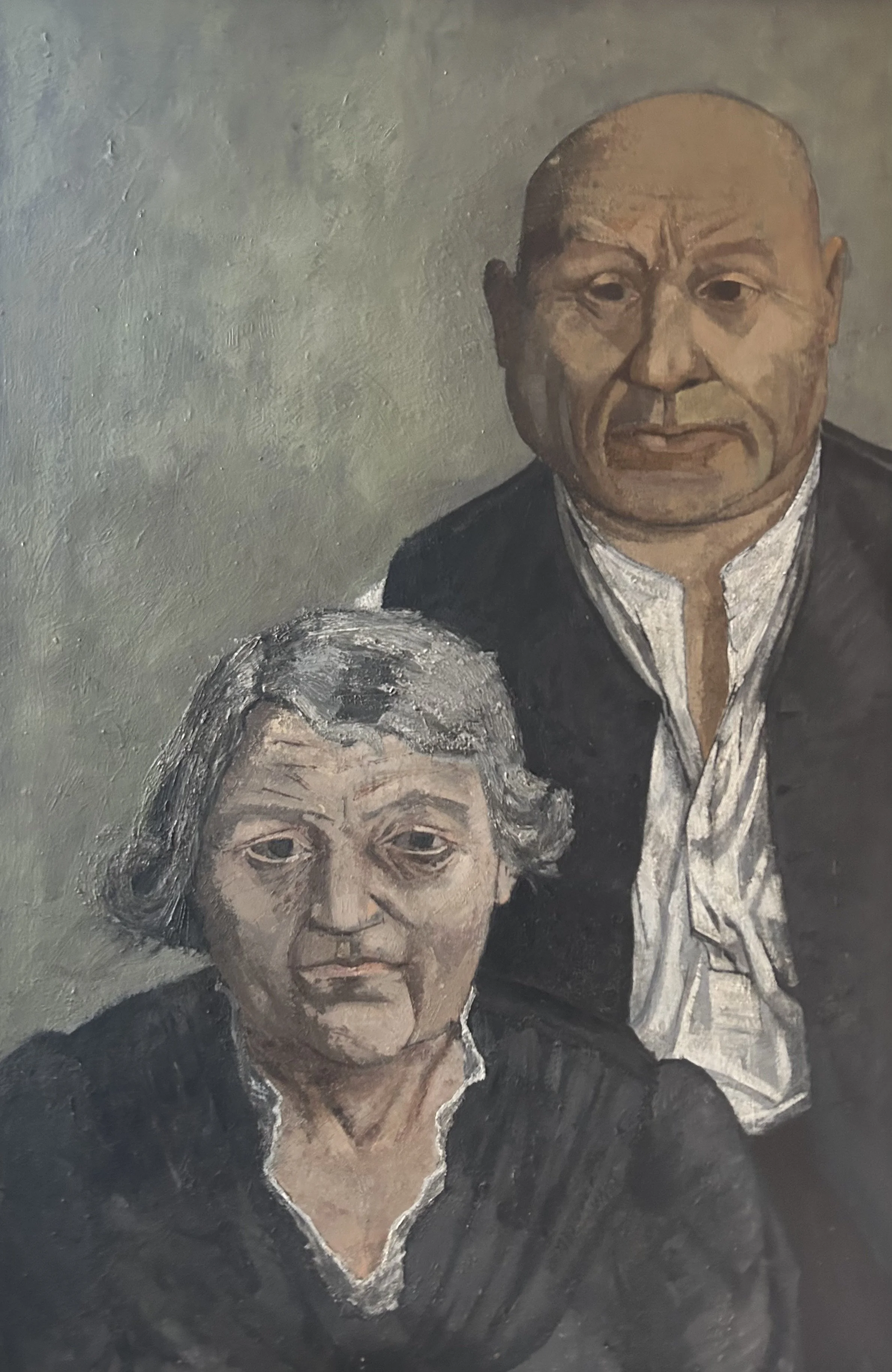
Bill and Nellie, 1955, oil on board
Born in Boarhunt, Hampshire in 1931, Benjamin’s early work was dark, reflecting the difficult post-war times and his unsettled working-class upbringing, but it was also brilliantly visual and technically powerful. He had an unsettled early life as a wartime evacuee, claiming to have attended at least fifteen schools where he had to fight the playground bullies on each first day. History might have led to a different outcome when he almost became a professional boxer while studying engineering drawing at technical college.
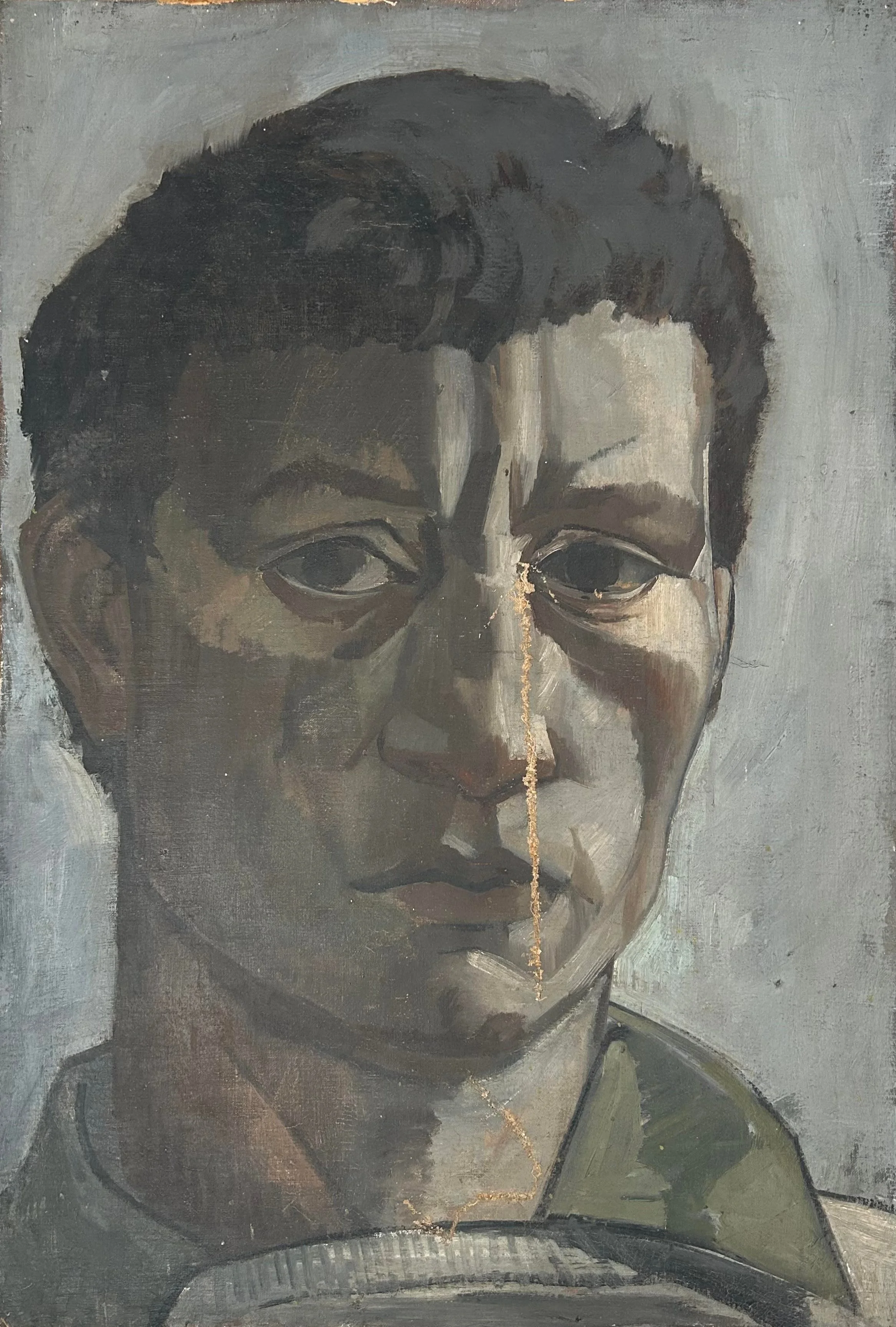
Self Portrait, 1955, oil on canvas
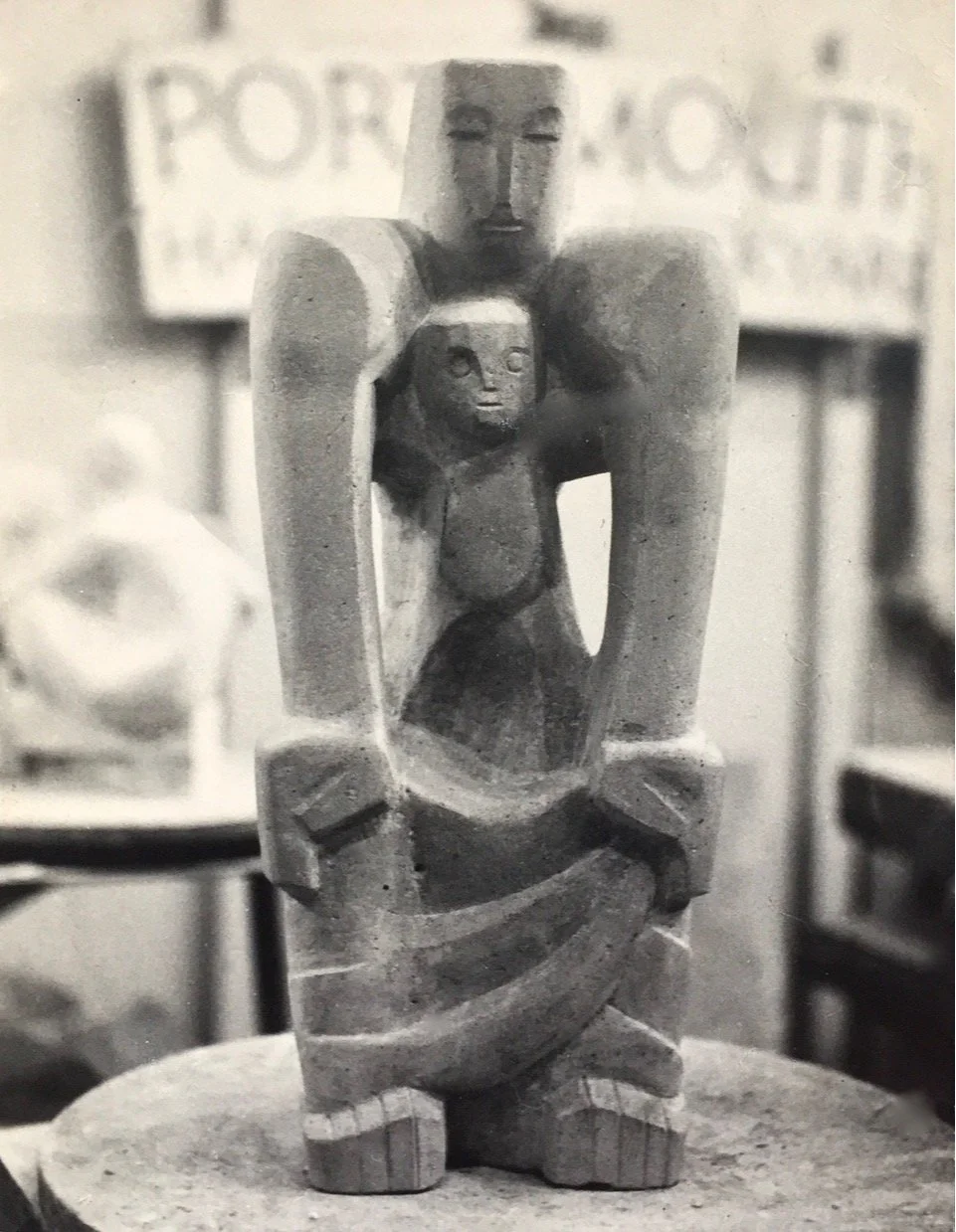
However, he followed his instincts to pursue art, and enrolled as an art student at the Regent Street Polytechnic in 1953 in London. Benjamin’s original artistic intention was to learn how to carve and be a sculptor; possibly this was due to his early training in engineering and because he enjoyed making things. When studying art in the early ‘50s at the Regent Street Polytechnic, he was accepted into the sculpture department where he carved a Mother and Child (below), with a nod in the direction of the Jacob Epstein style. The piece was ‘Highly Commended’ by Henry Moore and then purchased by the Anglo Iranian Oil Company. However, when he used some paint on his next stone carving, the instructor told him to destroy the piece, and when Benjamin adamantly refused, he was told to leave the sculpture department immediately. Fortunately, Norman Blamey, a skilful traditional artist who taught painting and drawing at the Poly, recognized his talent and admired his tenacity; he offered a place in his class, for which the young student was forever grateful.
Benjamin’s work attracted the attention of Helen Lessore, director of the Beaux Arts Gallery. She exhibited the work of John Bratby, Jack Smith, Edward Middleditch, and Derek Greaves, labelled by David Sylvester as the Kitchen Sink School, and referred to as Socialist Art by John Berger. This suited him, but when his painting became more concerned with abstraction, Lessore gave him short shrift by cancelling his forthcoming exhibition and telling him to remove his work from her gallery.
Benjamin, answering a letter from Gary Topp, Director of Culture Central, Birmingham, 1995, asking him about his life as a young ‘Socialist’ painter in the mid 1950s:
Bill and Nellie lived on the ground floor in the house in Gower Street. They were poor in a way that made each day depend on Bill’s cunning, and the house always smelled of boiling bones for stock. I lived in a basement in a room 8’ x 12' and painted next to the window, the top of which was below street level and the pictures larger than the window. I also slept, washed, cooked and ate in there. The pictures I painted at the time, around the area, the market, Tolmer Square, etc., were intended as social statements. They were realist (as you see) and although many of my contemporaries of that time have subsequently denied that their work had social realist content, my own work was as described above.

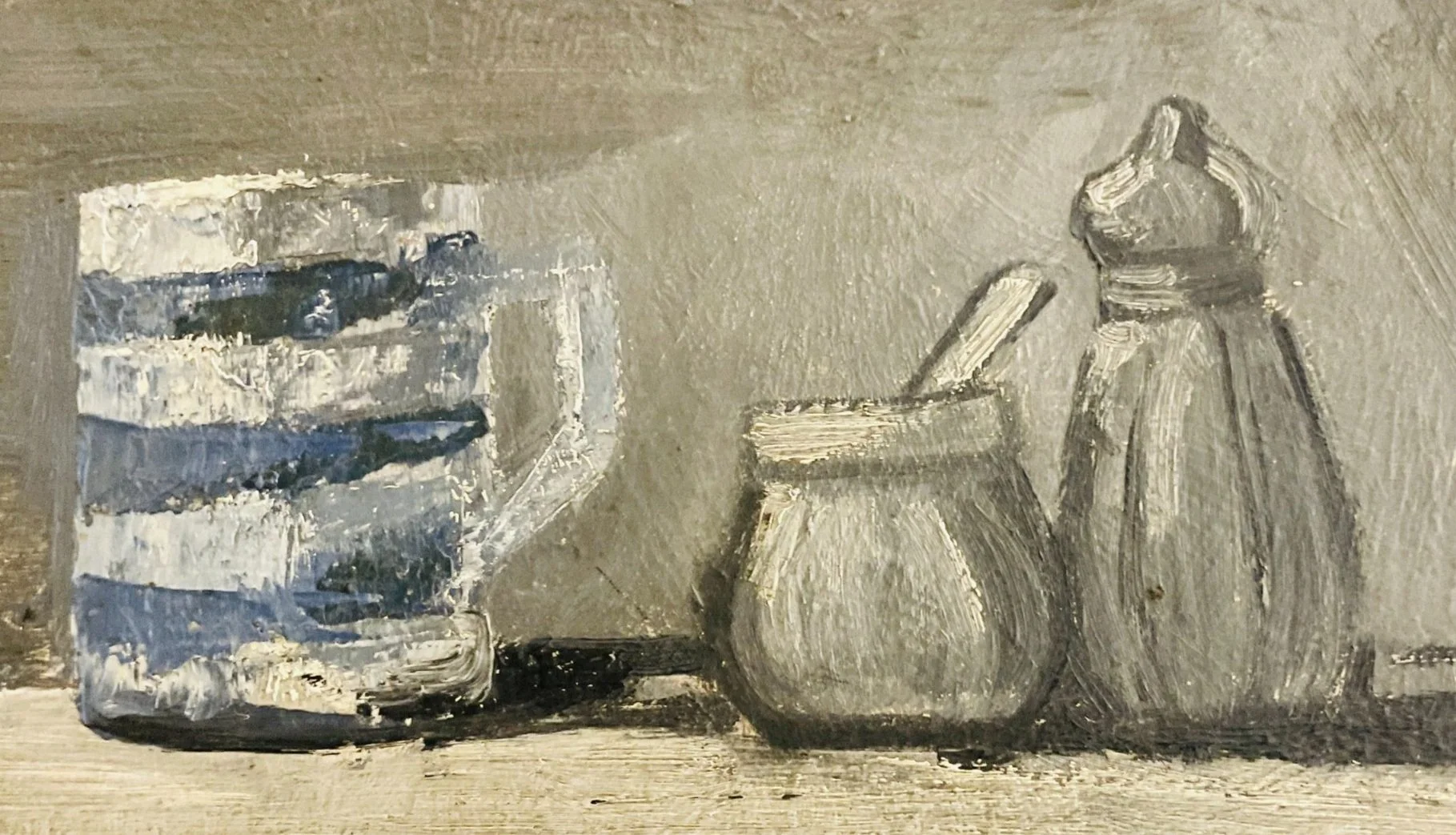
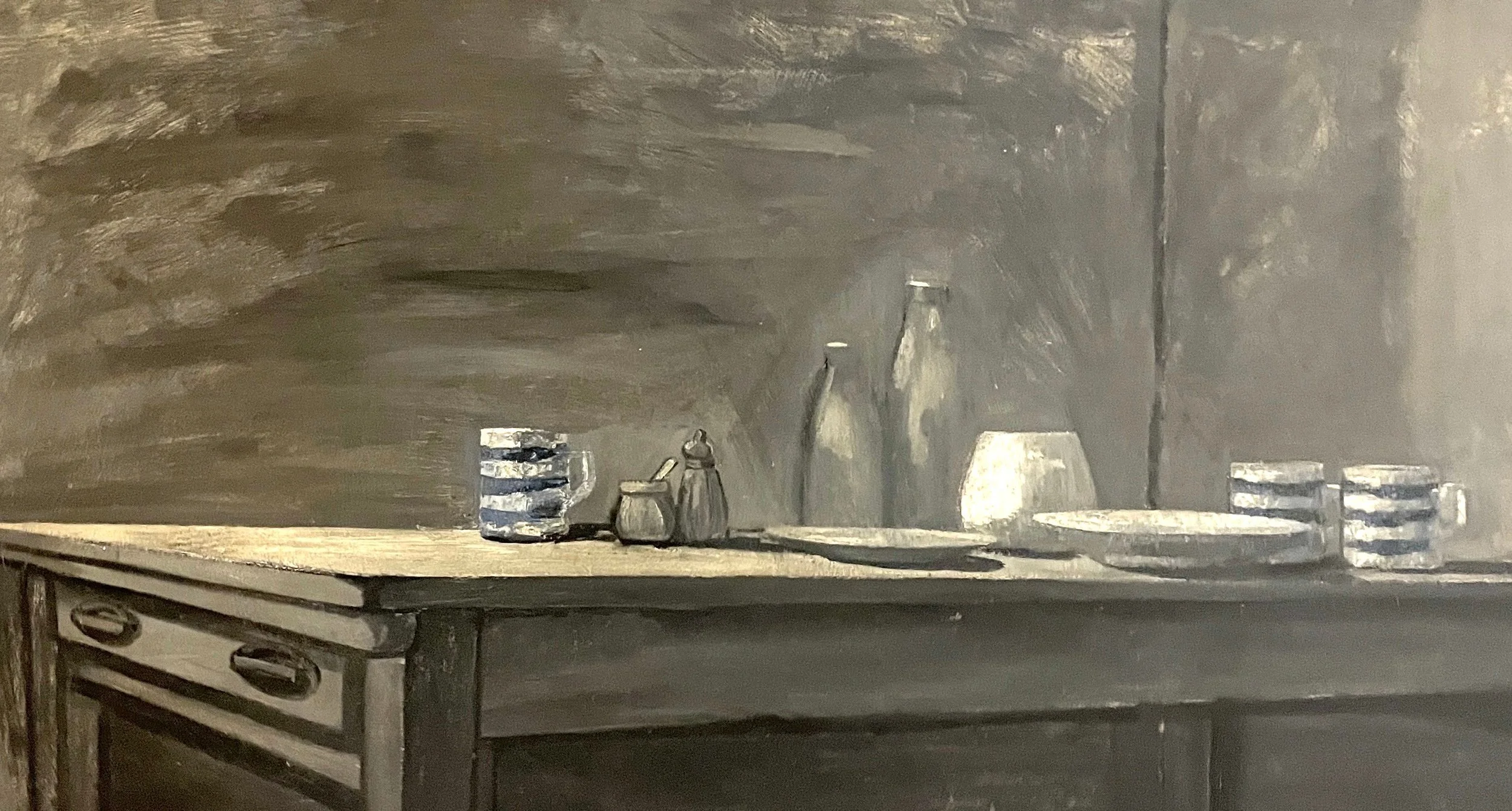
Kitchen Table, Gower Street, 1955, oil on board (detail above)
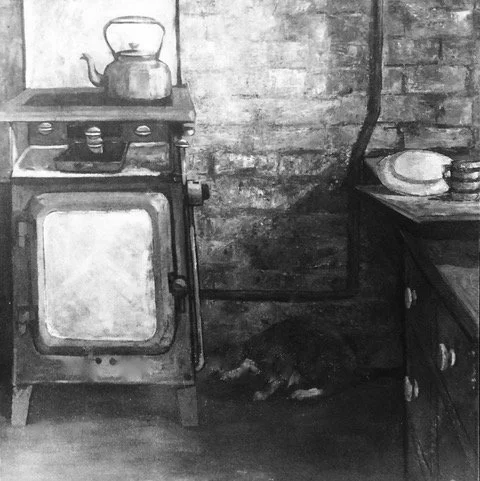
Cat and Cooker, 1955, Gower Street
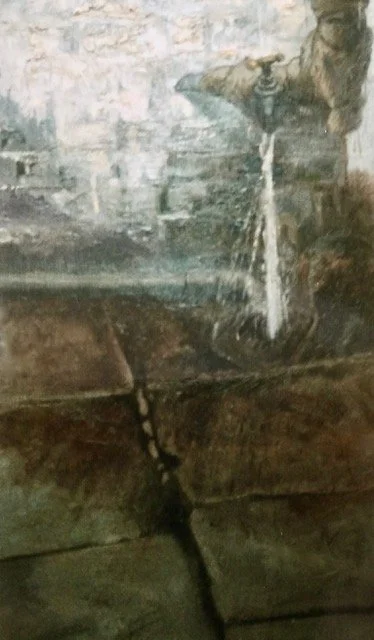
Backyard Tap, 1955, Gower Street
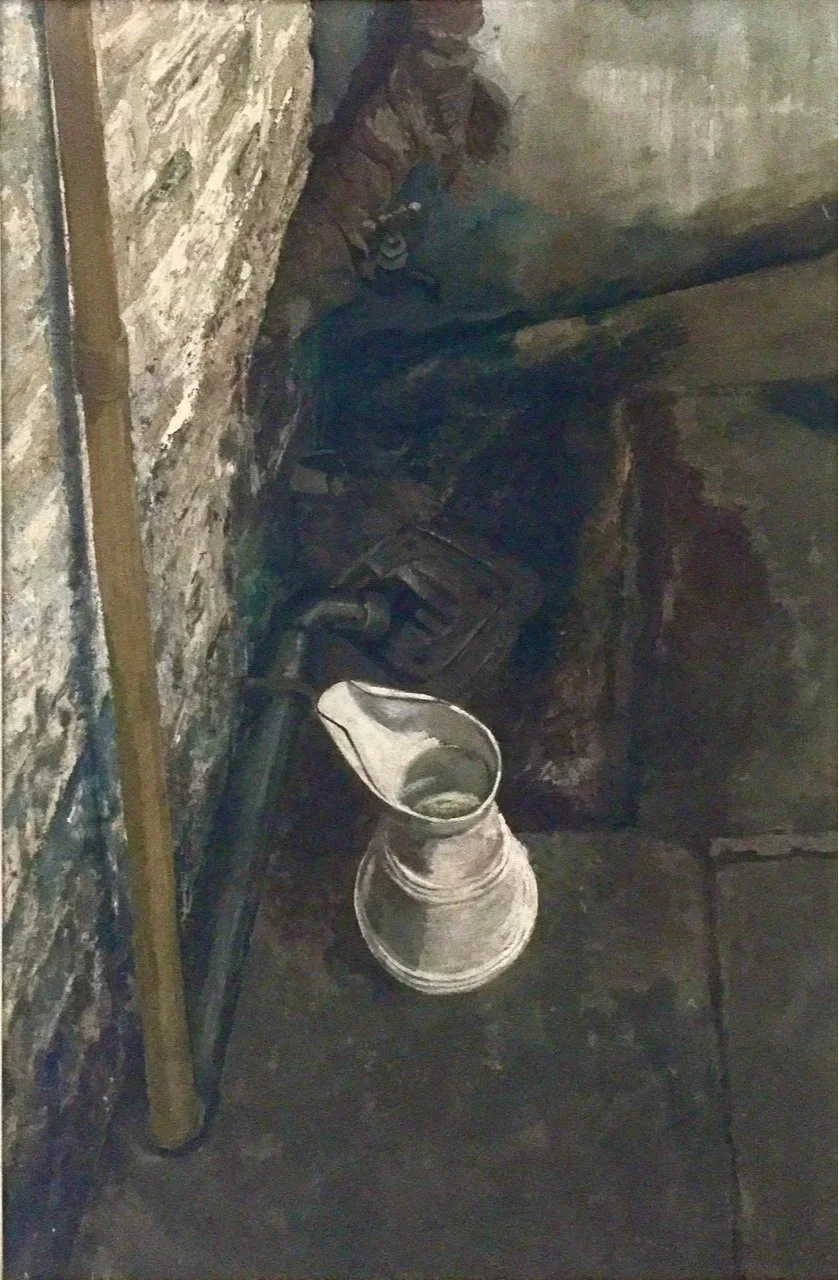
Courtyard Jug, 1955, Gower Street
As early as 1954, Benjamin exhibited paintings with a profoundly felt social-realist content. These works were the objective symbols for a young man’s rage about social injustice and his passionate rejection of militarism.
The best of these early paintings (there was one of a backyard with a running water tap, that expressed a poignancy I can still remember after all this time) were on the edge of a tragic, almost existential grandeur.
Kenneth Coutts-Smith, artscanada, Spring, 1972