
1968 Winchester: Sculpture
He got on well with Heinz Henges, Head of Fine Art at Winchester School of Art, a dedicated sculptor whose Modernist work is in a similar vein to Brancusi. Henges was a cheerful, sociable person who liked to share a bottle of wine. He had a studio in the town in an old red brick, two-story stable/barn. He offered Benjamin the use of the upper level of the building as a studio and overnighter. This spacious attic/hay loft had a double door on the end wall that opened on to an uninterrupted view of the back of the magnificent Winchester Cathedral, about two hundred metres away across a lush green field. It was a perfect situation as Henges did not mind if Benjamin had parties, as he was always happy to join in.
Brian Eno had been a student of Benjamin’s at Ipswich in 1964, then again on the Dip AD (Diploma in Art and Design) at Winchester in 1966. His unusual approach to creativity caused considerable discomfort with the more conventional members of the staff at Winchester. However, he was diligently championed by Benjamin and rescued from exclusion: There was a group of tutors saying that I shouldn't be in an art college at all since …‘he obviously isn’t a painter and has no intention of becoming one’. Anthony, always patiently and cogently arguing on my behalf, saying that I was just the kind of person that art schools needed, that I provoked discussion and a healthy atmosphere of questioning.
Brian Eno, in a letter to Nancy, 2003
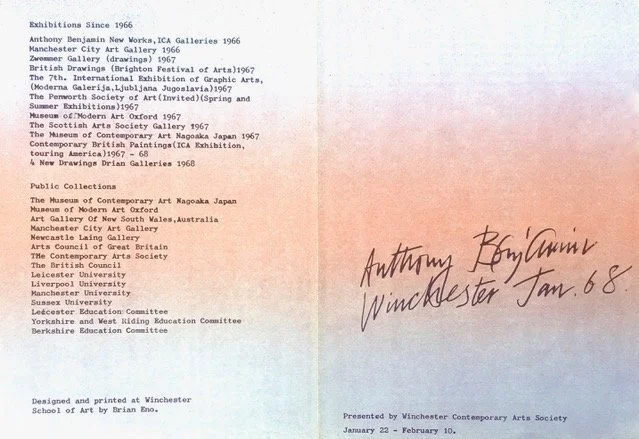
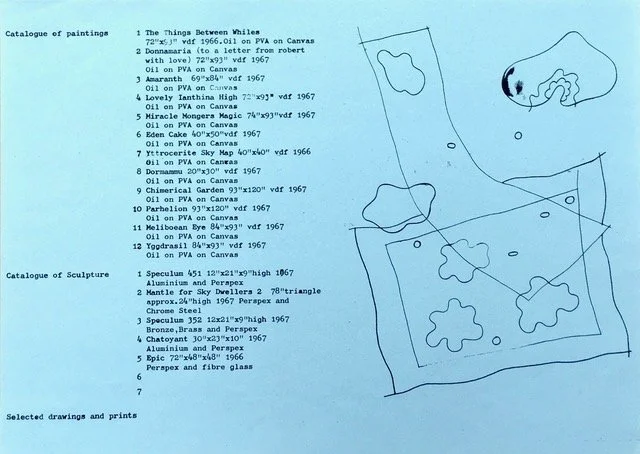
Designed and printed at Winchester School of Art by Brian Eno.
Arch III, Perspex and polished metal, 1967
When Benjamin was teaching at Ipswich, and later Colchester, he purchased a zippy, two-person, lightweight red fibreglass Rochdale, sports car. He would leave London after midnight to travel at maximum speeds; he was clocked and stopped at 3 a.m., going through a sleepy village at almost 90 mp an hour, and given a heavy fine. However, instead of behaving himself and slowing down to safer speeds, he had his vehicle repainted a super-bright canary yellow, and continued to cut down travel time by going even faster. He had to carry a couple of sandbags as ballast to keep from taking off into the wild blue yonder. Sometimes when zipping along at terrifying high speeds he would assume the jokey persona of Fangio, a leading Italian racing car driver, then lapse into mock racing commentary in a bad Italian accent.
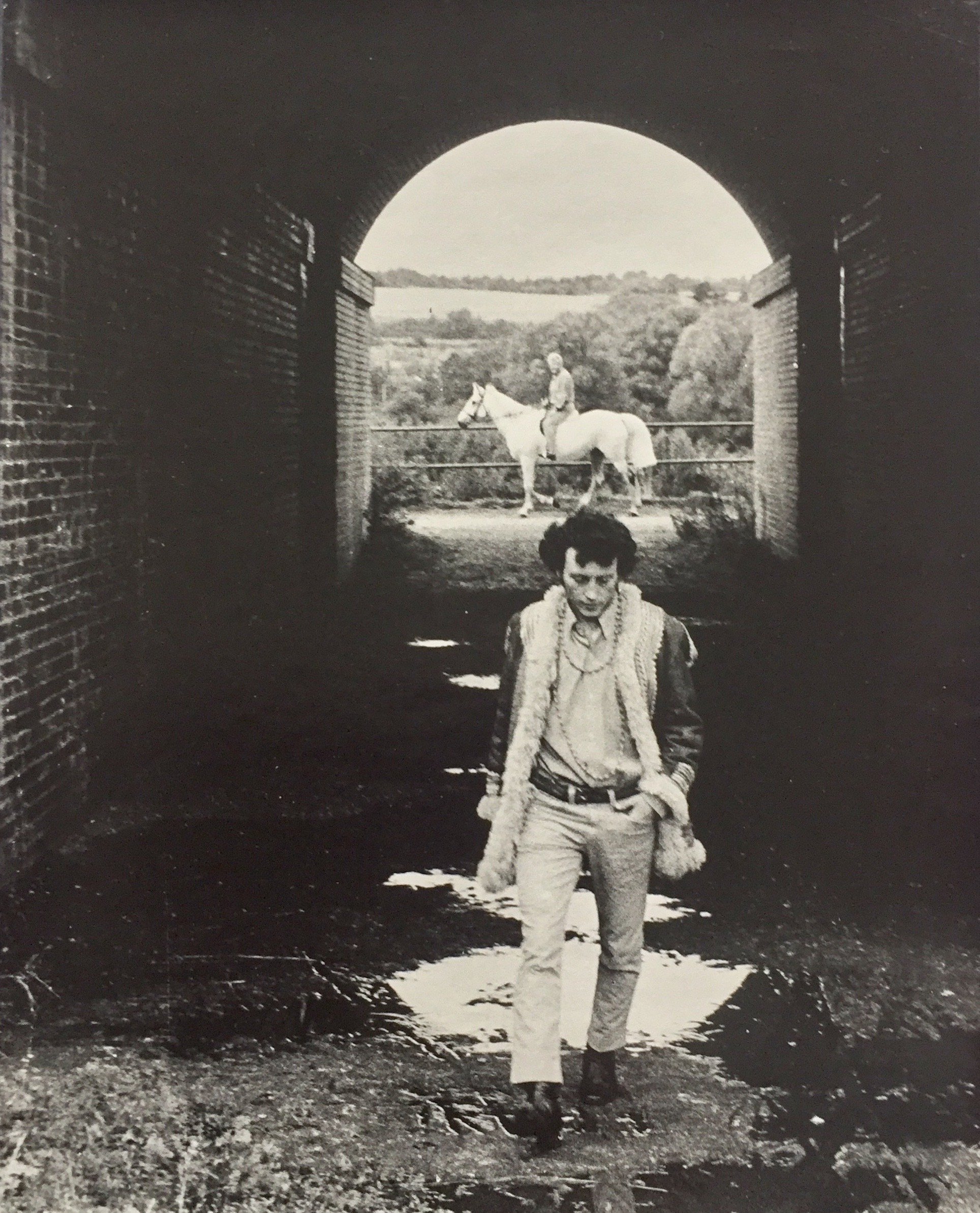
Winchester Watermeadows, 1965. Photo: Anthony McCall
In 1965, Benjamin started teaching on the new Dip AD Course at Winchester College of Art, about 70 high-speed miles from London. He was fascinated by the Silverstone Race Circuit; images of wheels, speed, and distorted reflections added a new dynamic to his work.
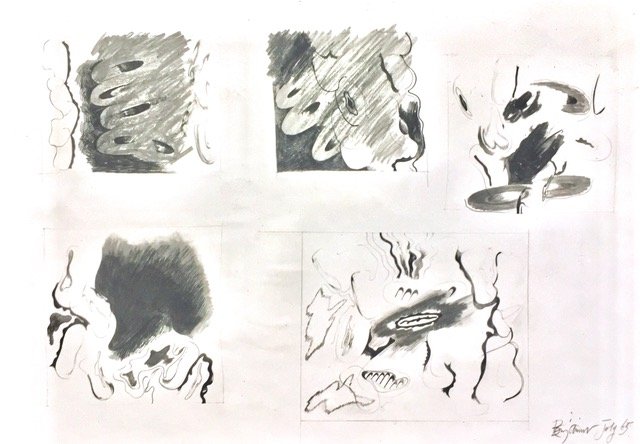
Echoes of Silverstone, 1965, mixed media drawings
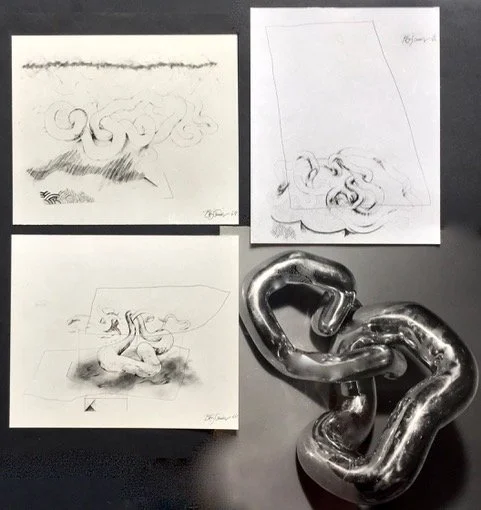
Bronze Knot, casting for an unfinished sculpture
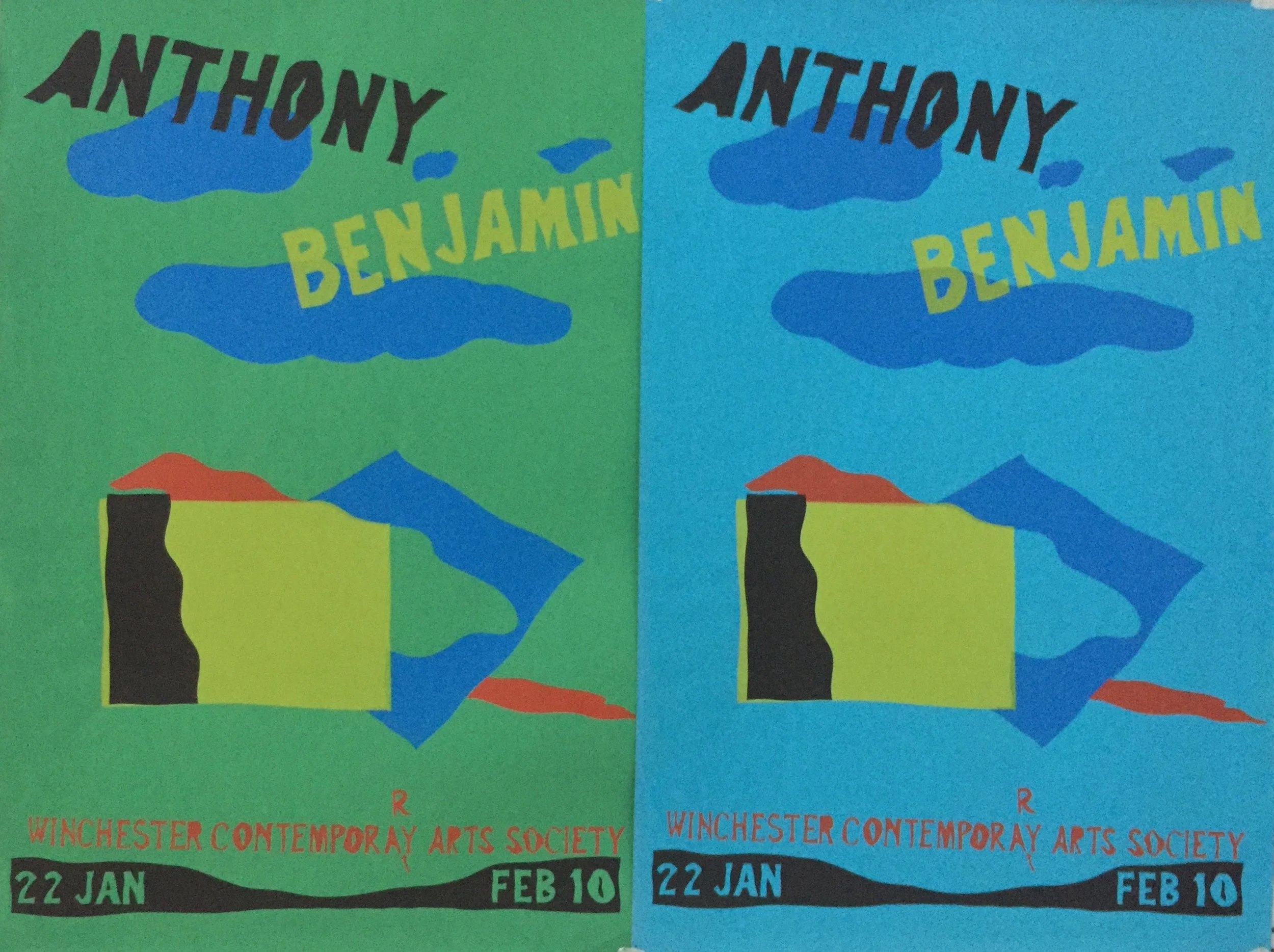
Posters for the exhibition, made by Benjamin (noted for his bad ‘spiling’)
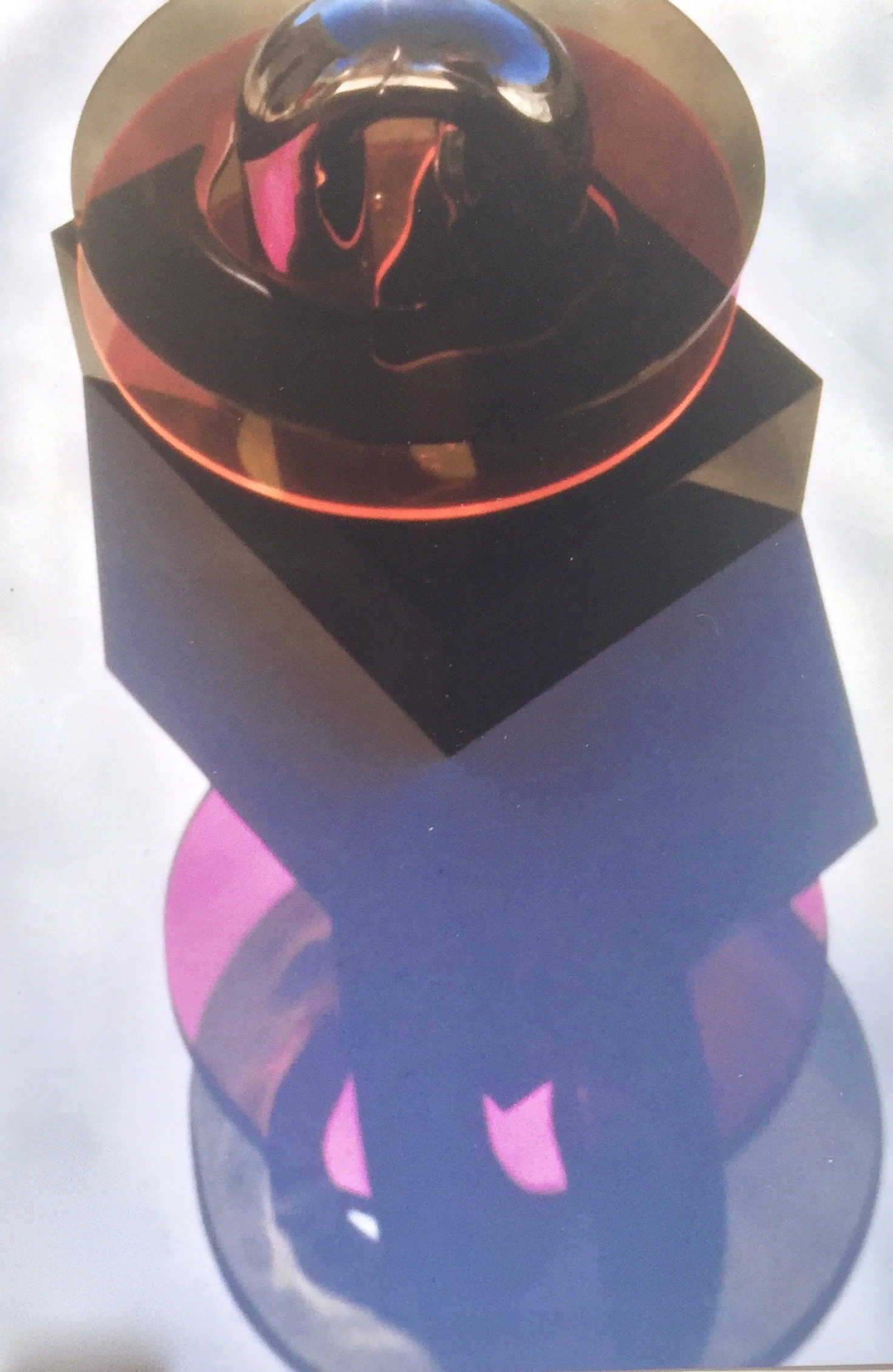
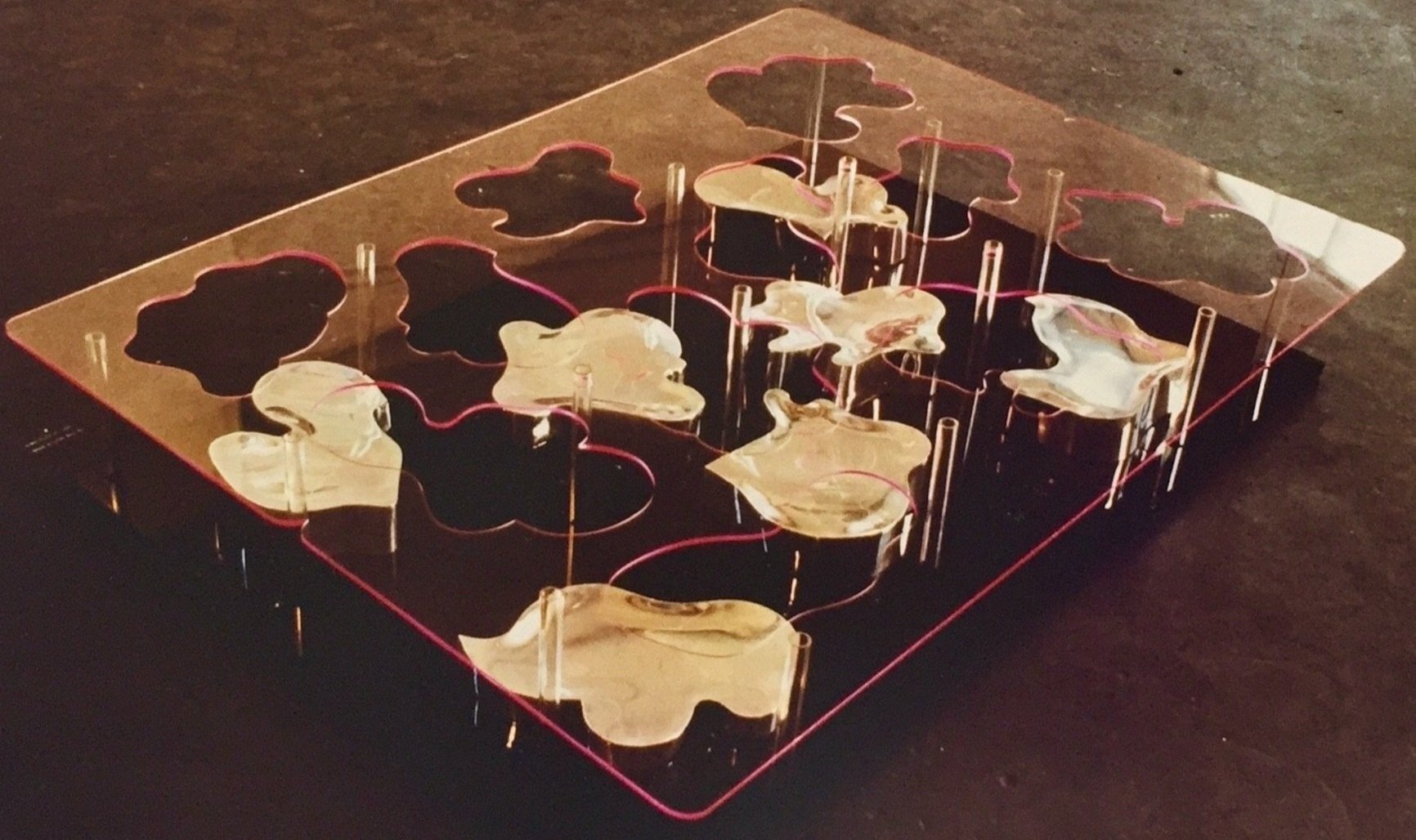
Gentle Edge, 1967, Perspex and polished metal
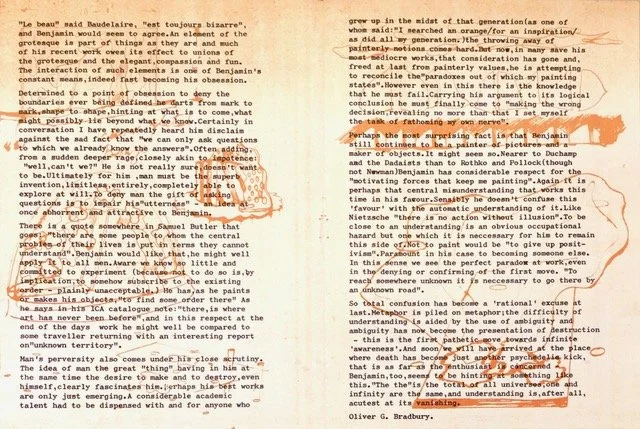
Eno designed and printed the exhibition catalogue at the Art College on a classic Roneograph (an early version of a Mimeograph) setting up a blended colour background that varied slightly from copy to copy, making each a unique piece. The edgy text was written by Oliver Bradbury, who had an unusual outlook on all matters pertaining to creativity.
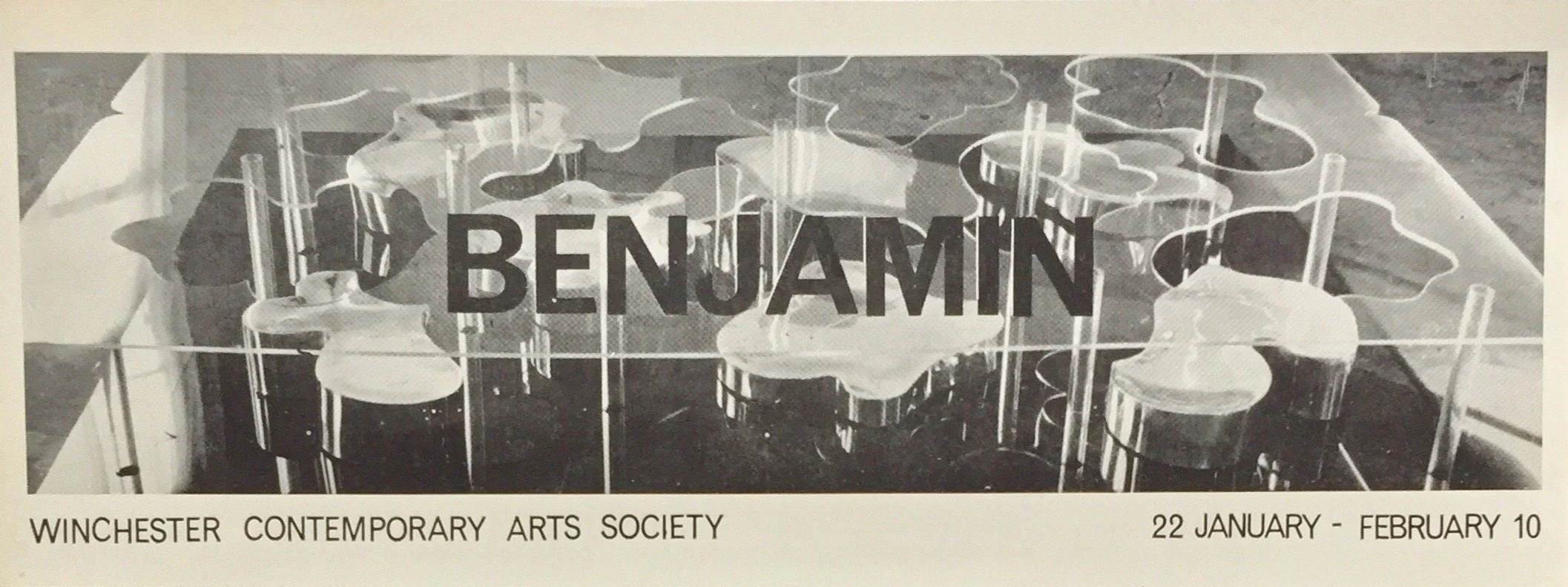
Benjamin had an exhibition sponsored by the Winchester Contemporary Arts Society in early 1968. Oliver Bradbury, an old friend of both Benjamin and Eno, wrote the text for the catalogue. Bradbury was more of a philosopher/intellectual than a visual artist; he could have been described as a young Old Fogey. He was clever, wise, and a mentor to the bright students he befriended, like Brian Eno and Roger Ackling, who were both very original in what they did, and how they did it. Bradbury saw creativity through a different looking glass, and Benjamin had great respect for his opinions. He had witty, offbeat outlooks on serious matters.