Roxy Revisited
When working with Kevin Harris in the early 1970s on the complex Roxy Bias Suite of screen prints, Benjamin persuaded him to print some extra sheets of plain strong colours; indulgent as ever, Kevin complied and these sheets of flat bright colour survived undisturbed in the bottom drawer of a plan chest. In the late1990s, when Benjamin returned from Morocco, he was full of energy and enthusiasm to start work on a series of new paintings that expressed and extended the vibrant colour and trance-inducing rhythms he had experienced.
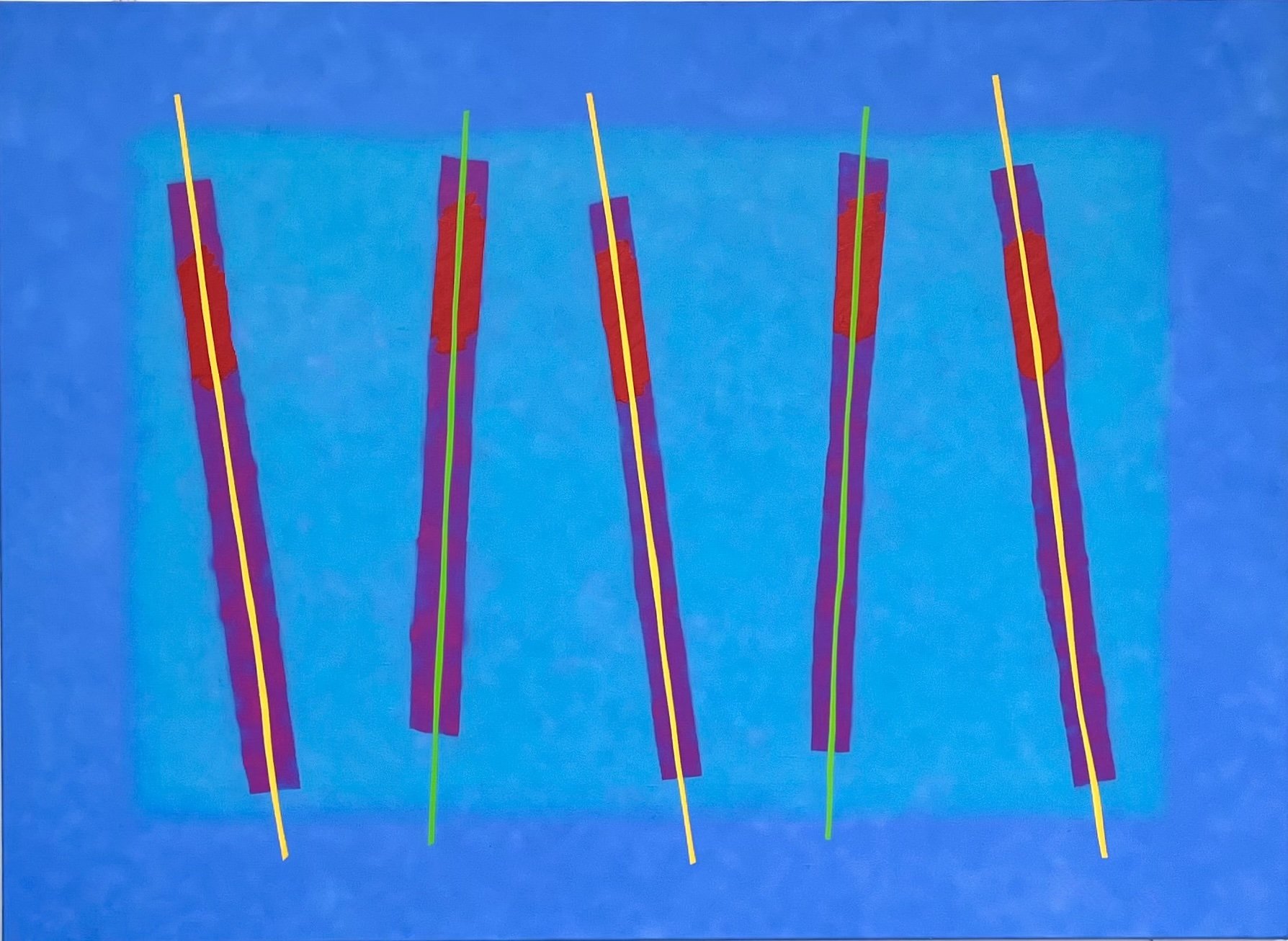
Carnival, 1999, acrylic on canvas (152 cm x 193 cm)
1998-2002 Late Paintings
Each work shows a careful negotiation of strong colours, paint textures, pictorial space and rigid and amorphous forms. Some seem purely concerned with colour and space, one hue framed by another, the suggestion of depth undermined by the tonal balance achieved through the complex modulation of each area.
Chris Stephens, Anthony Benjamin (1931-2002)
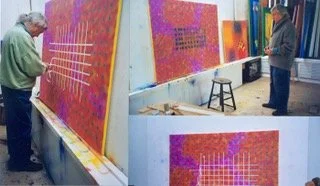
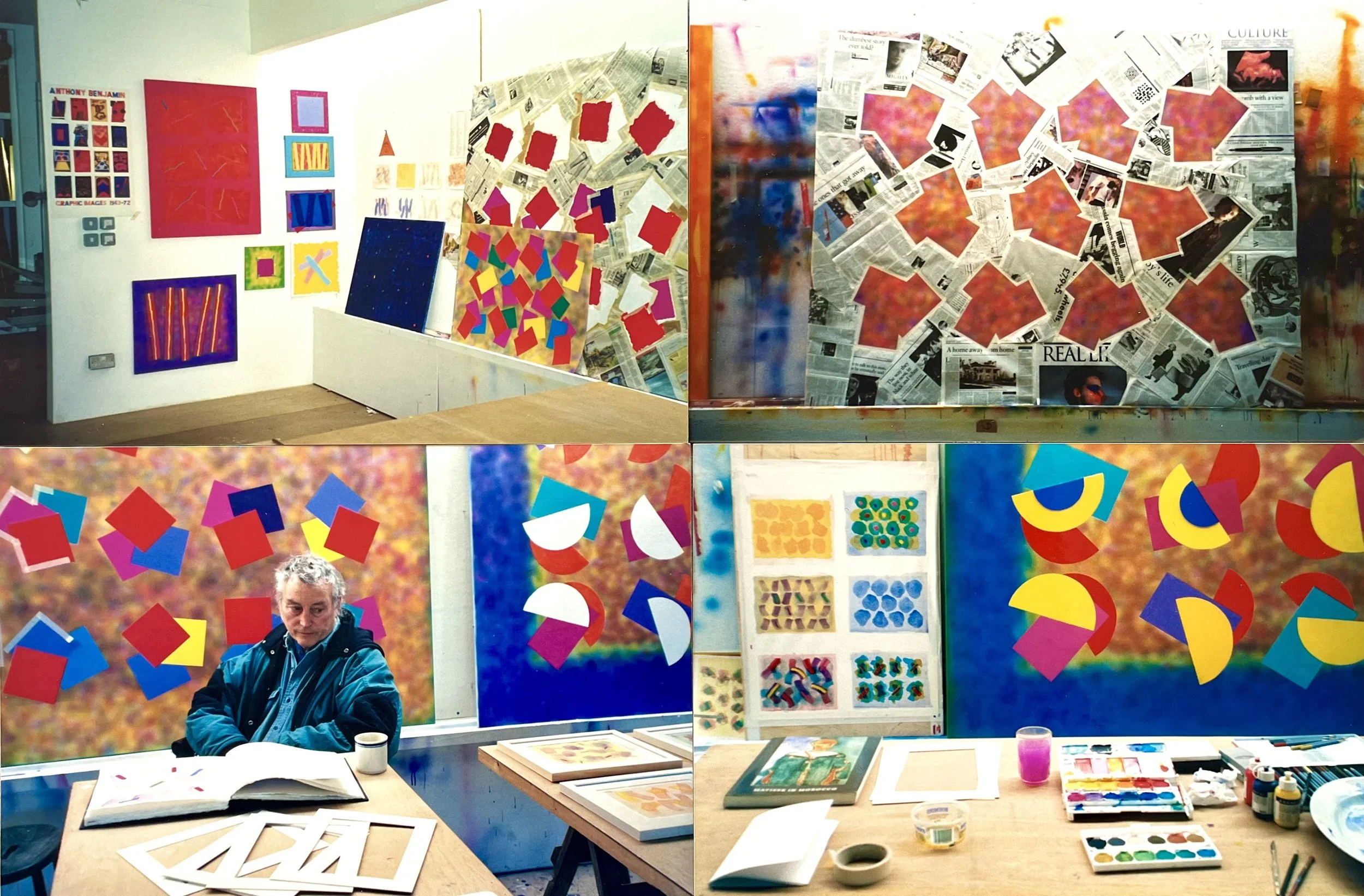
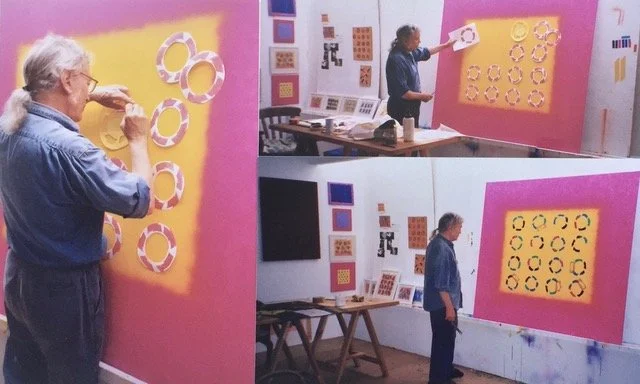
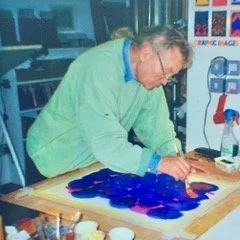
In the Kelling studio.
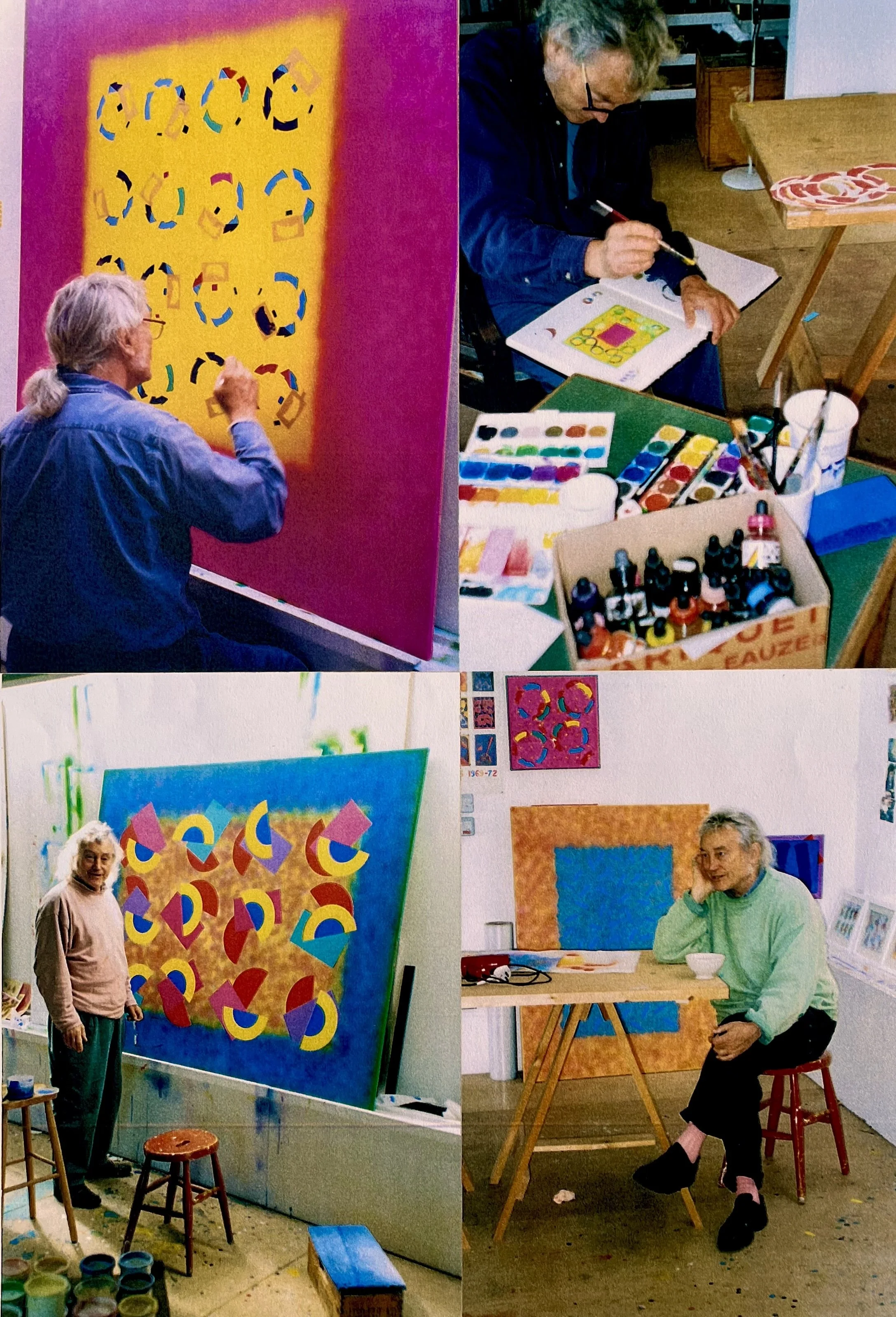
Benjamin attached the paper shapes into possible positions on the large canvas, with double-sided tape, often while listening to Arabic music—the oude, the lute, played by Algerian musician Tanakoul Alla or the pulsing Gnawa rhythms of Morocco. He retrieved the screen-printed sheets, cut them into sets of simple geometric shapes, squares, and round forms to plan the compositions by temporarily fixing the shapes on the close-toned shimmering backgrounds he had previously prepared with a spray gun. He would carefully consider and rearrange the compositions until they gave the impression of floating and moving in dynamic rhythmic patterns across the canvas. He then outlined the cut paper shapes with fine pencil lines, removed the paper and applied masking tape up to the lines, covered the sprayed backgrounds with paper masking, and re-primed the selected areas with opaque white, so the final colour applied over the white was as vibrant as possible.
Benjamin was fully occupied, loving what he was doing, making paintings simply for the pleasure of creating something beautiful without needing the goal of an exhibition or anything else. If he had lived a few weeks longer, he and Nancy would have been involved in purchasing a small but almost perfect riad in the heart of the Marrakesh Medina. He intended to set up a painting studio there so he could spend months, rather than weeks, doing what he truly loved—making colour-filled art—but he ran out of time.
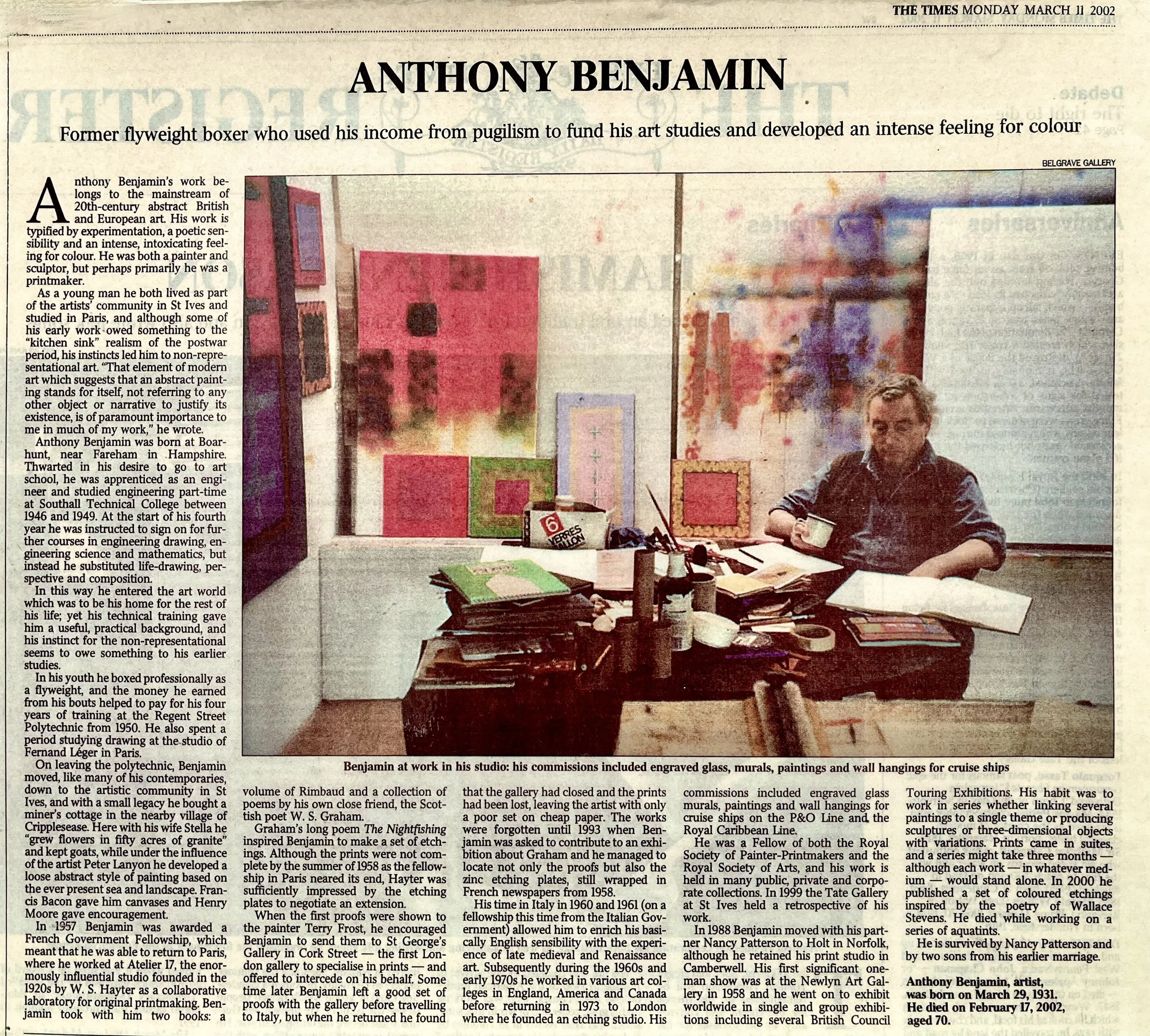
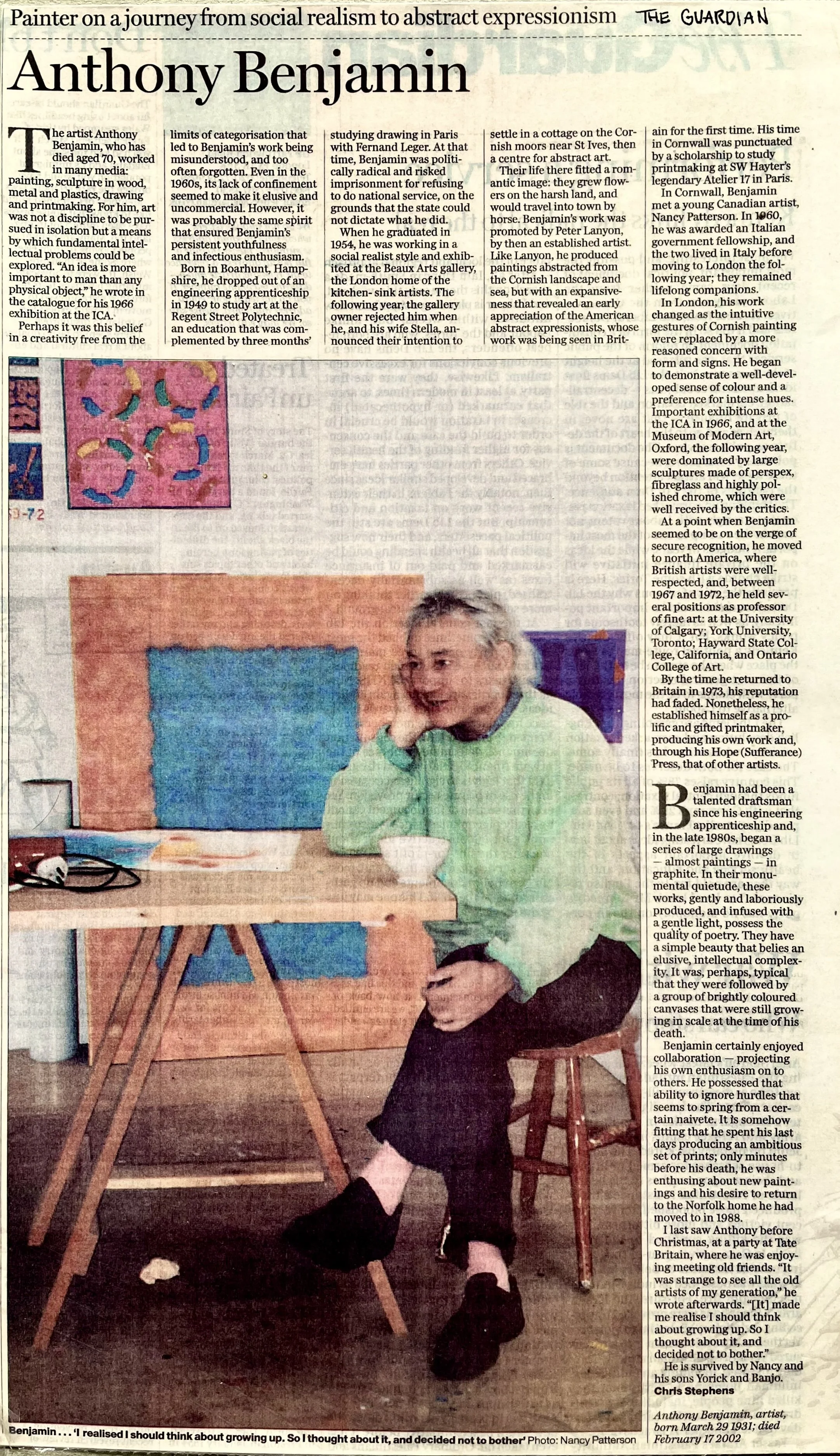
Benjamin … I realized I should think about growing up. So I thought about it, and decided not to bother.
The Dancers, 2001, acrylic on canvas, (122 cm x 152 cm)
Djemma, 2001, acrylic on canvas (152 cm x 167). Private collection
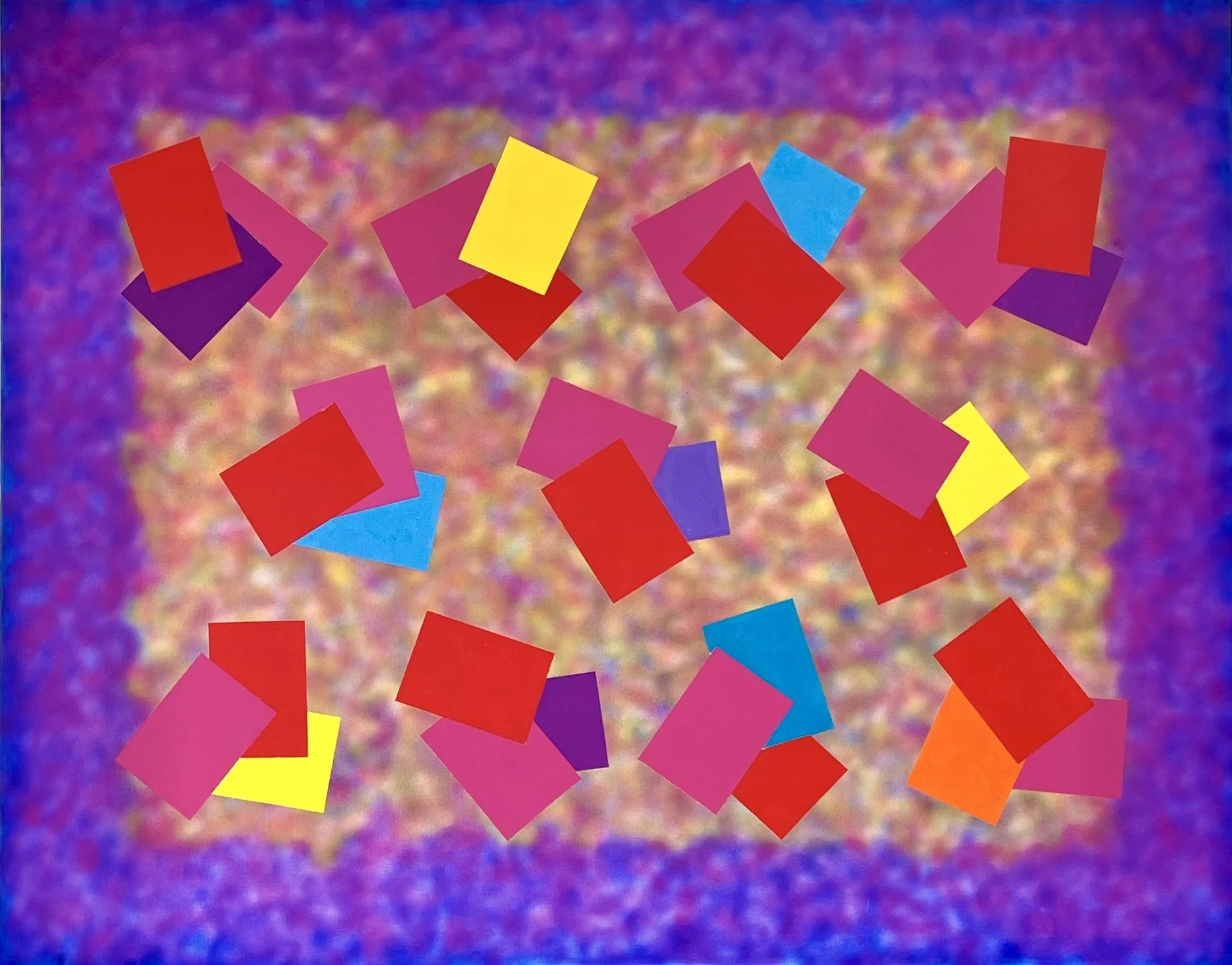
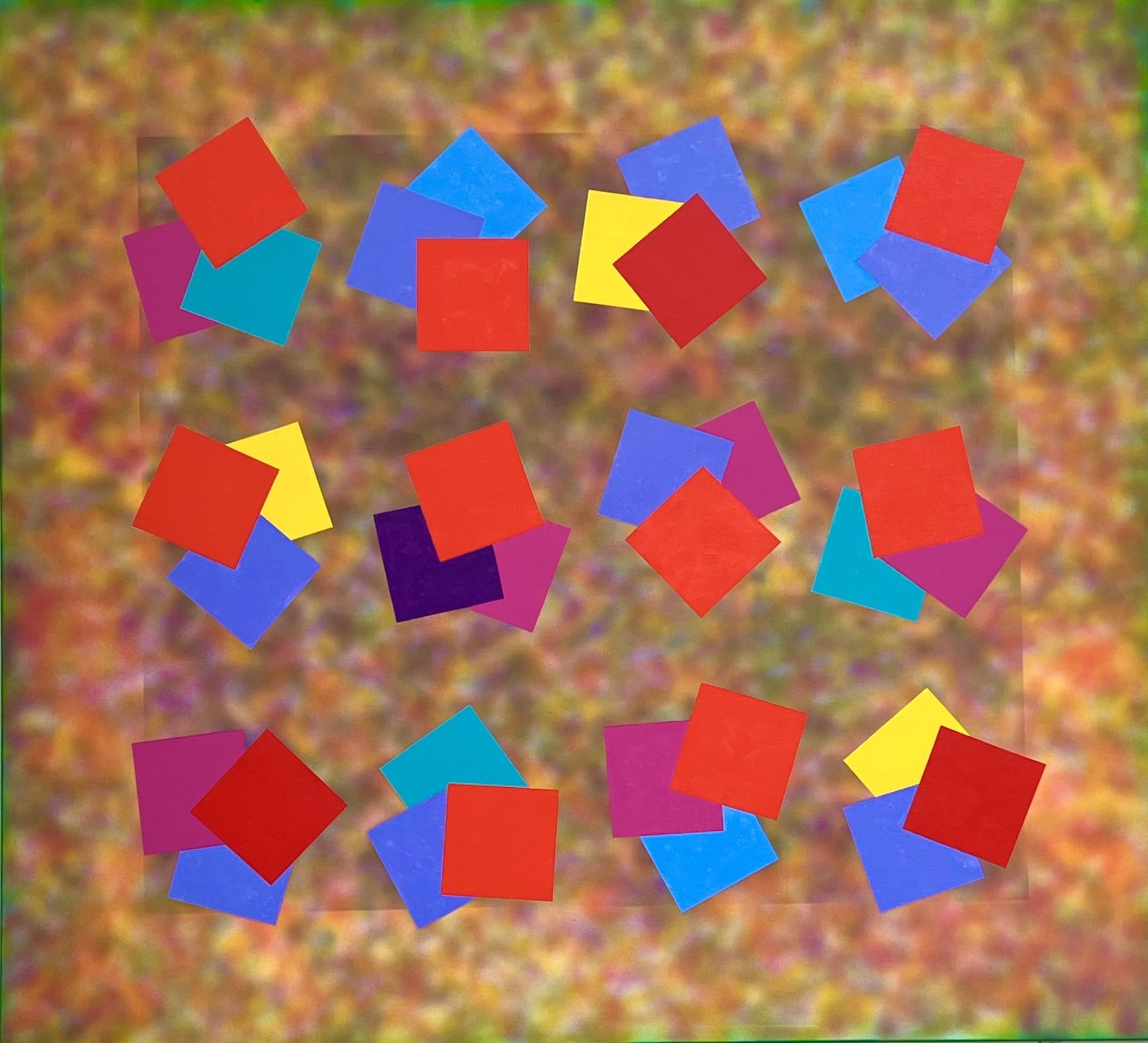
Increasingly, however, the paintings seemed to be concerned with movement. In a number of them, groups of three squares, rectangles, or parallelograms are arrayed in rows, each group appearing to turn on an axis. Benjamin seems to have been exploring the possibility of suggesting movement by the use of colour and form alone. In such works, he also managed to create a spatial separation between these geometry figures and the endlessly varied grounds. The latter are made up of a range of acrylic colours, applied with an airbrush so that they meld together and overlay each other, creating a sense of swirling formlessness.
To achieve the degree of density and intensity required, he developed a complex method of masking to ensure the precision of their straight edges. The result is that the smaller forms seem to hover slightly in front of the ground. In one work, asymmetrical units of yellow, green, and red seem to float in a field of warm colour, while their tapering forms seem to have been designed to accentuate the kaleidoscopic effect of their tumbling pattern.
Chris Stephens, Anthony Benjamin 1931-2002
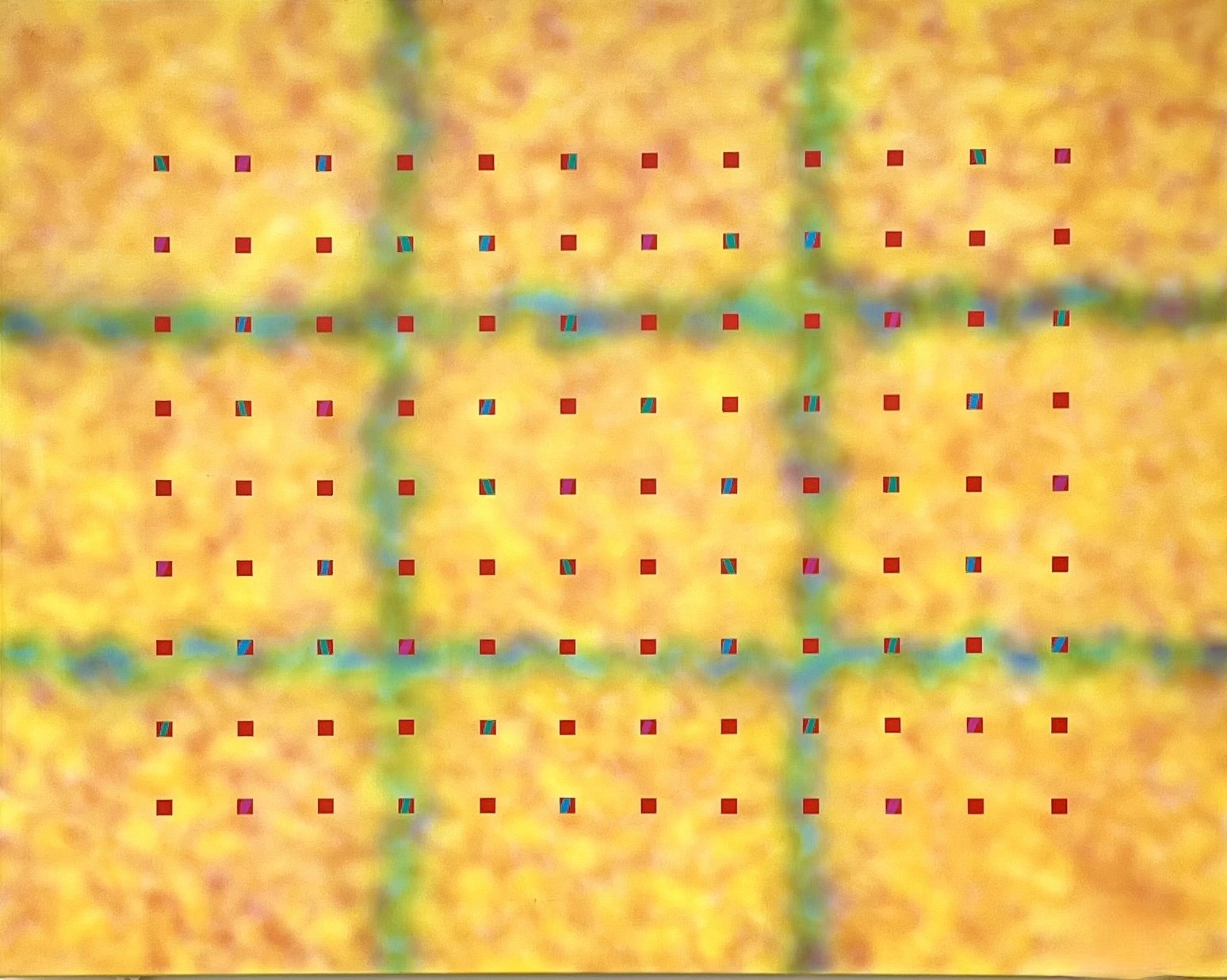
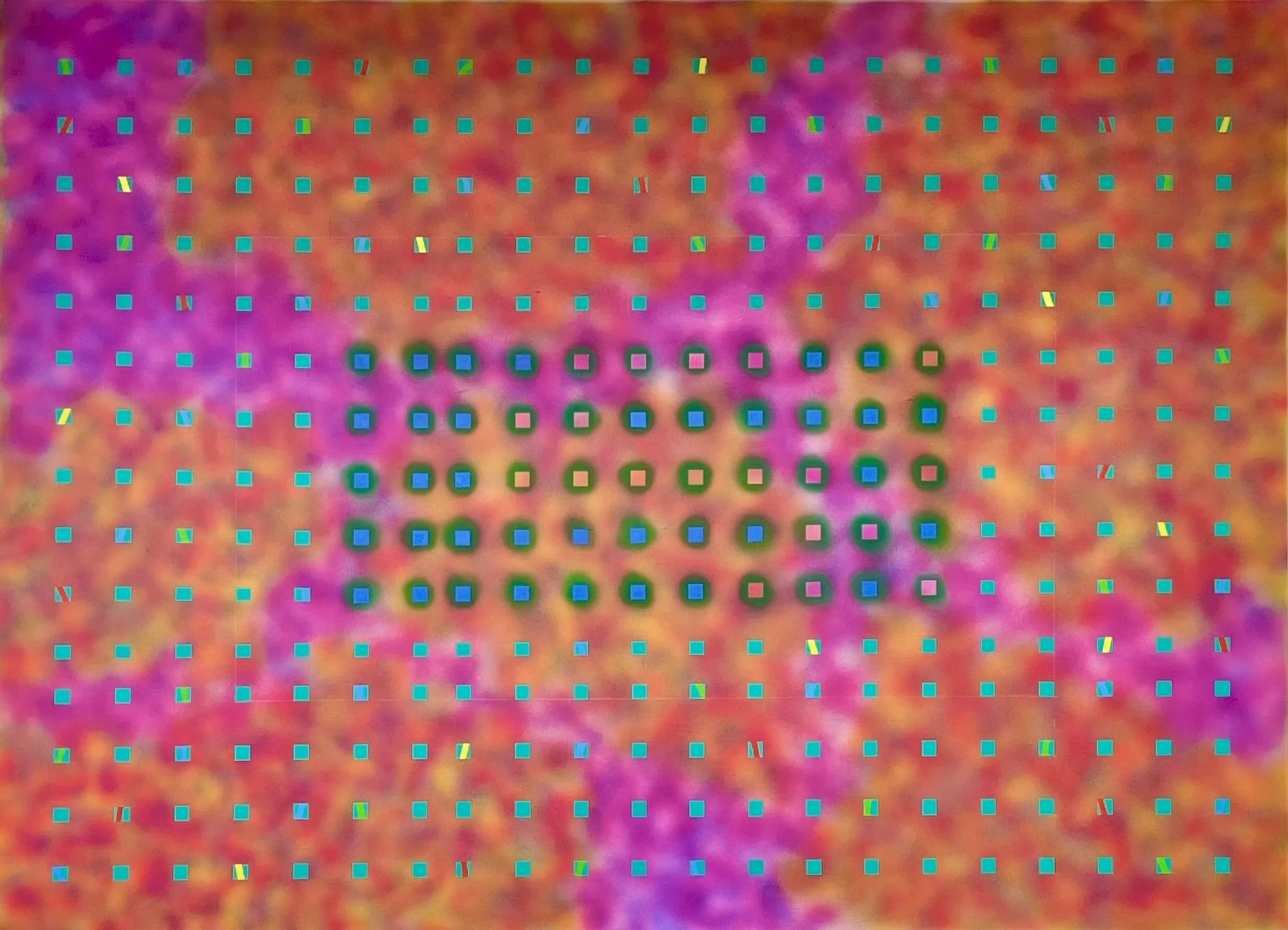
In Tanakoul, these forms are replaced by hundreds of tiny spares, many divided by a band of contrasting colour, but such is the relationship between figure and ground and between the different colours and textures that they appear to shimmer before the viewer’s eyes. Evoking, perhaps, the sun and heat of Morocco, the effect is not simply one of extreme sensory stimulation but almost one of physical disequilibrium.
There seems to be little doubt that with these late works, Benjamin fulfilled his own belief that, ‘art is about everything. Art isn’t just related to art. It’s personal, you draw on almost everything. It can be serious, but it ought to be playful too … You should enjoy it’.
Chris Stephens, Anthony Benjamin 1931-2002
Study, 2001, watercolour and guache
This was a complex and labour-intensive procedure that fully engaged him. He seemed to find great satisfaction, and it worked like magic; the flat painted forms float, vibrate, and dance above the sprayed backgrounds exactly as intended.
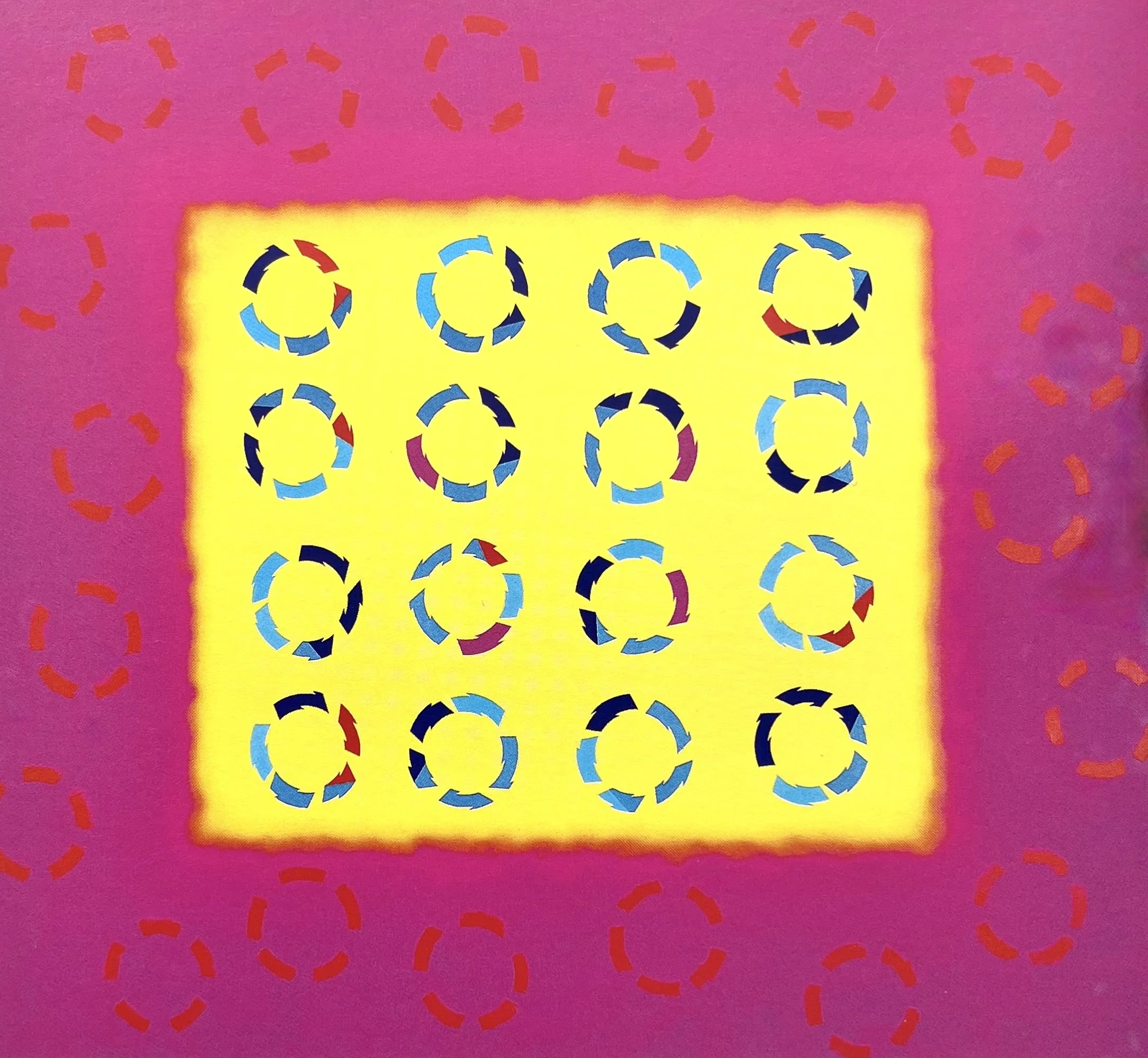
Tanakoul II, 2001, acrylic on canvas (122 cm x 152 cm)
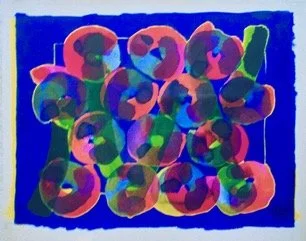
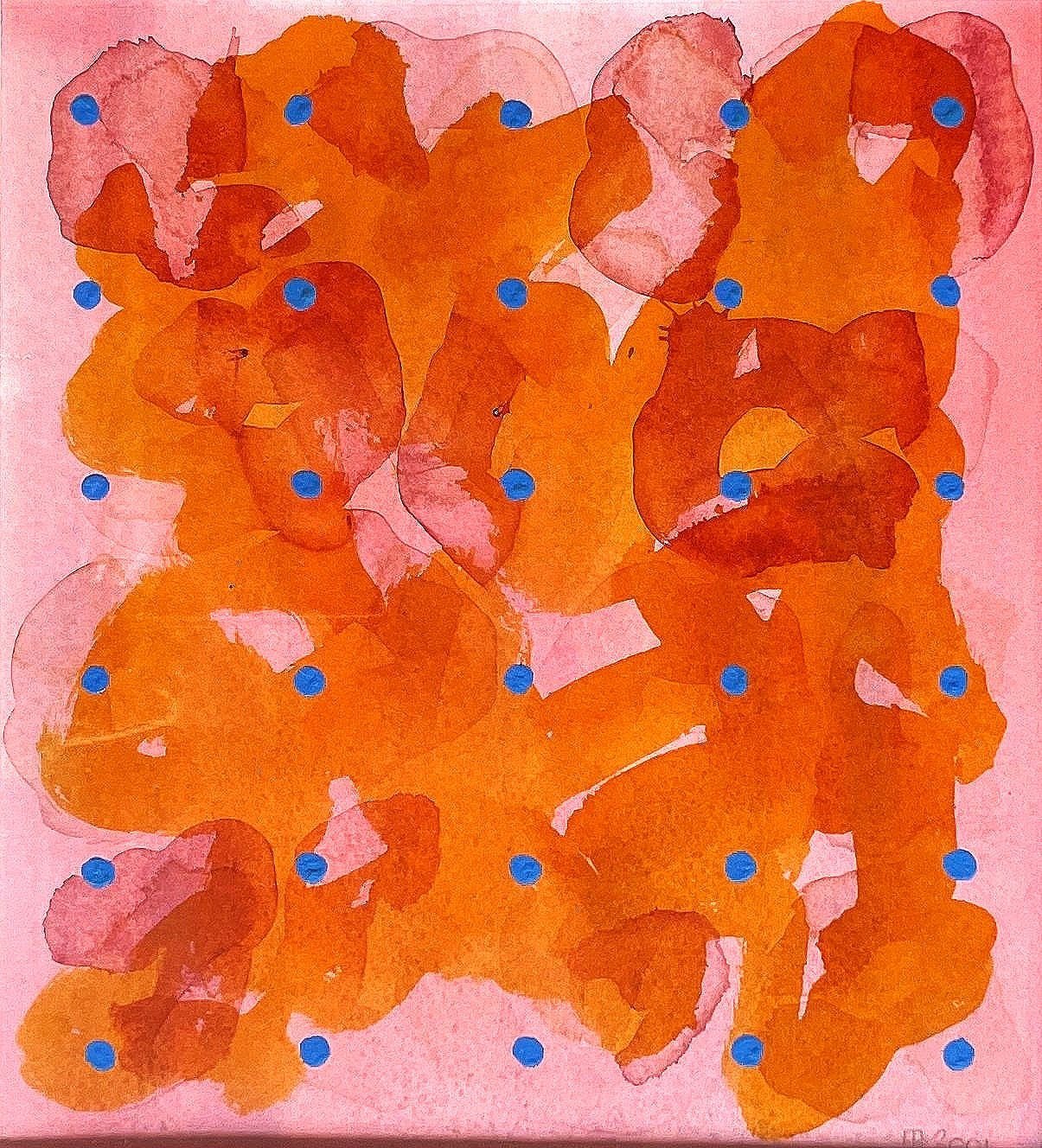
Untitled, 2000, watercolour. Private collection.
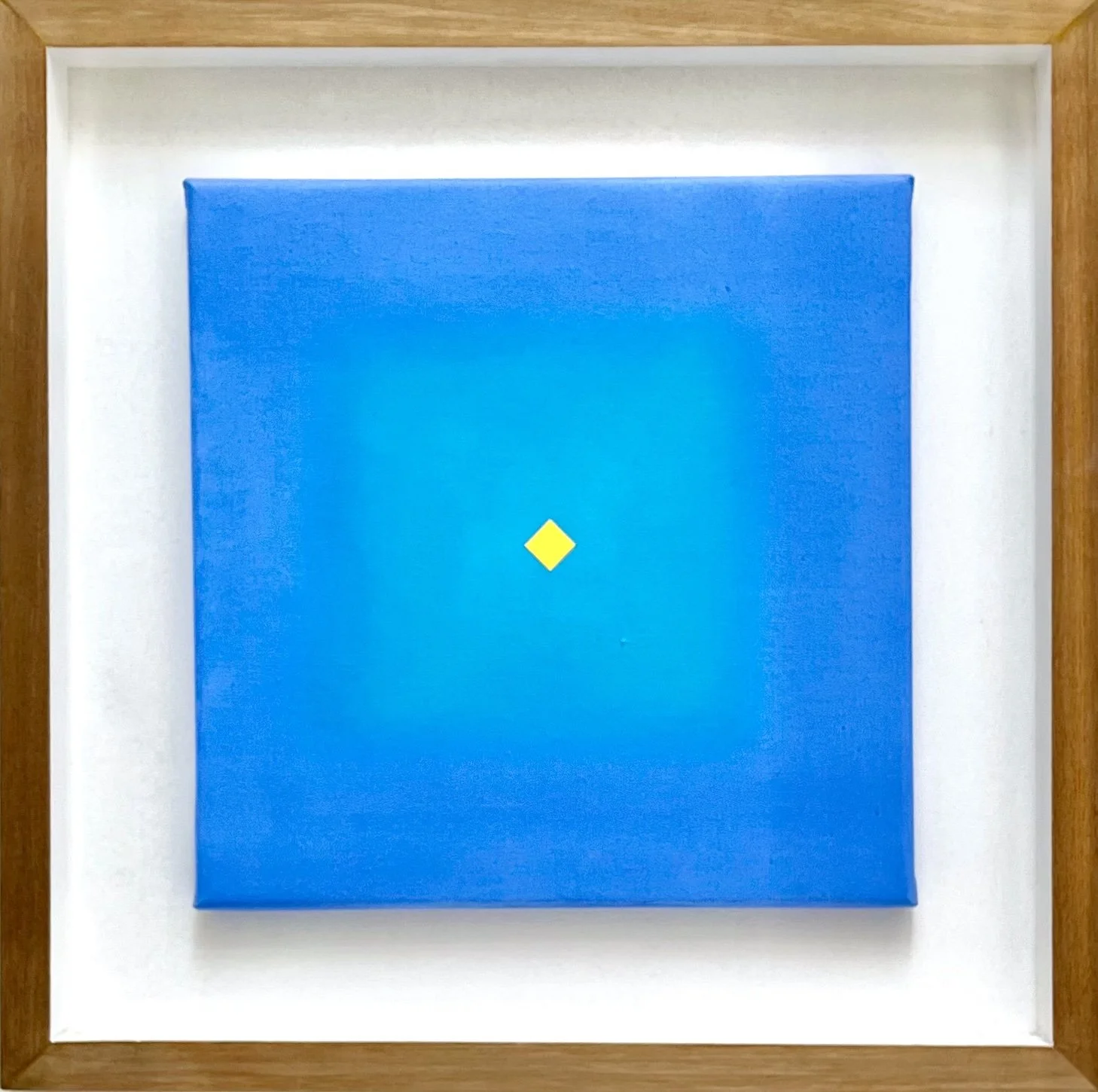
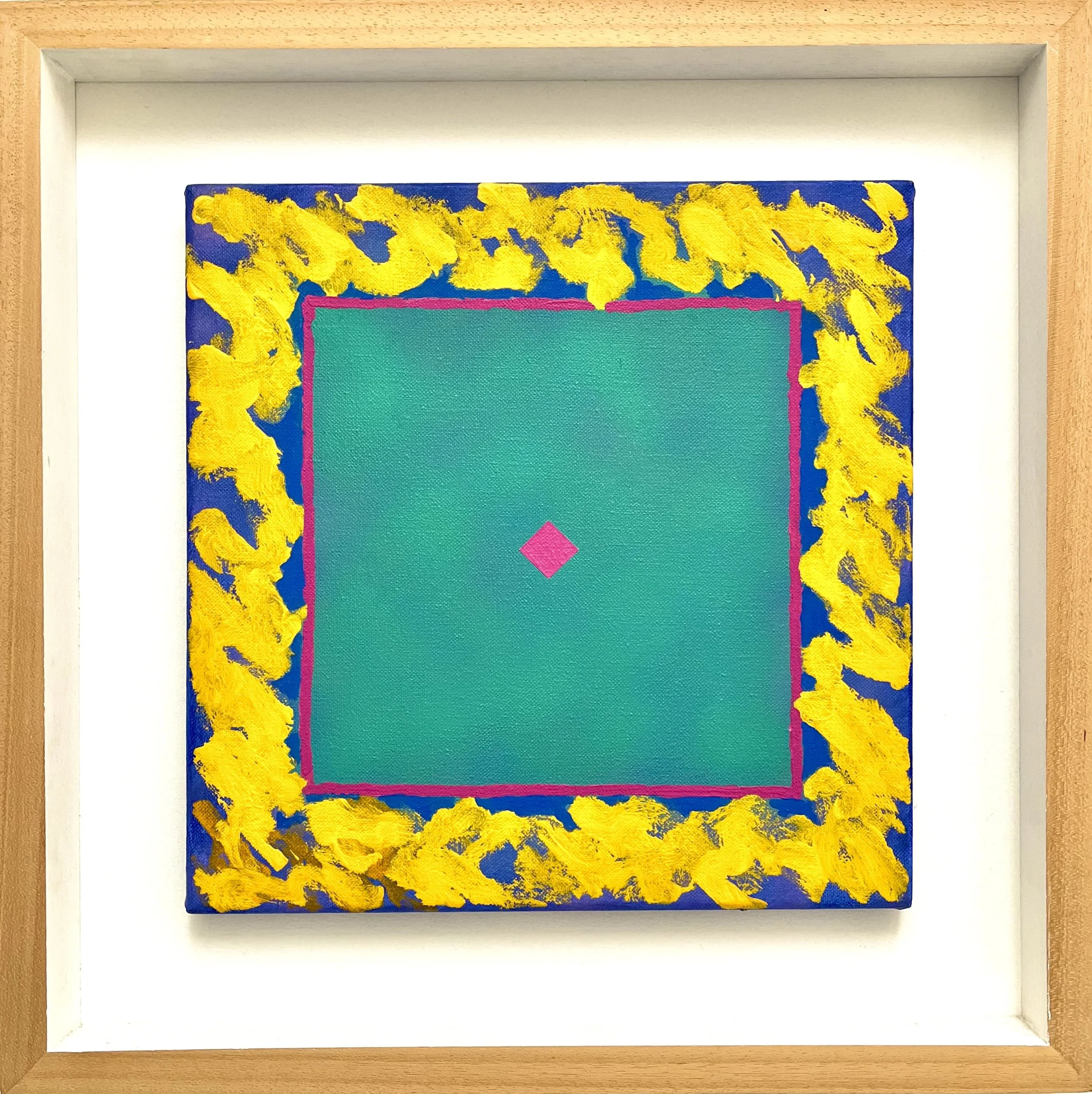
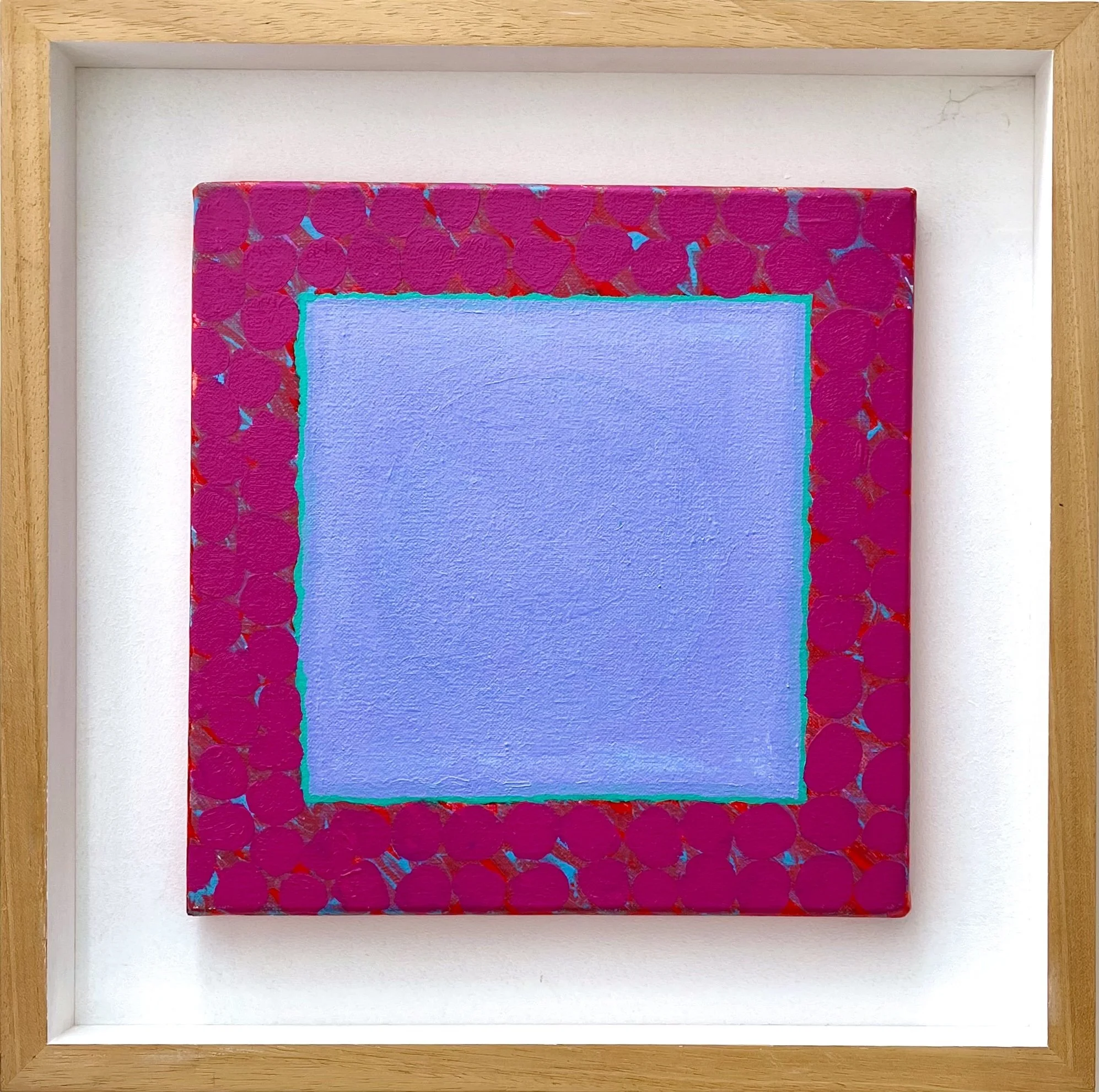
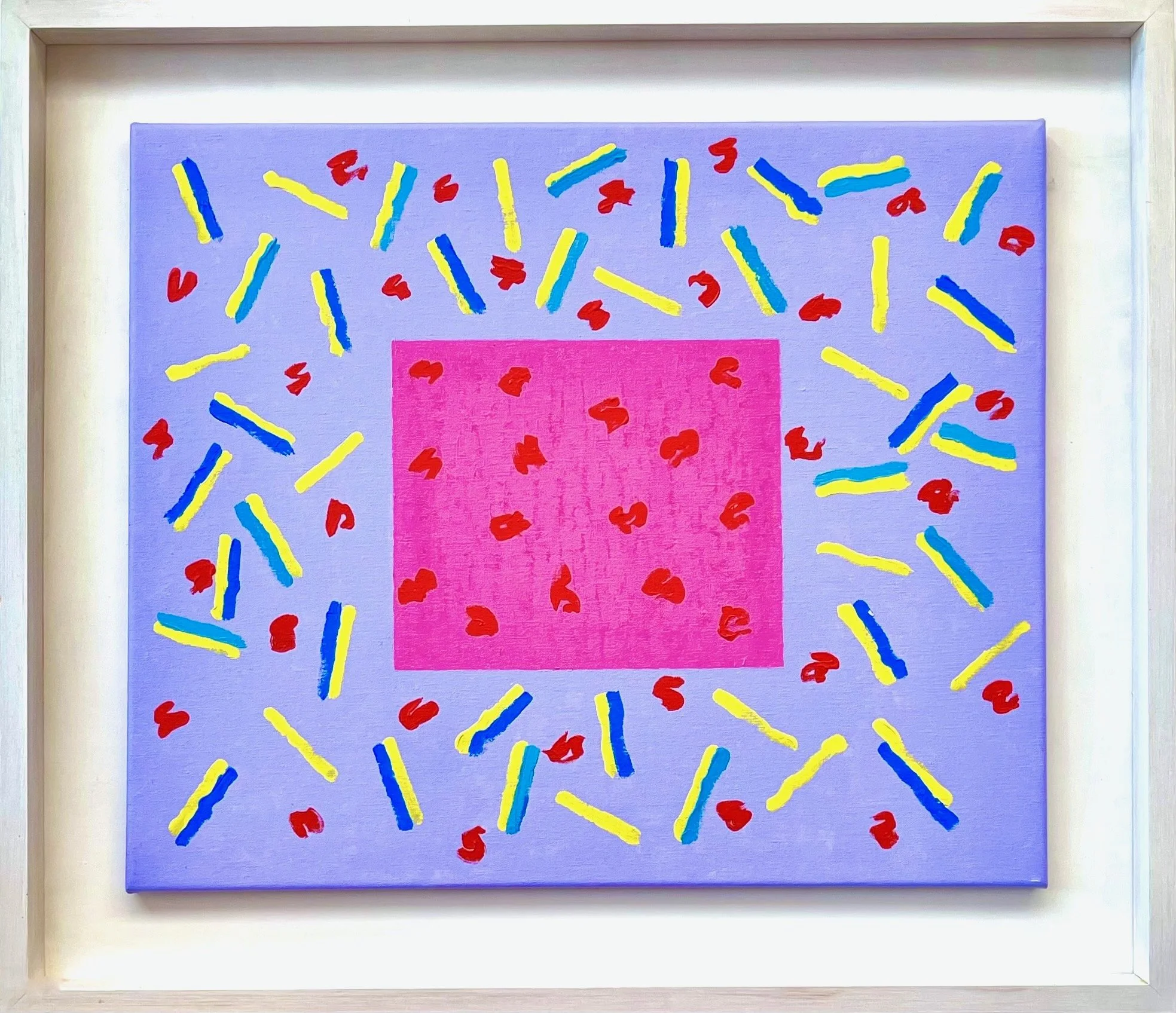
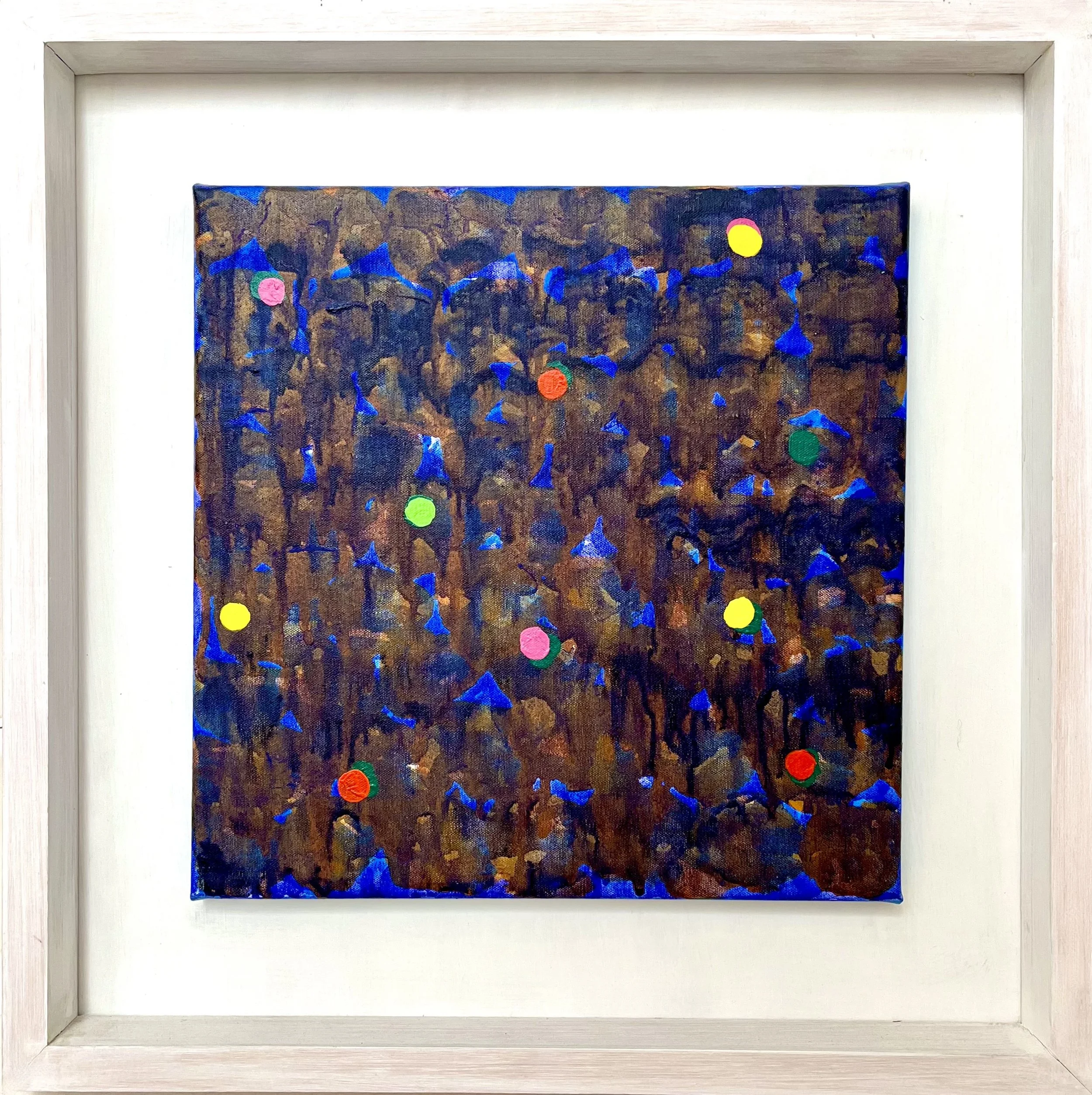
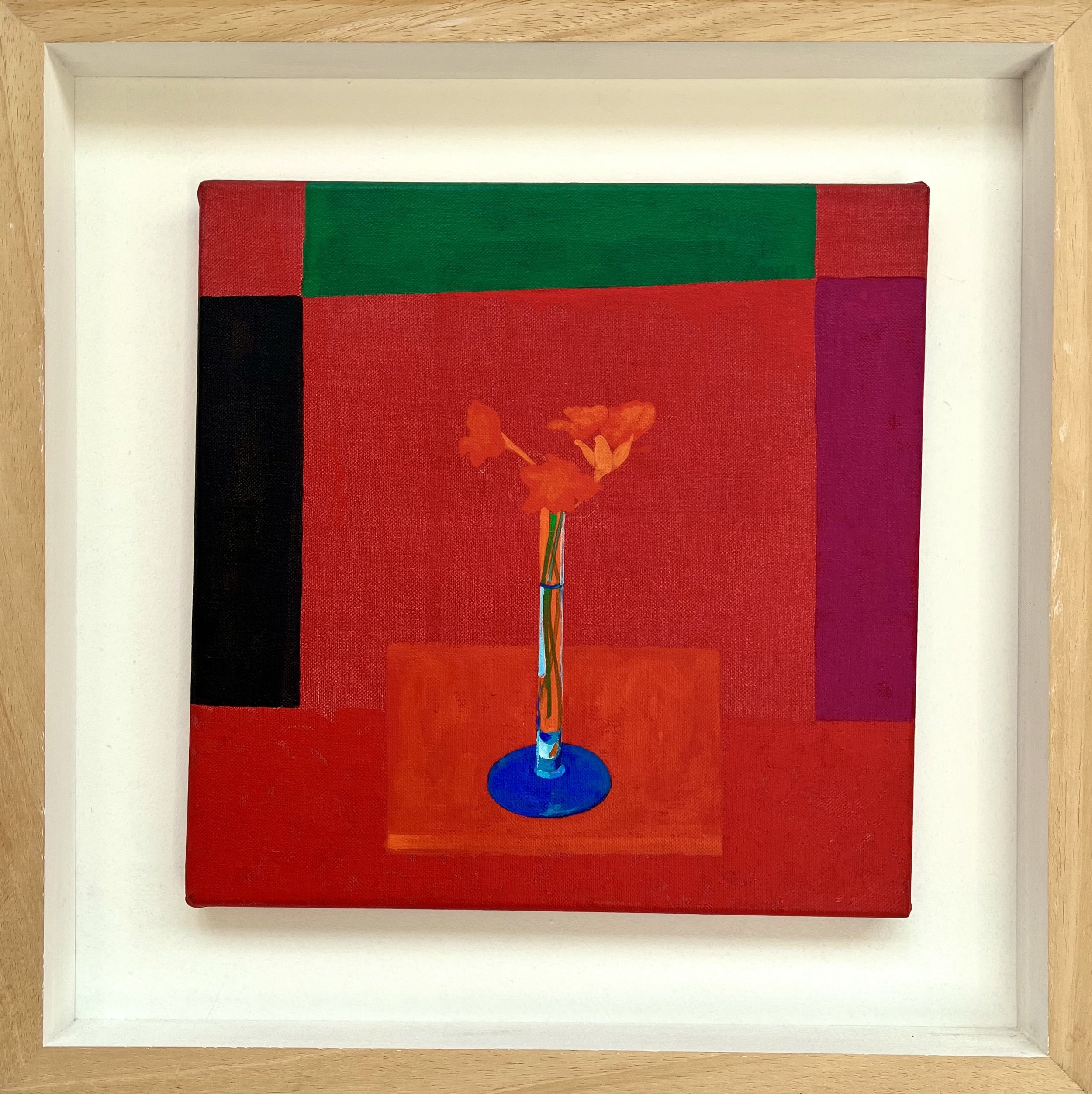
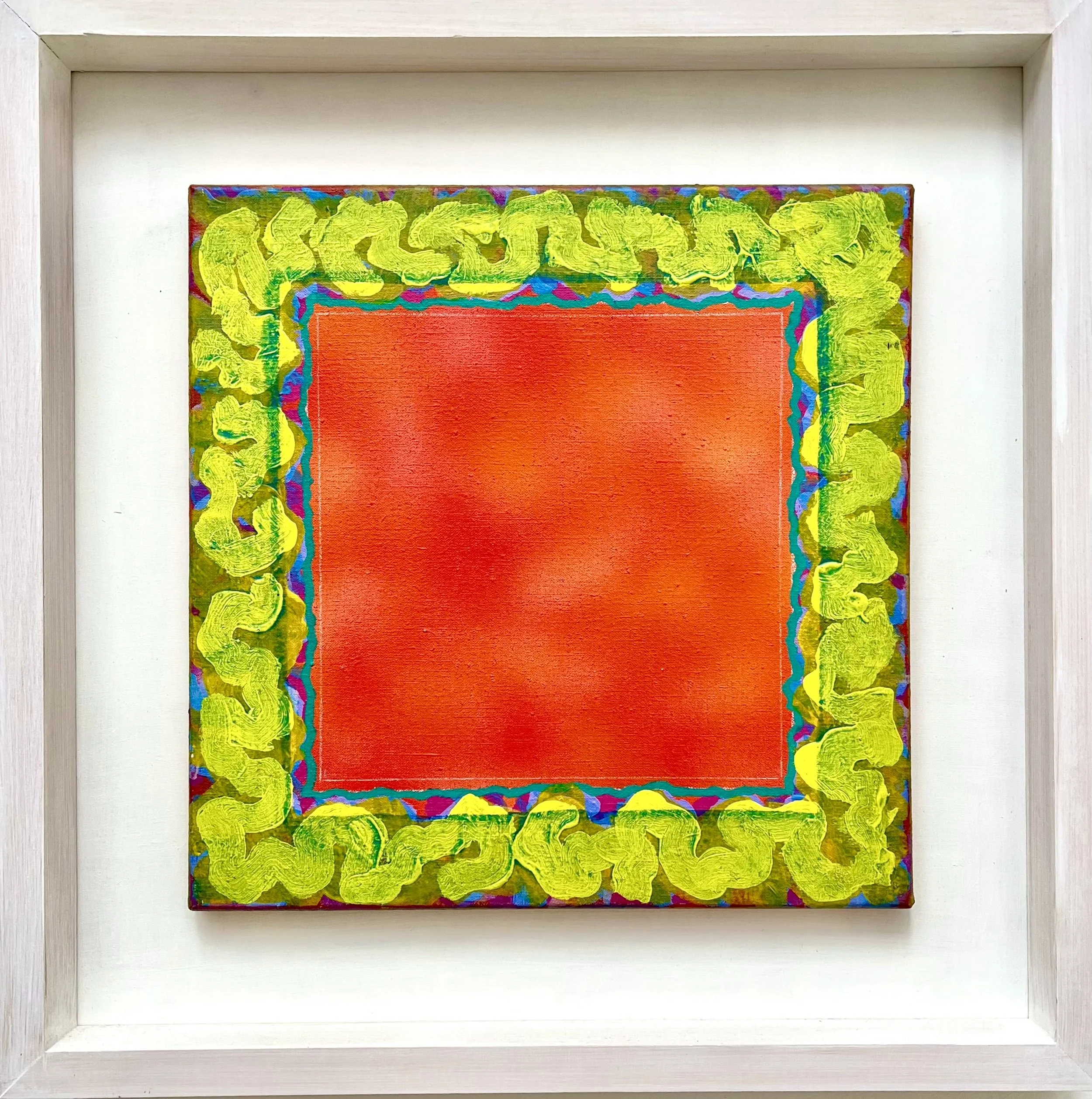
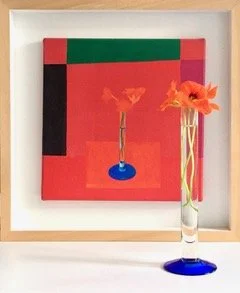
These small paintings were made at the same time, between 1998 and 2001. As with the very large ones, they are not titled or dated. The frame size of the small ones is 45 cm square. As was his tendency, Benjamin liked to work on large scale or a very small scale.
Tanakoul I, 2001, acrylic on canvas (122 cm x 152 cm)
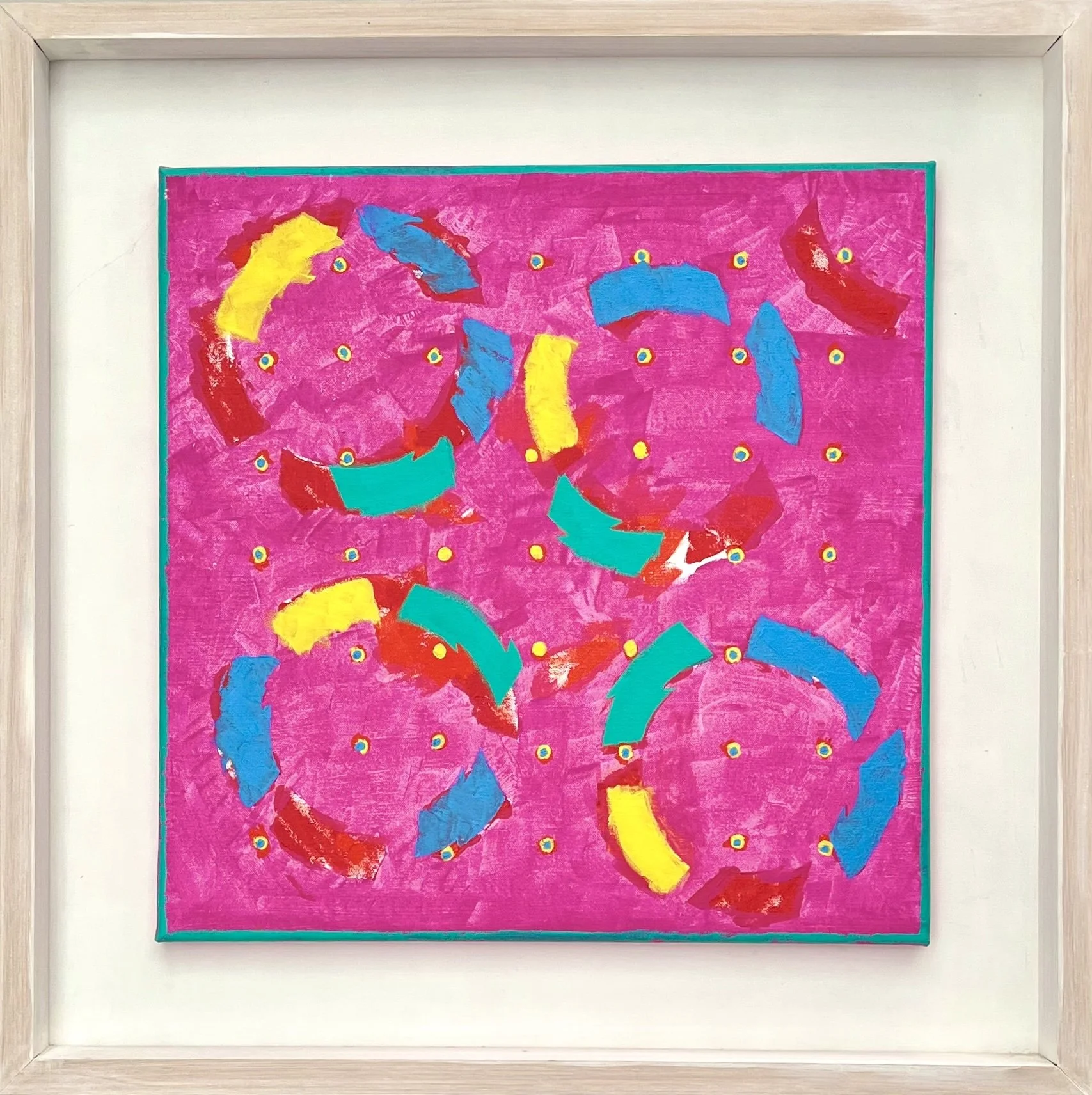
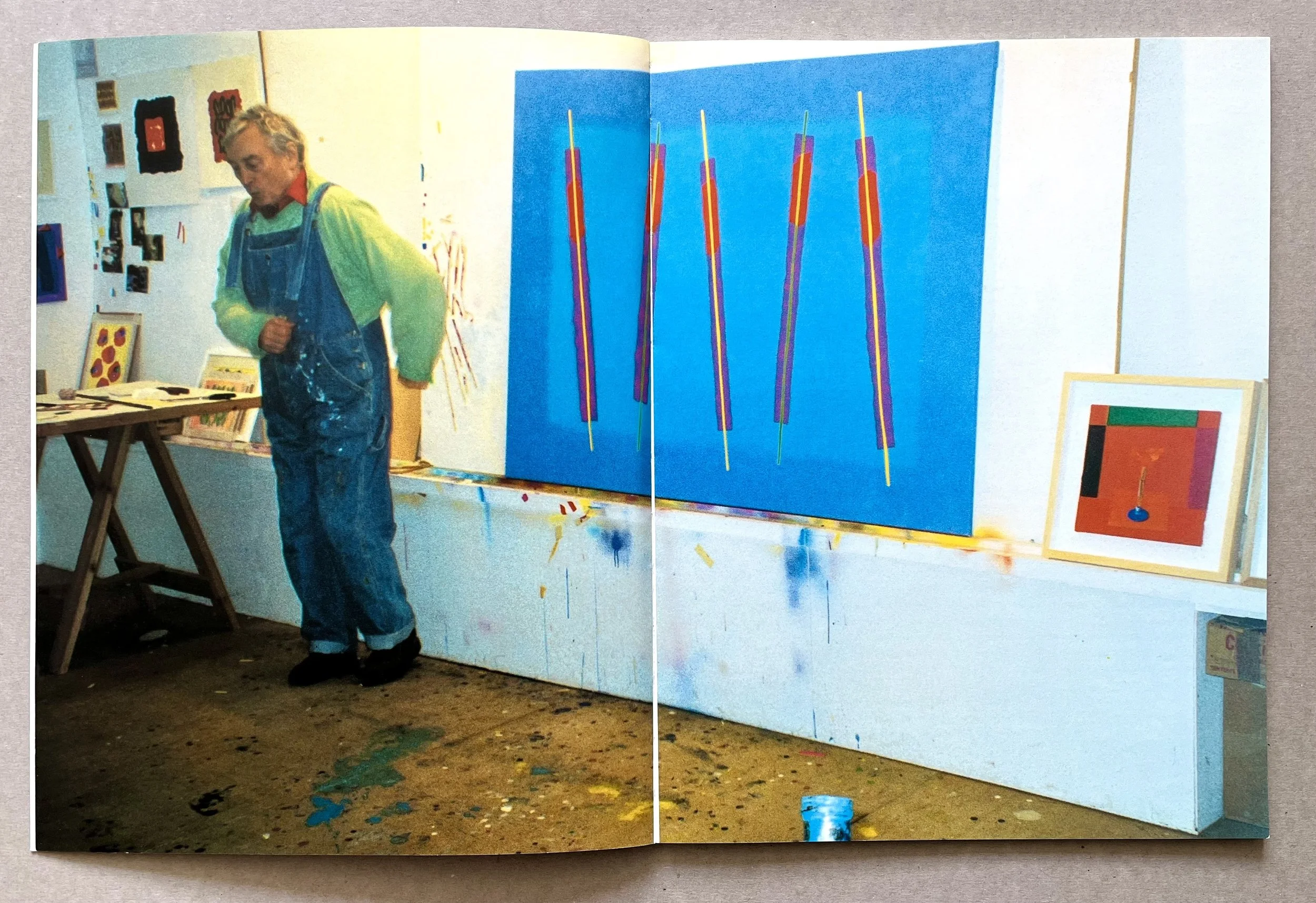
The artist in his studio, 2001. In the book Anthony Benjamin 1931-2002, by Chris Stephens.
Untitled, 2000, 56 cm square. Collection of Robert Lewis