1966 London: Silkscreen Printing
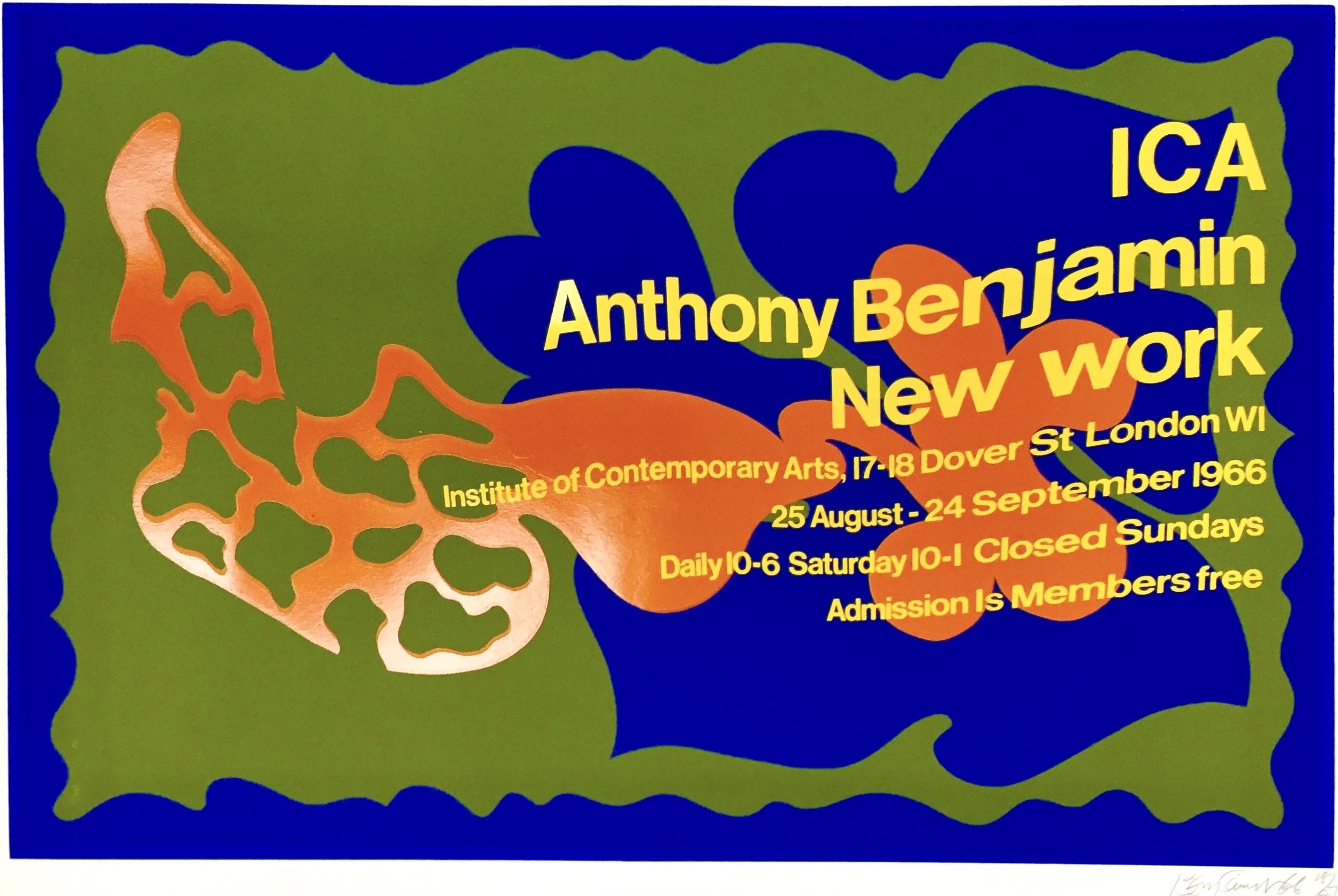
The experience of making the silkscreen poster for the 1966 ICA Exhibition filled Benjamin with enthusiasm about the creative possibilities of the process. This was mainly because the strong colour range used when making limited edition screen prints was much brighter and more vibrant than what could be achieved in the intaglio printing process he had studied with W.S. Hayter at Atelier 17 in Paris in the 1950s.
Before the ICA show closed he found an able technician and produced some images in editions of 20 in four translucent colours that related to the irregular reflections on the heat manipulated surfaces of the coloured Perspex used in the sculpture and a wavy frame, similar to the ICA poster.
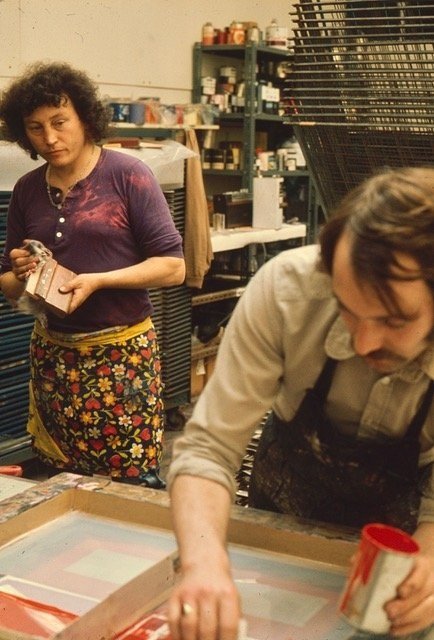
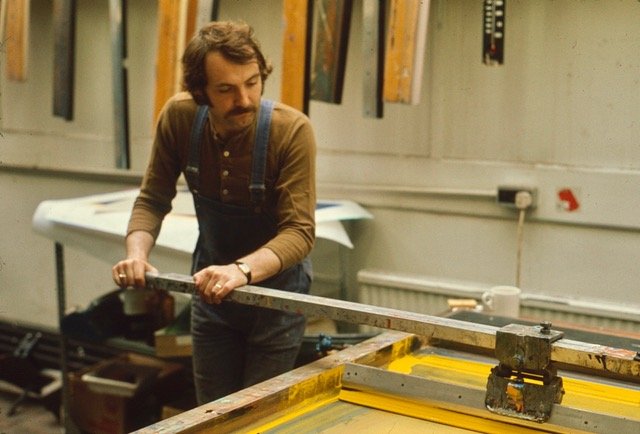
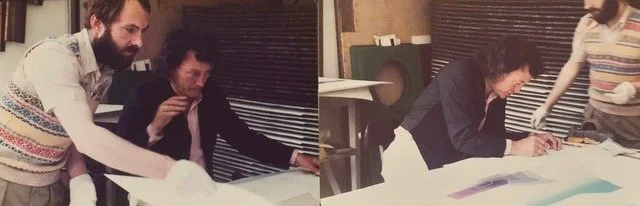
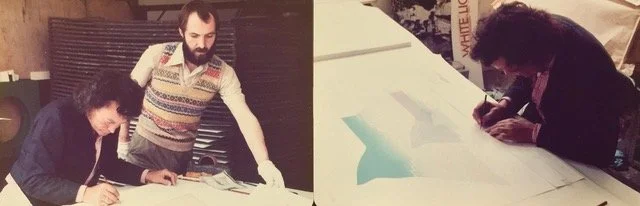
Benjamin was not someone to be deterred by technical challenges; when he decided to make a series of screen prints in larger editions of 50, he chose the shiny, white Astralux, an unforgiving, non-absorbent paper that was slow to dry. The images were centralised and somewhat related to the sculptural pieces and the proscenium arches in theatres. He also used a scattering of floating forms, similar to previous printed images, with the addition of sinuous silver lines that wandered across the forms, and titles that referred to favourite cinemas, the Savoy, Regal, Essoldo. The prints were named the ‘Eden Gate Suite’ with reference to Bob Dylan’s edgy song titled the Gates of Eden, and Kevin Harris (above) printed them to perfection.
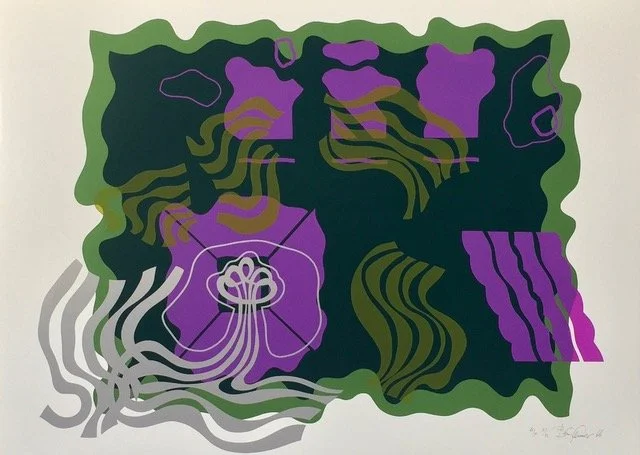
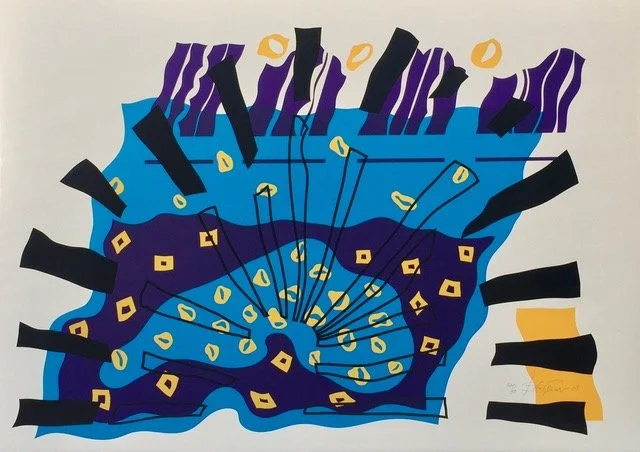
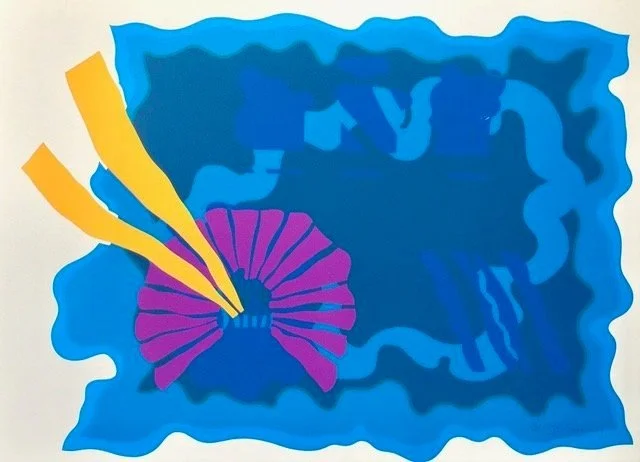
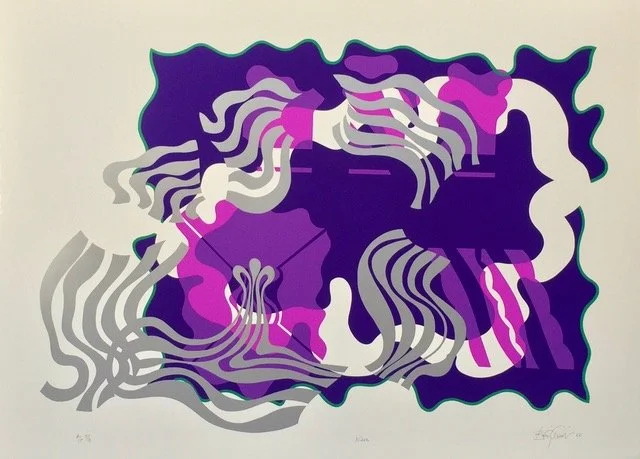
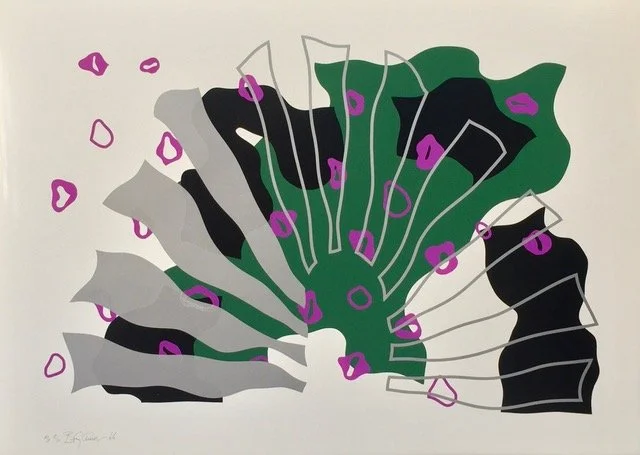
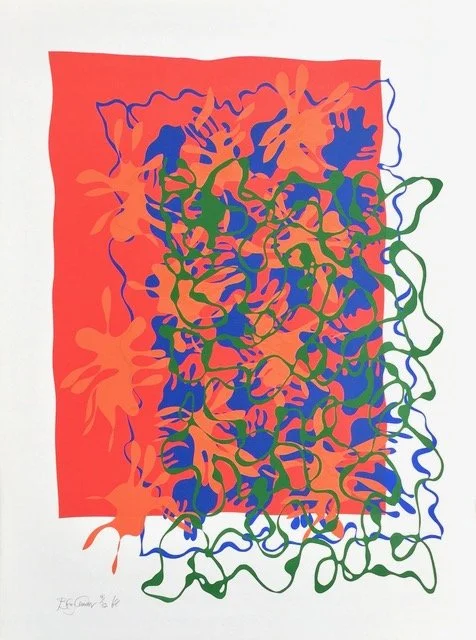
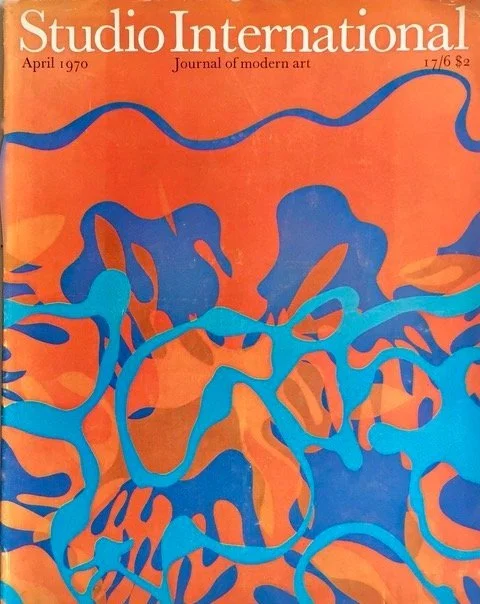
The next prints followed on directly—flat irregular forms and irregular ovals that were reminiscent of the ‘floating’ Perspex sheets in the Gentle Edge Sculptures. The series was titled ‘Overlayers’—inspired by his beloved Grandma’s distinctive phrase—used to cover all things unexplainable/unknowable as ‘Overlayers for Medlers’. A detail from one was used as the cover of ‘Studio International Magazine’, April 1970 (below).
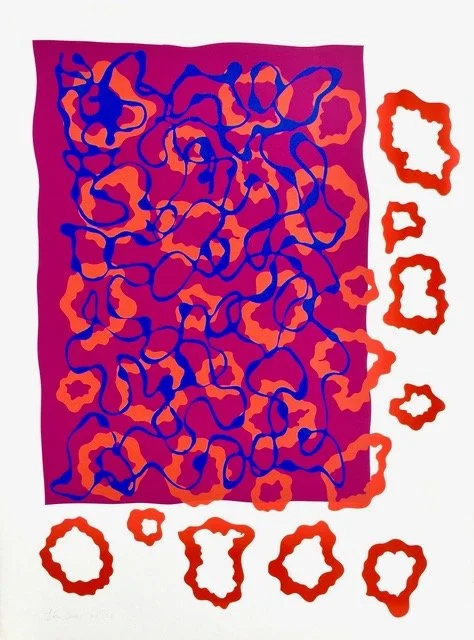
Overlayers 2. Prize winner at the 6th International Biennial, Tokyo National Museum of Modern Art, 1968.
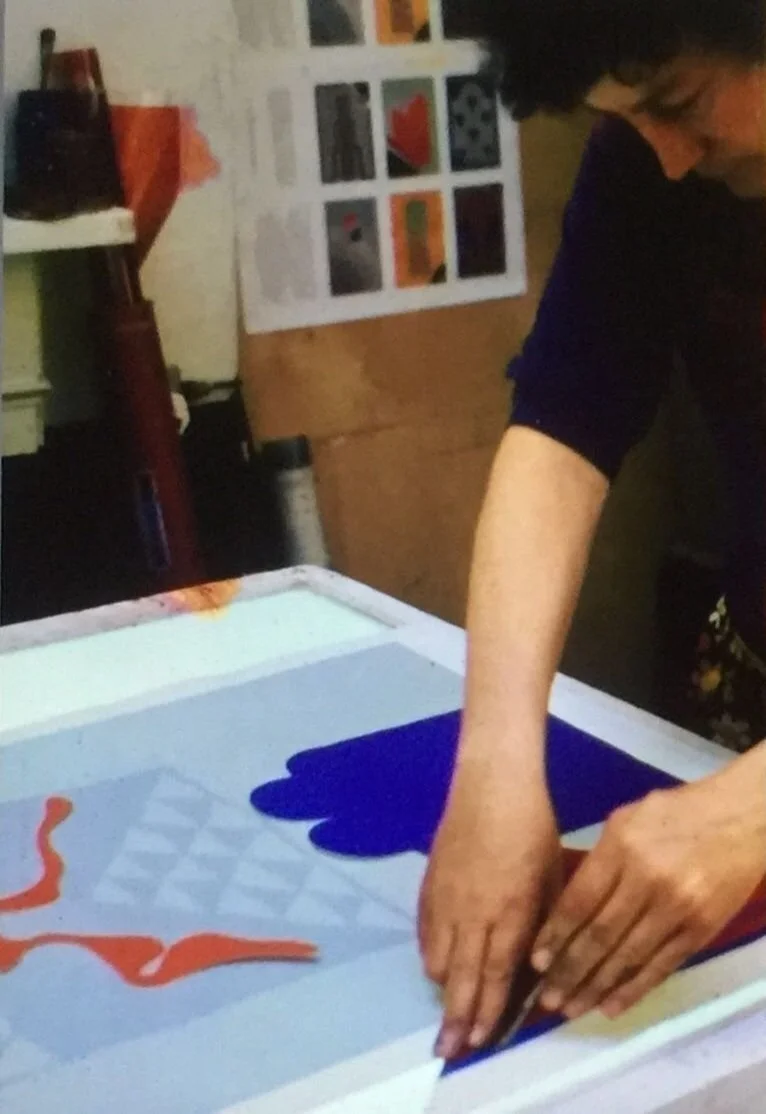

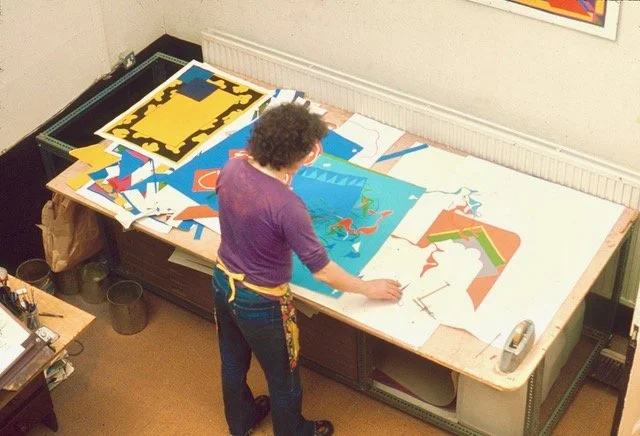
When making a print, he did not produce a finished art work for the printer to reproduce, he arrived at the image by an experimental collaborative process. When writing about it, Benjamin mentioned starting with ‘a collage of cut up proofs. After the central image has been conceived and some forms have been cut, I work on a light box to get some idea of the possibilities of the overlapping forms. I often make 4 or 5 collages of the same image and pin them on the wall in the studio. Sometimes when working on another collage, I’ll try one of the shapes over the completed works on the wall’.
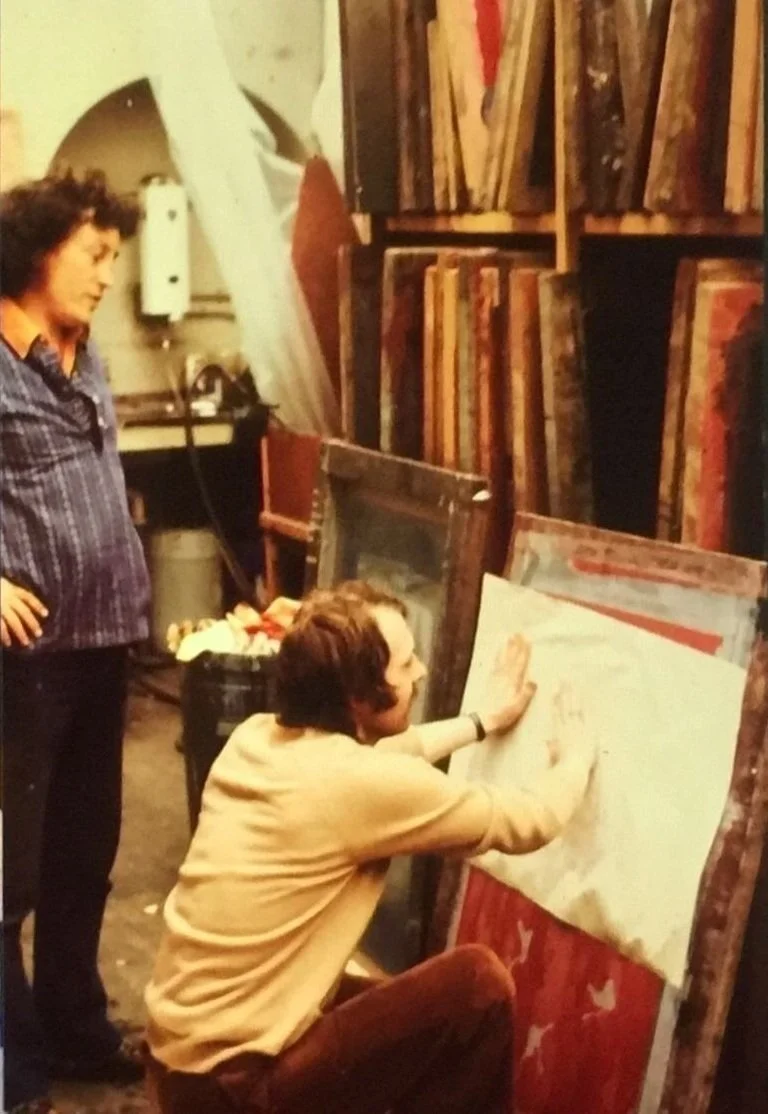
Fortunately he soon found the perfect person to work with — Kevin Harris, a highly skilled, master screen printer who had the technical skill and patience, necessary to work in collaboration. They respected and liked each other, got on socially as well as professionally … a formidable team, right from Day One.
Benjamin and Harris continued to work together with great success; the pleasure they both got from the working situation was palpable. They never looked tired, and both seemed slightly ‘high’ after finishing the days work at the studio. Maybe it was the effect of breathing solvent fumes all day, or maybe it was the nice feeling of satisfaction for a job well done?
In 1966, Benjamin had further exhibitions at the Grabowski Gallery and at the Central Street Gallery in Sydney, Australia, arranged by Bryan Robertson.
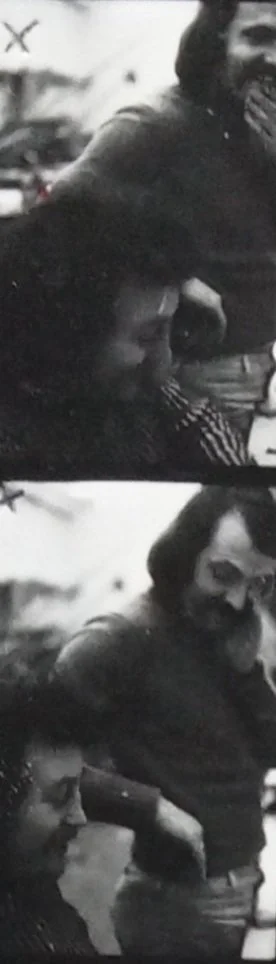
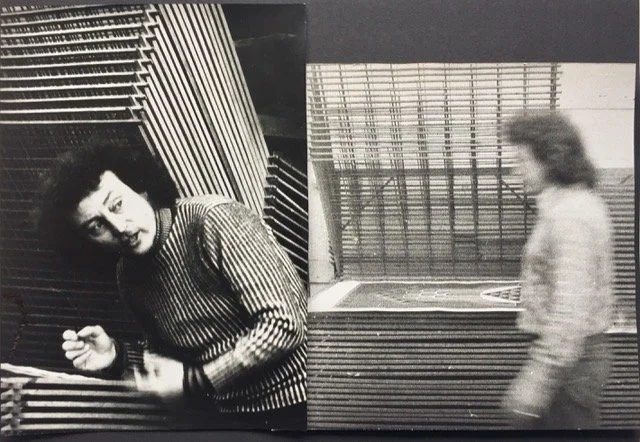
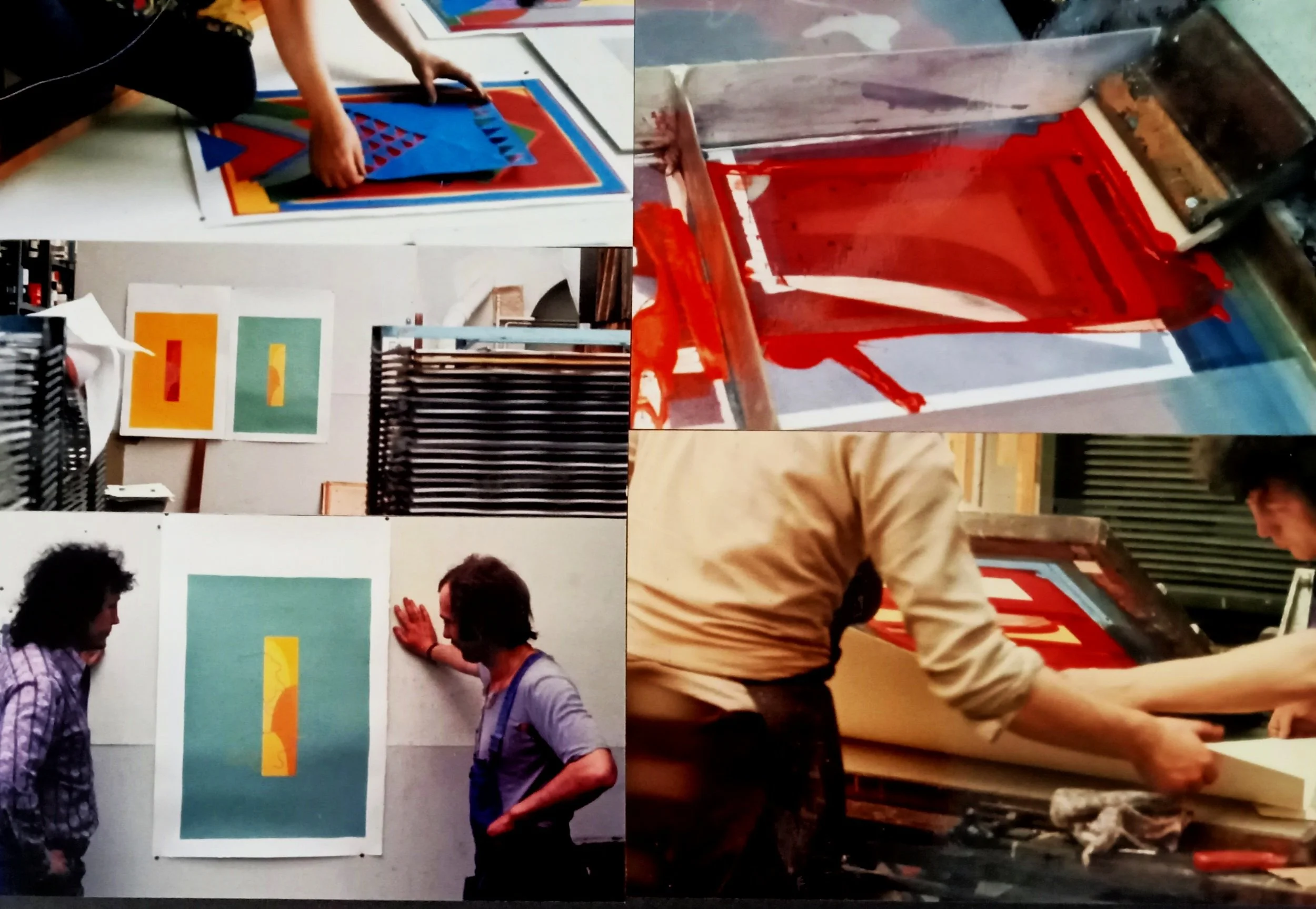
Benjamin and Kevin Harris at Calvert Street Studio, Southbank, London, 1970s