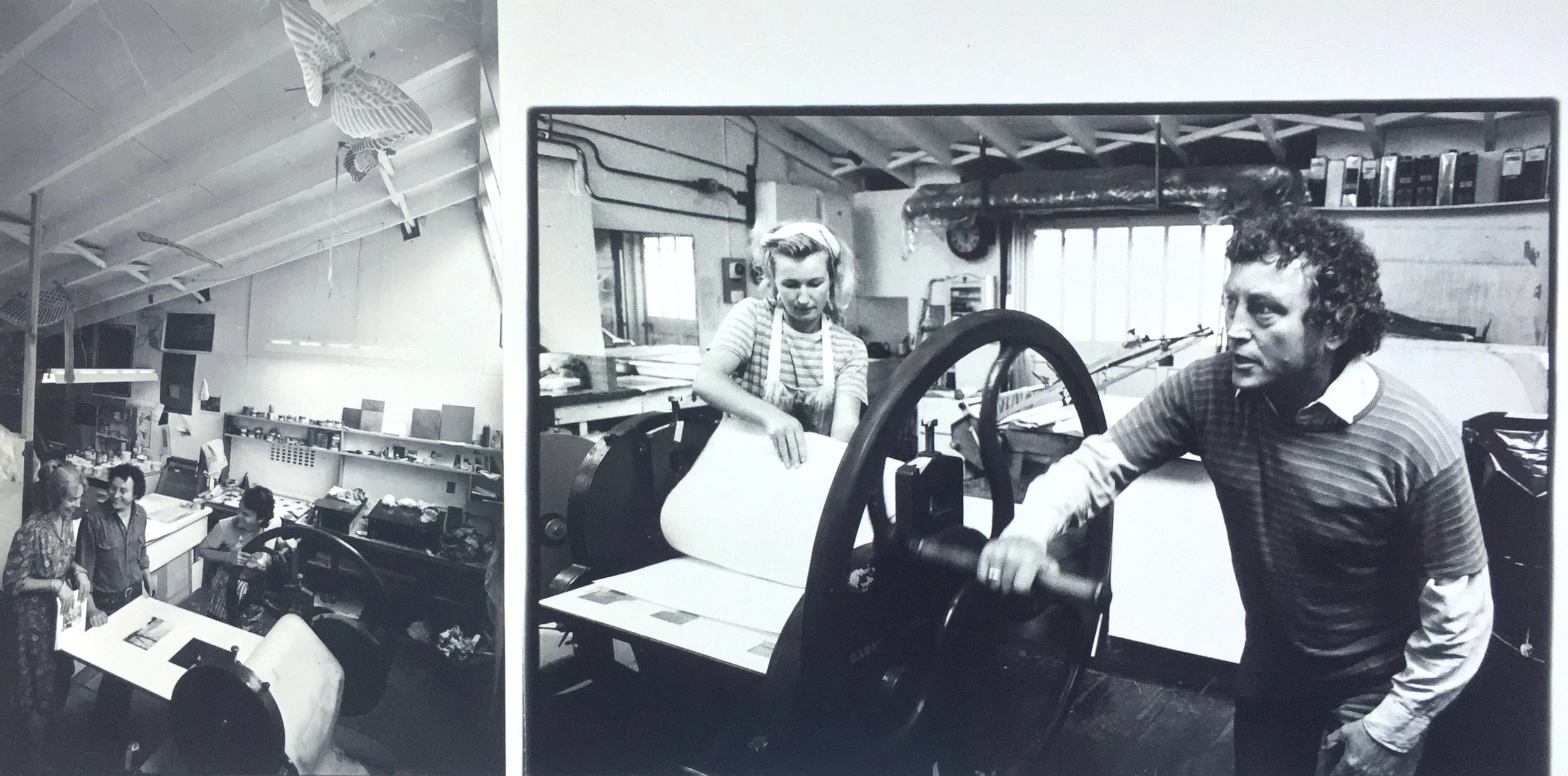
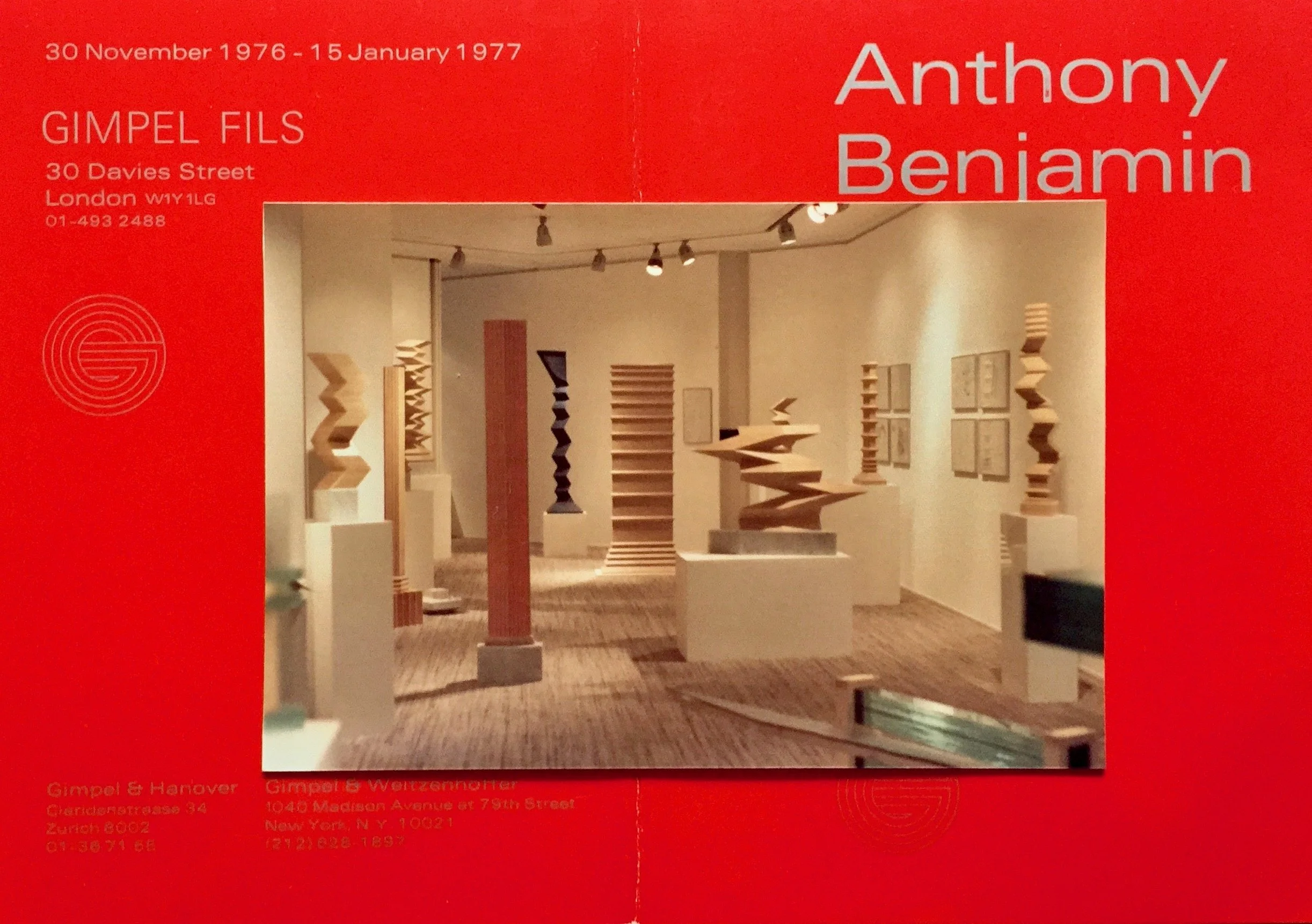
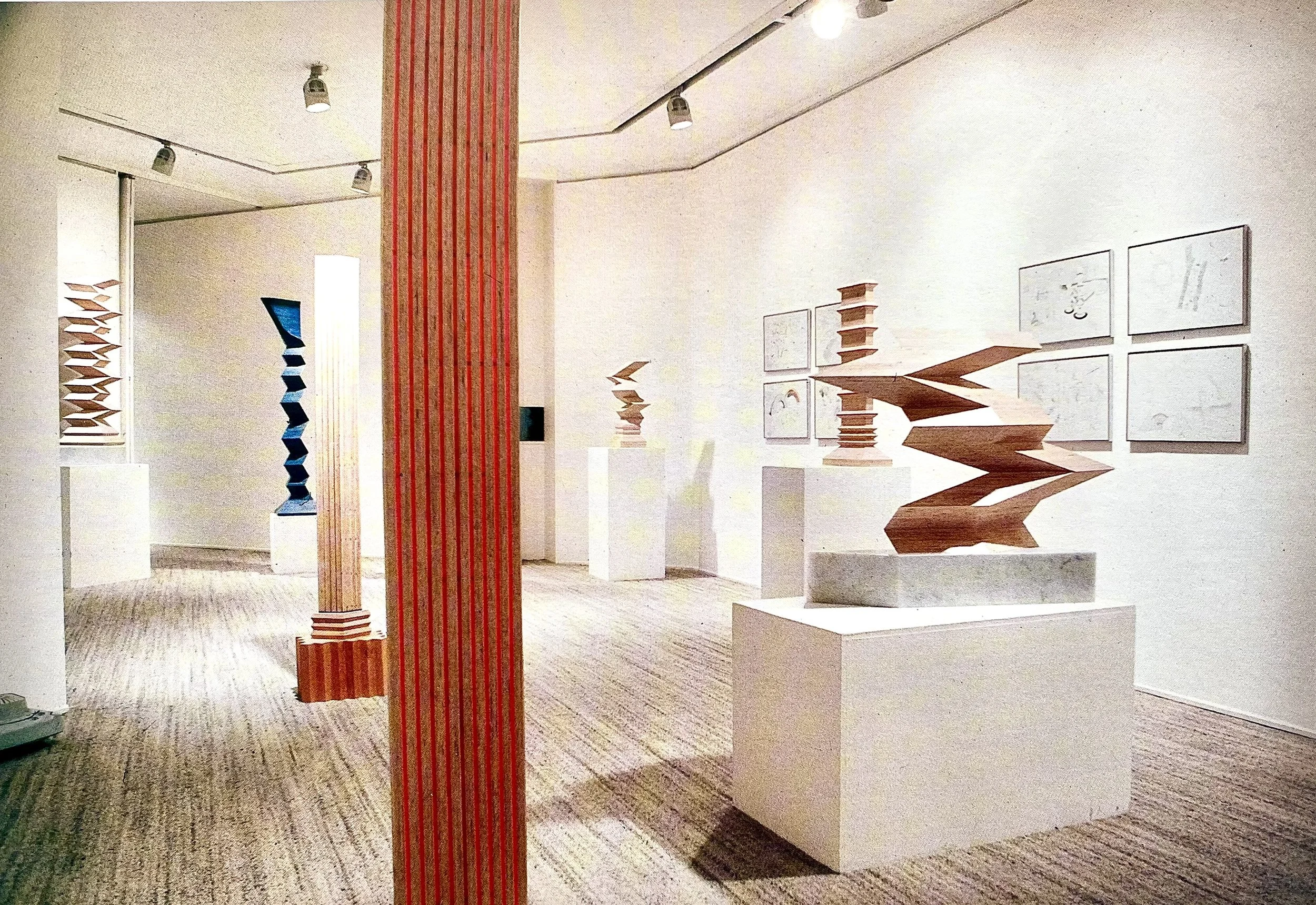
Prints dominated the 1970s for Benjamin. But in 1976, he produced a series of three-dimensional works, which again explored sculpture’s potential for defining space, if in a manner somewhat more restrained than the Plexiglass works of the 1960s period. These were made of pieces of birch ply, layered, laminated together and sawn to create zigzagging columns of striated timber. With muted reference, perhaps, to ‘Brancusi’s endless column’. They rose angularly, energizing the space around them. Some were more soberly vertical than others and some incorporated other materials—marble bases being carved to continue the dynamic accent.
Chris Stephens, Anthony Benjamin, 1931-2002
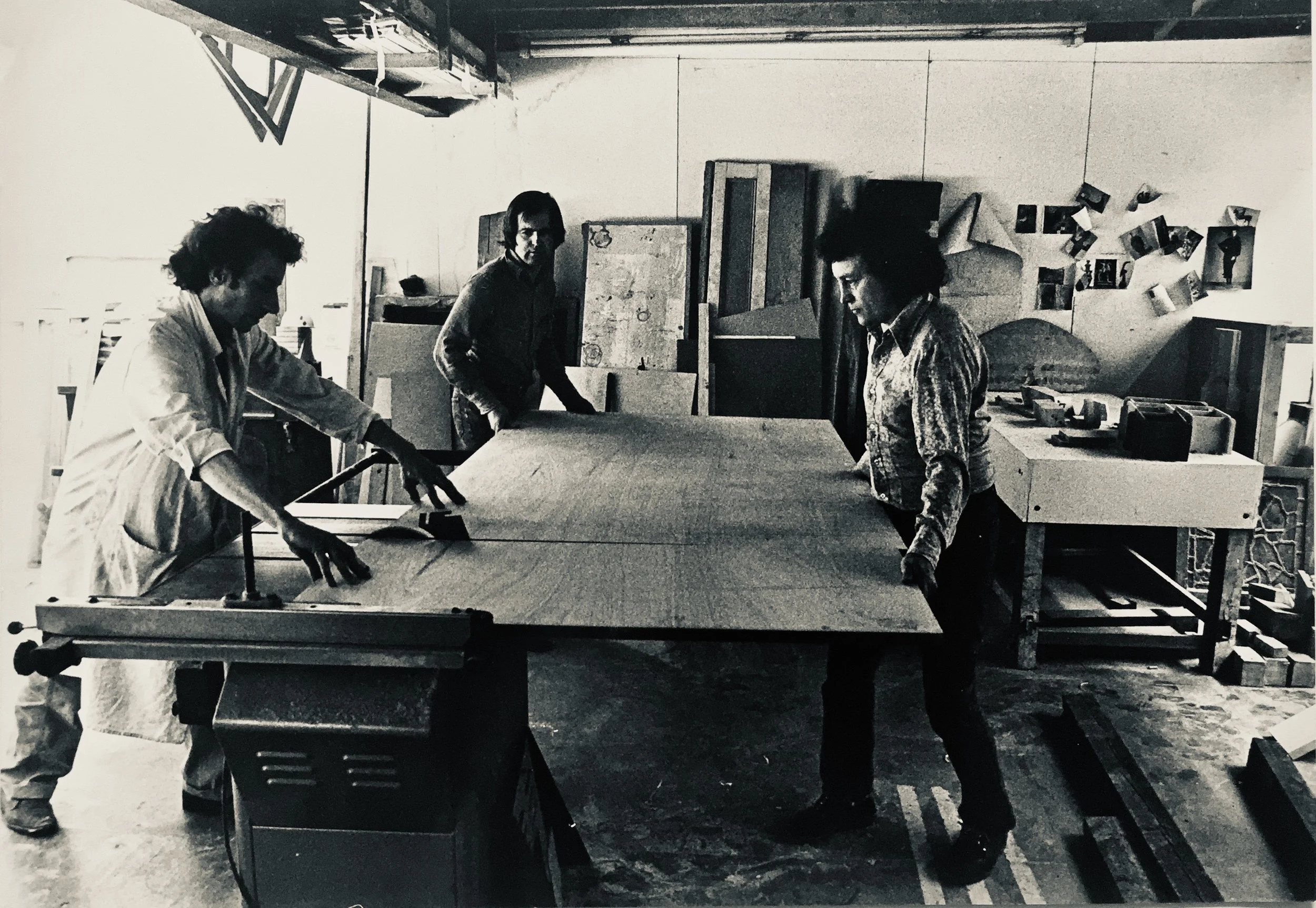
Simon Brint, musician, and Tony Staples, lighting designer, working with Anthony on the first stage of cutting the plywood for the sculptures, 1976-77
There were echos of Benjamin’s early explorations of three dimensions in works which incorporated acrylic. Sandwiched between vertical strips of plywood, the tinted plastic allows light through, becoming zips of glowing colour that add to the sculpture’s upward reach and blurs the edges of the wood, so that the whole piece seems to hover in space …Photographs show how the ensemble of energetic forms had a dynamic quality beyond that of the individual pieces.
Chris Stephens, Anthony Benjamin, 1931-2002
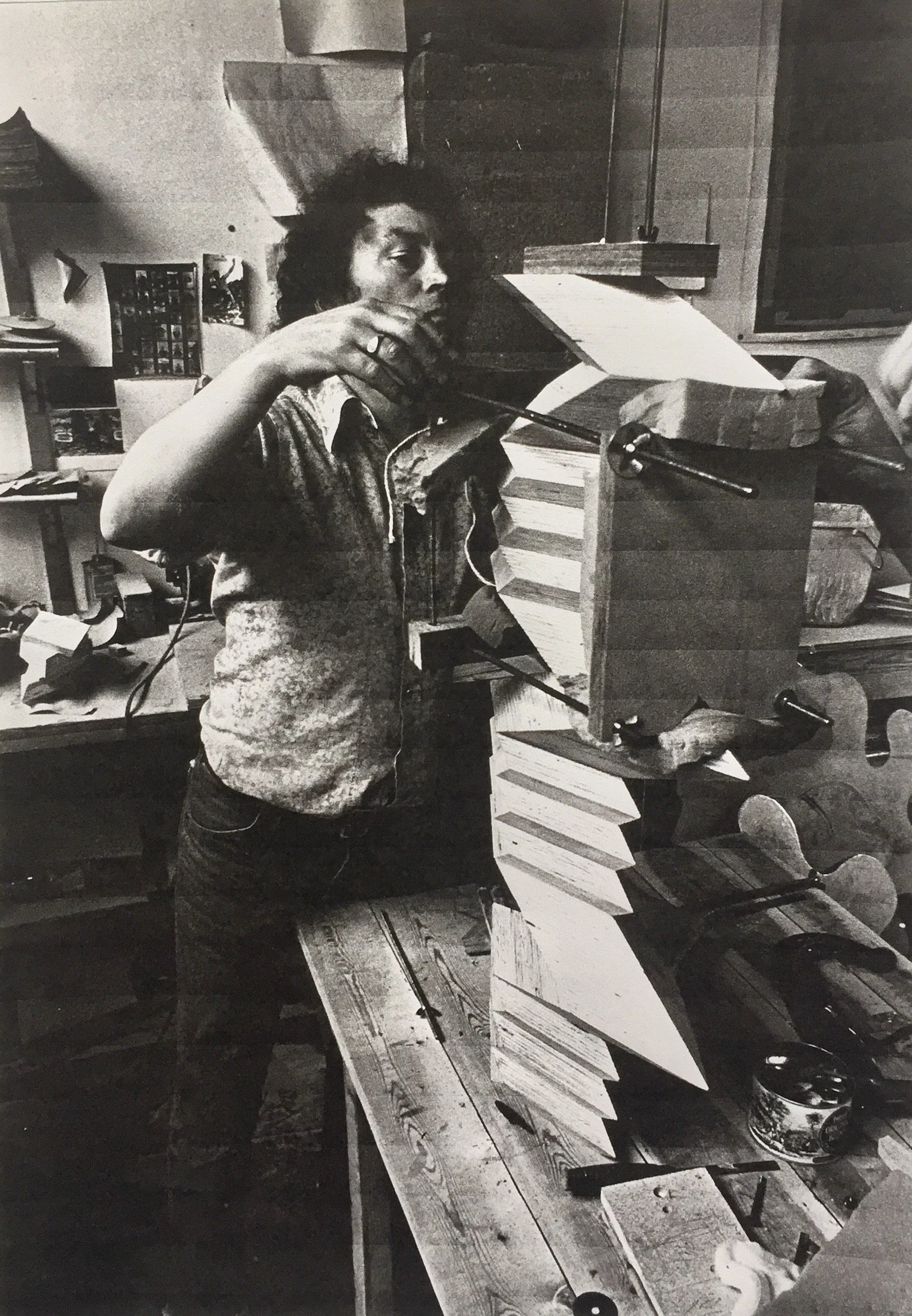
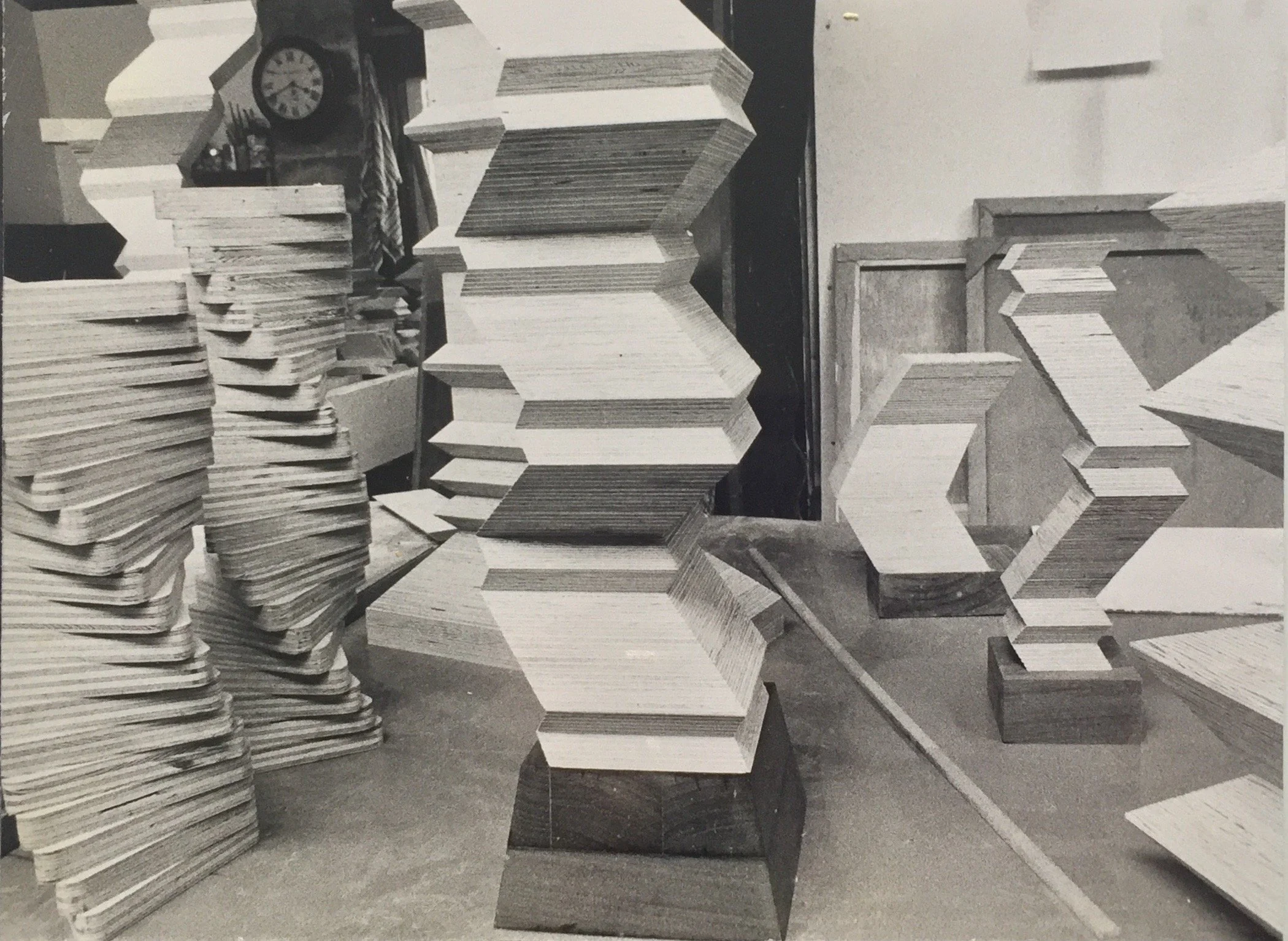
Anthony was trained in engineering and used his skills in making the complex pieces that involved cutting and bevelling the 18 mm, 14-layered birch plywood assembled into zigzagging columns and straight forms.
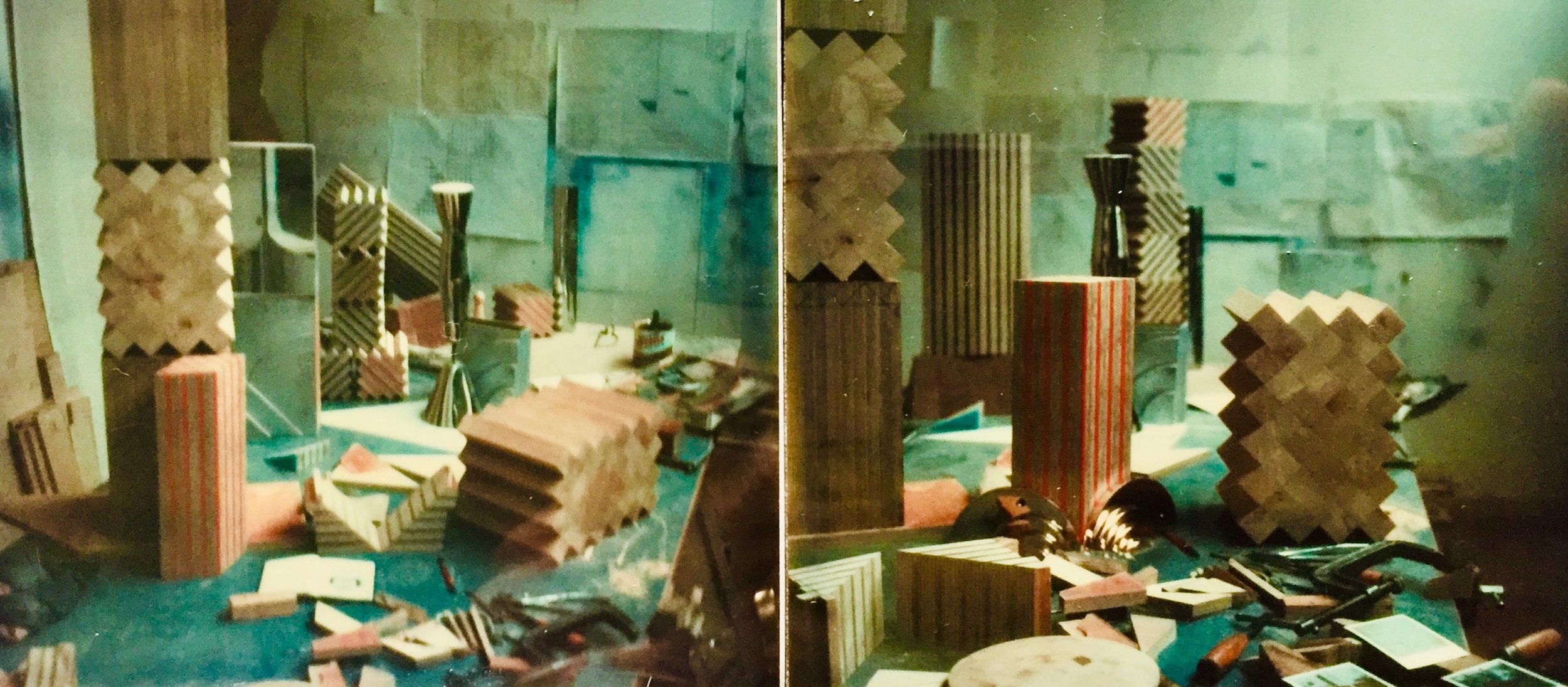
Works in progress
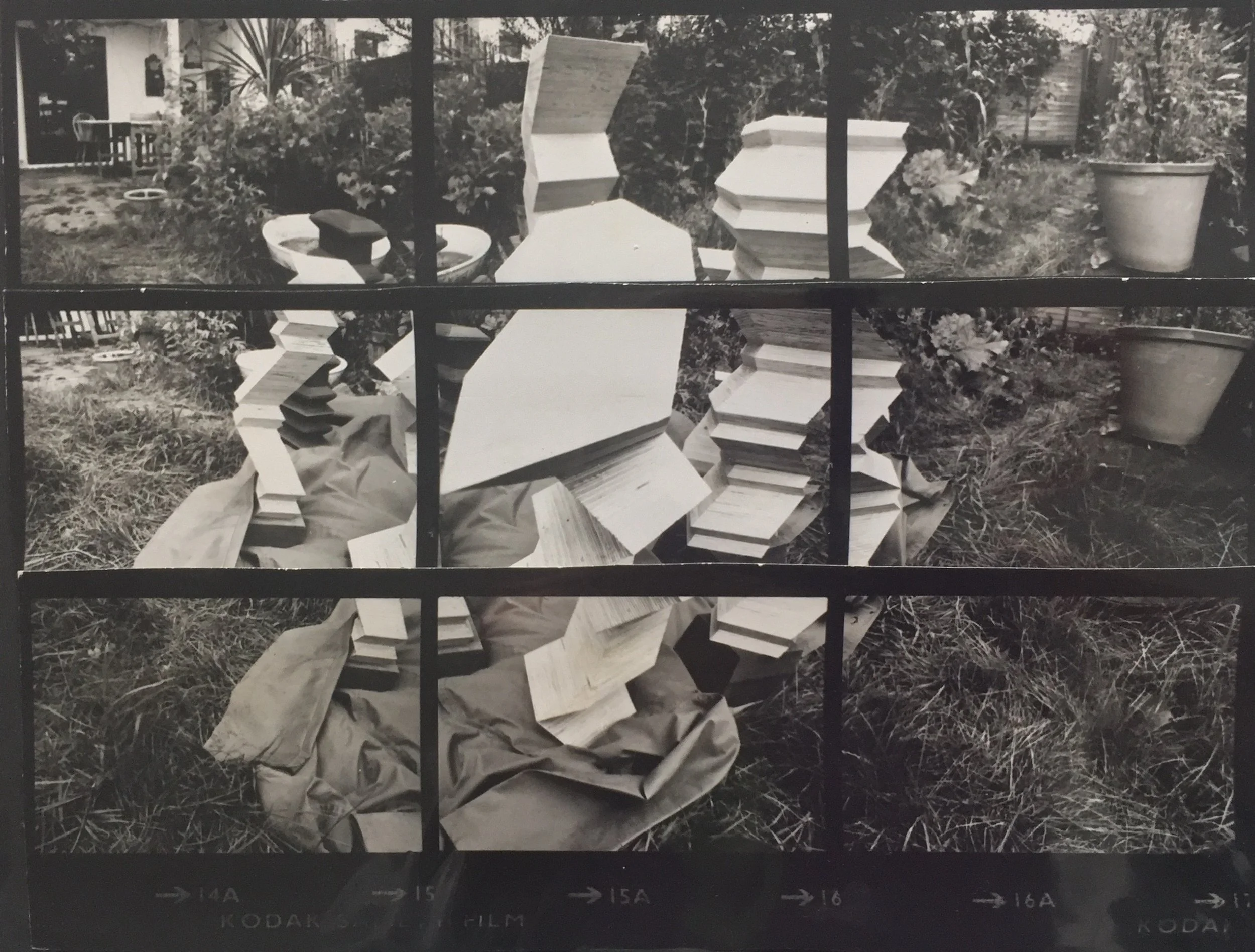
Nine-photo collage by David Wright, 1977
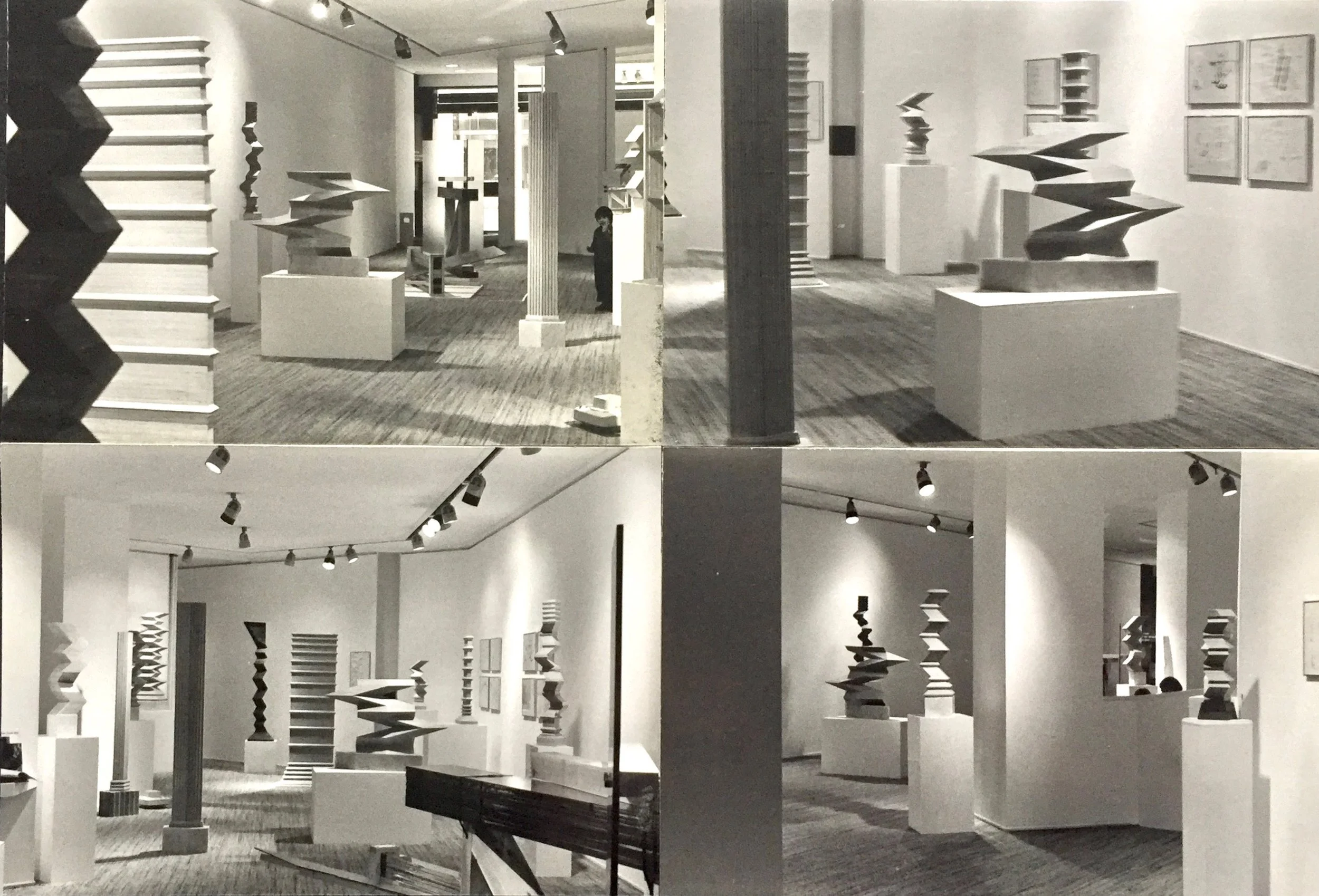
In the Gimpel Fils gallery. Photos: Nancy Patterson, 1977
While producing the Gimpel show, Benjamin was also working on etchings in the same studio, some of which reflected the layered and zigzag forms that he used in the sculptures.