‘Painting in Pencil’ London and Norfolk 1983-2002
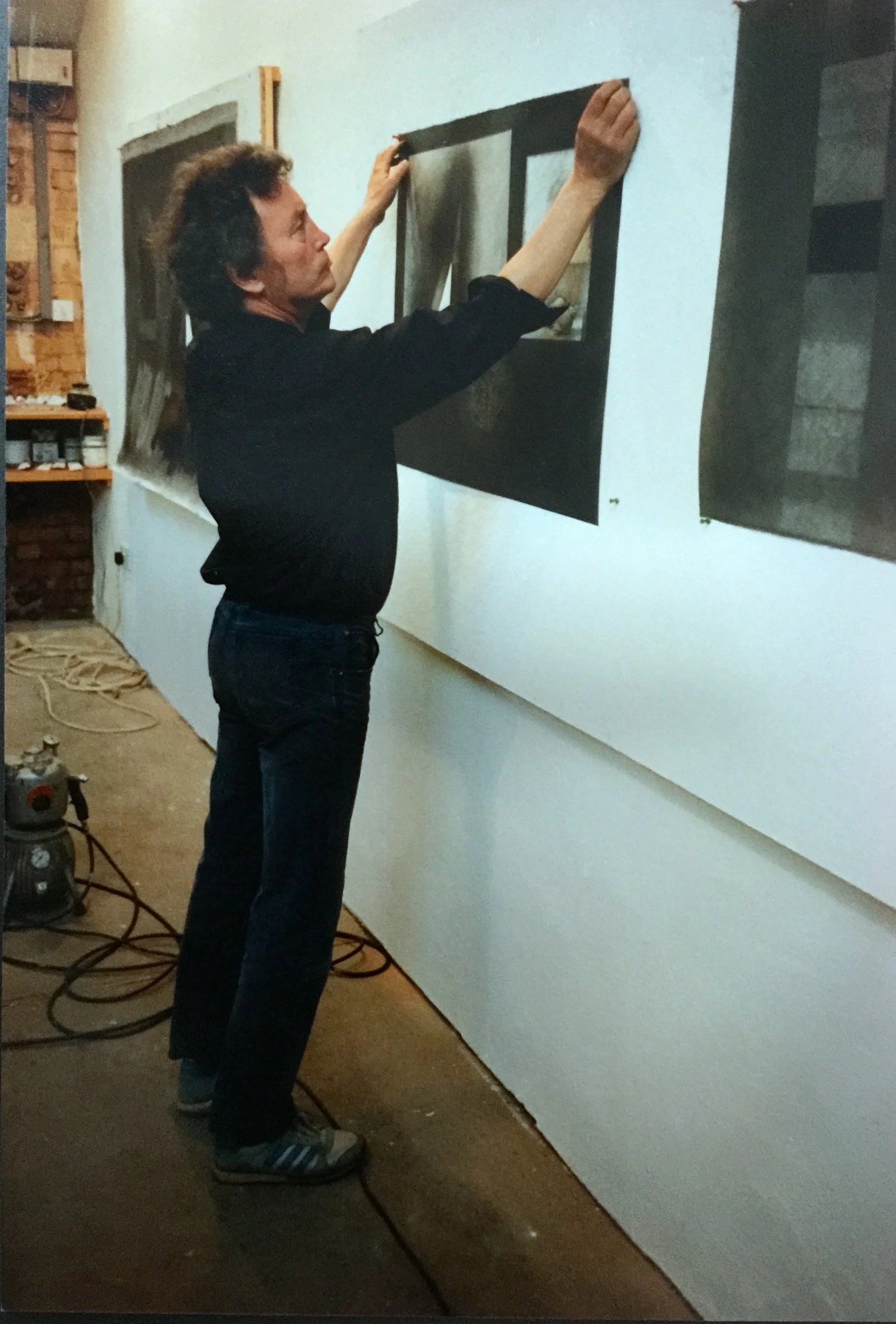
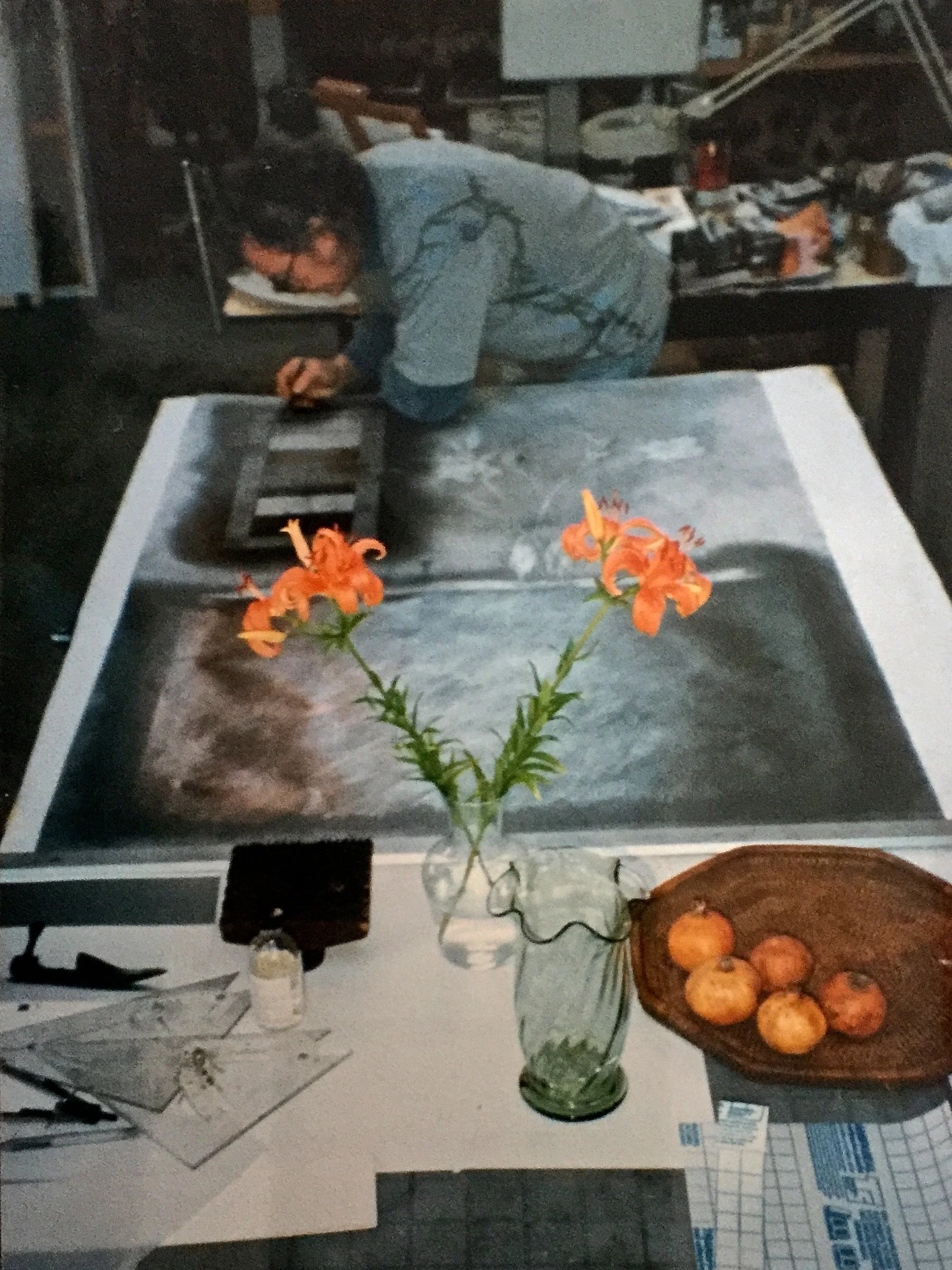
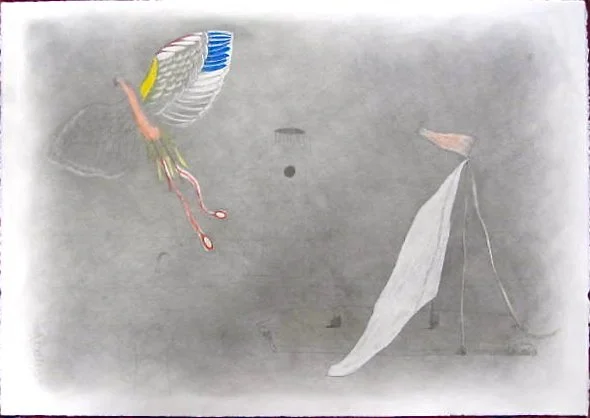
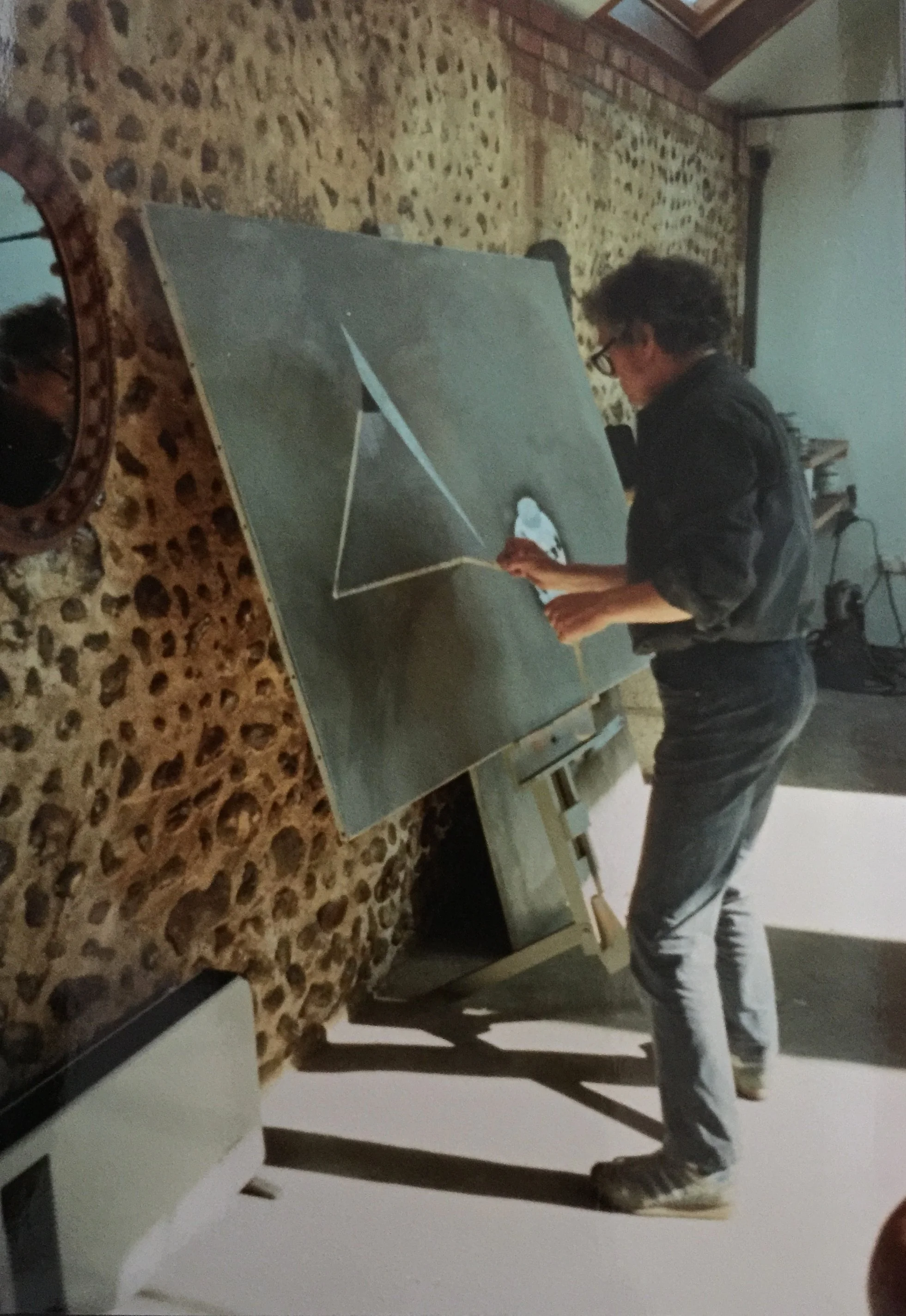
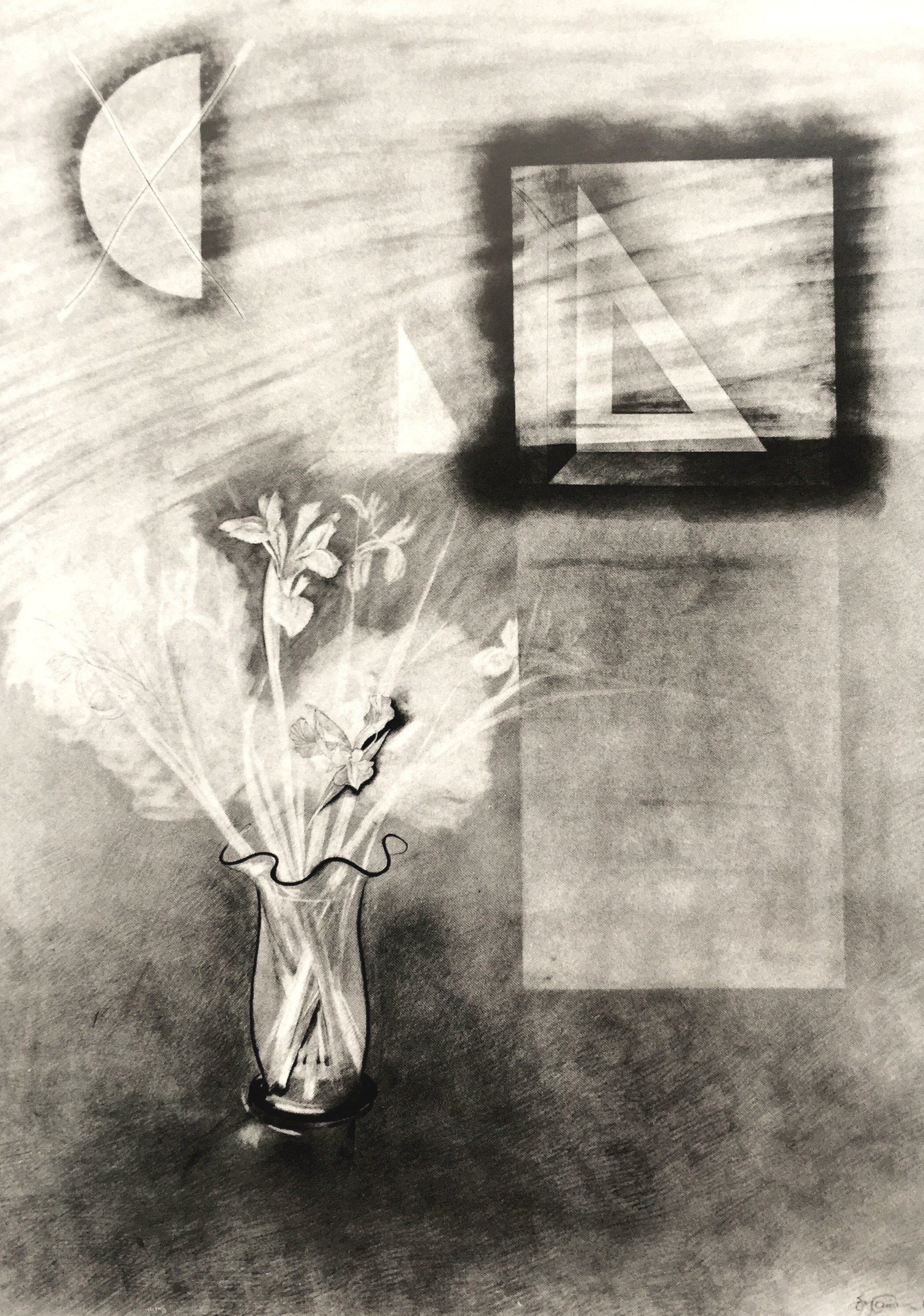
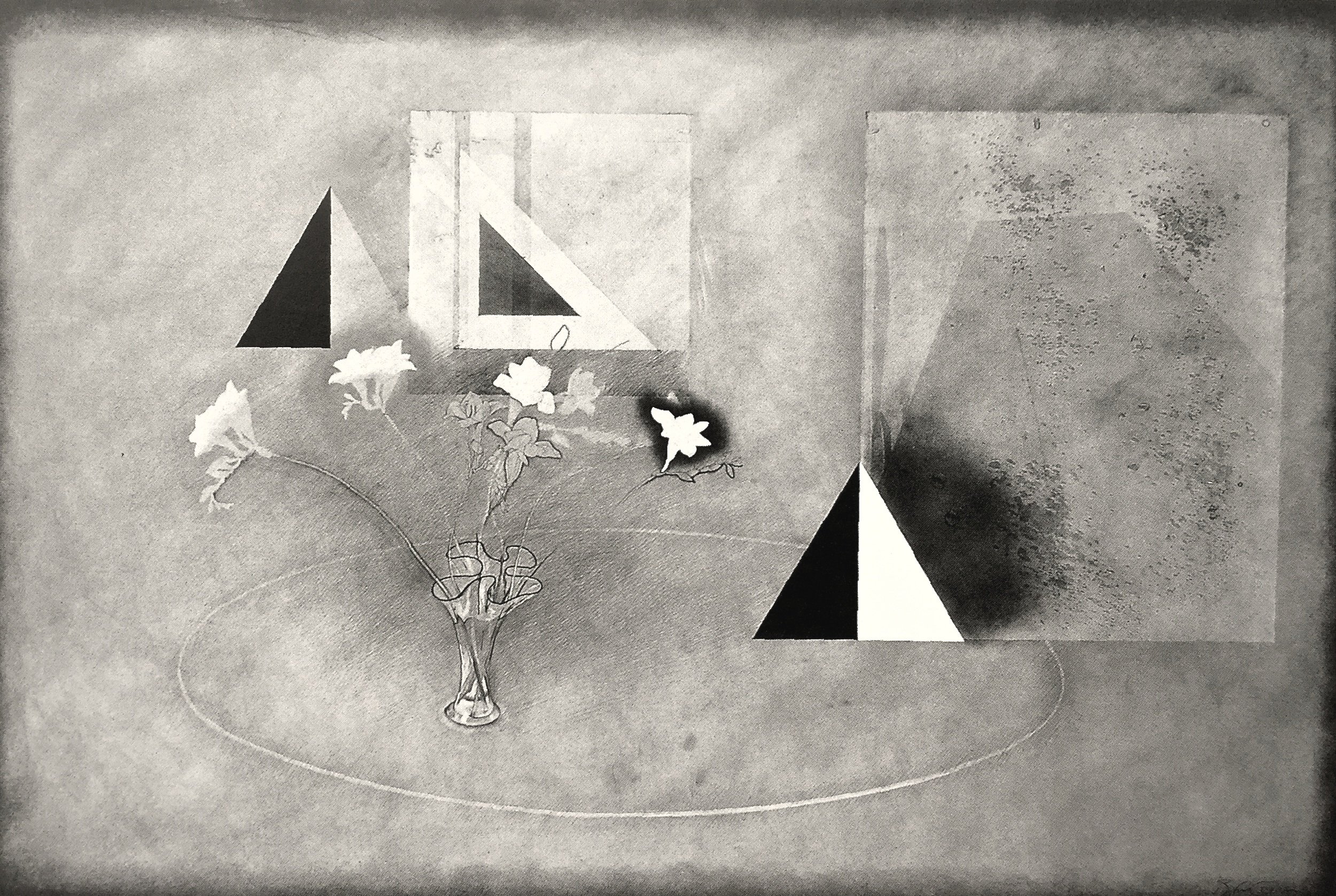
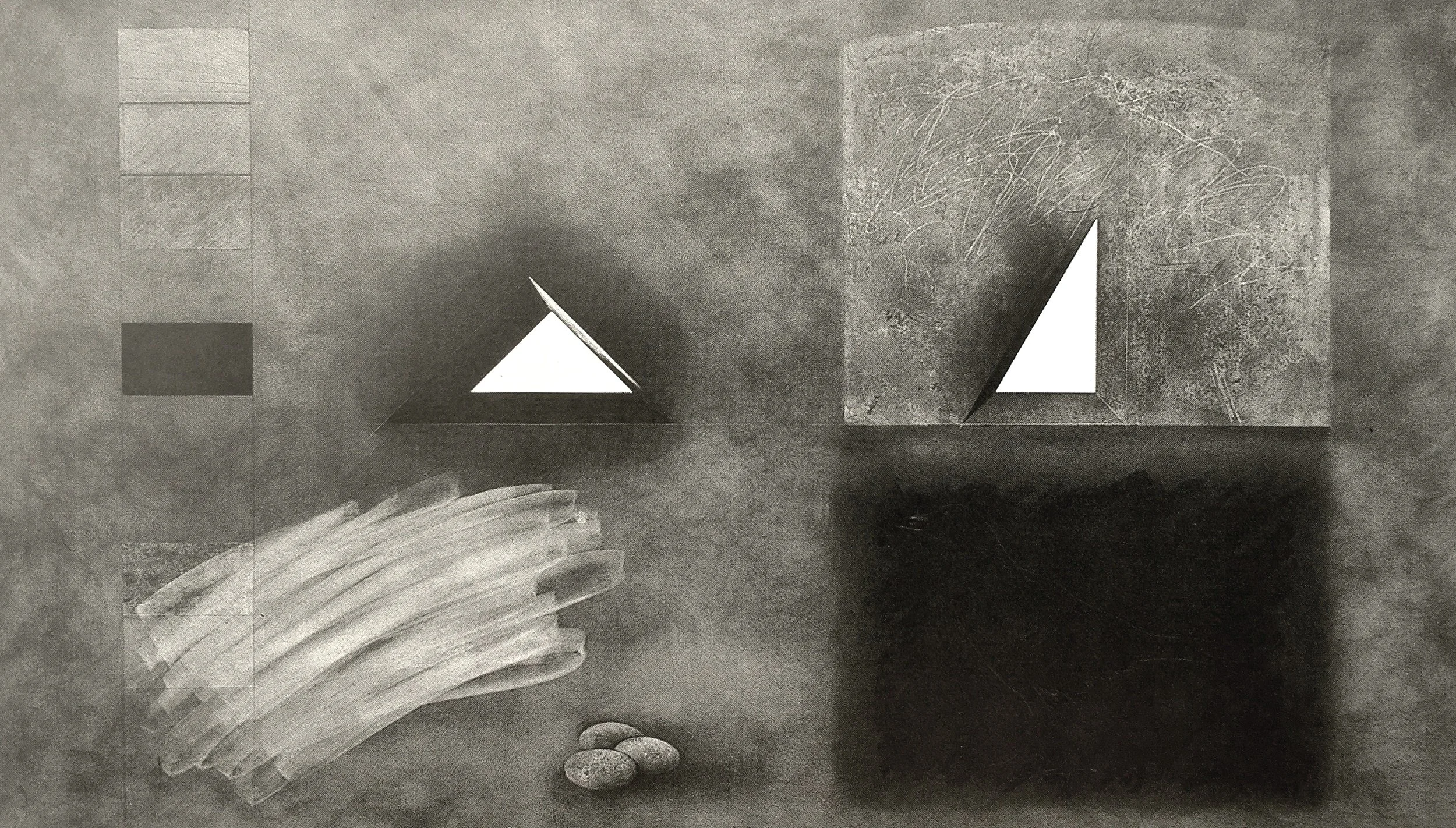
By the early 80’s Benjamin and Nancy were fed up with the gentrification of Islington and he went searching for a property. In 1983 he found a derelict cottage in Kelling Village, North Norfolk. They sold the ground floor flat of the London house and let the basement flat to Steve Benderlack, a Director at Spitting Image and moved to Norfolk. Benjamin rented a large well converted barn nearby at Lowes Farm, and after completing the art installation for the three luxury cruise ships with Nancy, he continued to work on the large drawings in pencil and graphite he had started working on in London. The calmly geometric compositions in cloudy textures incorporated detailed figurative images of significant familiar objects. A finely detailed sailing ship in a bottle (given to Nancy by her seafaring father) also fascinated Anthony; he put it into a large drawing titled - “Magic Swirlin’ Ship”… with a nod in the direction of the Dylan song with the line -”Take me on a trip upon your magic swirlin’ ship…”.
John Kelly wrote the introduction to the Gimpel Fils catalogue for the ‘Painting in Pencil’ exhibition, April-May,1990.
“The Textures of Contemplation”
“The most startling aspect of this collection of new pictures is their magnificent tranquility. Benjamin has sculpted, stroked and forged shapes, space and light to challenge the eye and coax the mind to float beyond the surface patina into a territory between night and light, sleep and wakefulness. Technique, form and function have been harnessed in a satisfying understated yet immensely consummate fashion to present windows to a world which is both intensely personal - belonging to the artist - but at the same time beckons participation. This achievement should not be underestimated, and neither should it’s intention. This exhibition is subversive.
We are living in turbulent times. Hurtling towards the century’s end, with the flotsam of wanton consumerism as excess baggage, it is paradoxically easy to dismiss contemplative art. Anger has been both symbol and graffiti of a decade of young figurative artists, and will stand testament to a time when Yang all but choked the life out of Yin. Benjamin’s abstract landscapes offer a different perspective, no less a confrontation of the status quo and, on the surface at least, more challenging. If the last wilderness is inner space, and if that universal landscape has been the subject and the canvas for art in all it’s forms since man learned to walk upright, then it’s exploration is the artist’s noblest task.
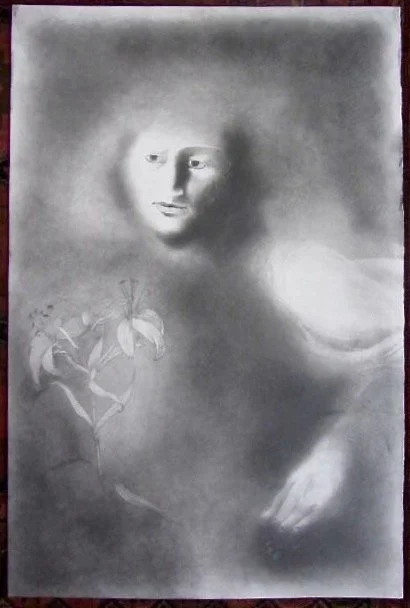
Describing the textures of contemplation, Benjamin has chosen to use the grey scale as a metaphor and visual reference. Working with soft pencils on fine linen paper, he uses geometry, recurring figurative images and the gradation , as is the working in the grayscale. Past work has been notable-not-quite-black and not-quite-white to circumscribe a world which is not necessarily there. A Navajo crow ghost balances in a sheen which the light throws on burnished graphite. A granite sarcophagus , suspended in perfect twilight, is no more than a slab of light against a grey wash. The lily, skull and catafalque all allude to the transience of life, but the death in life which these pictures suggest implies no menace, no decay.
Elegiac meditation is a new aspect of Benjamin’s work, as is working in grey scale. Past work has been notable for the use of vibrant colours, but the restraint, calmness, economy and technical proficiency are a common feature of both sculptures and paintings. Paradoxically, the absence of colour in this latest, and most challenging series serves to put his earlier work into clear perspective. For Anthony Benjamin, the artist’s muse is the colours and textures of the mind. The interaction of object and sensibility is both the beginning and ending of art. This extraordinary series takes us a step further towards charting that intangible territory, halfway between light and night, between definition and abstract, quick and dead.”
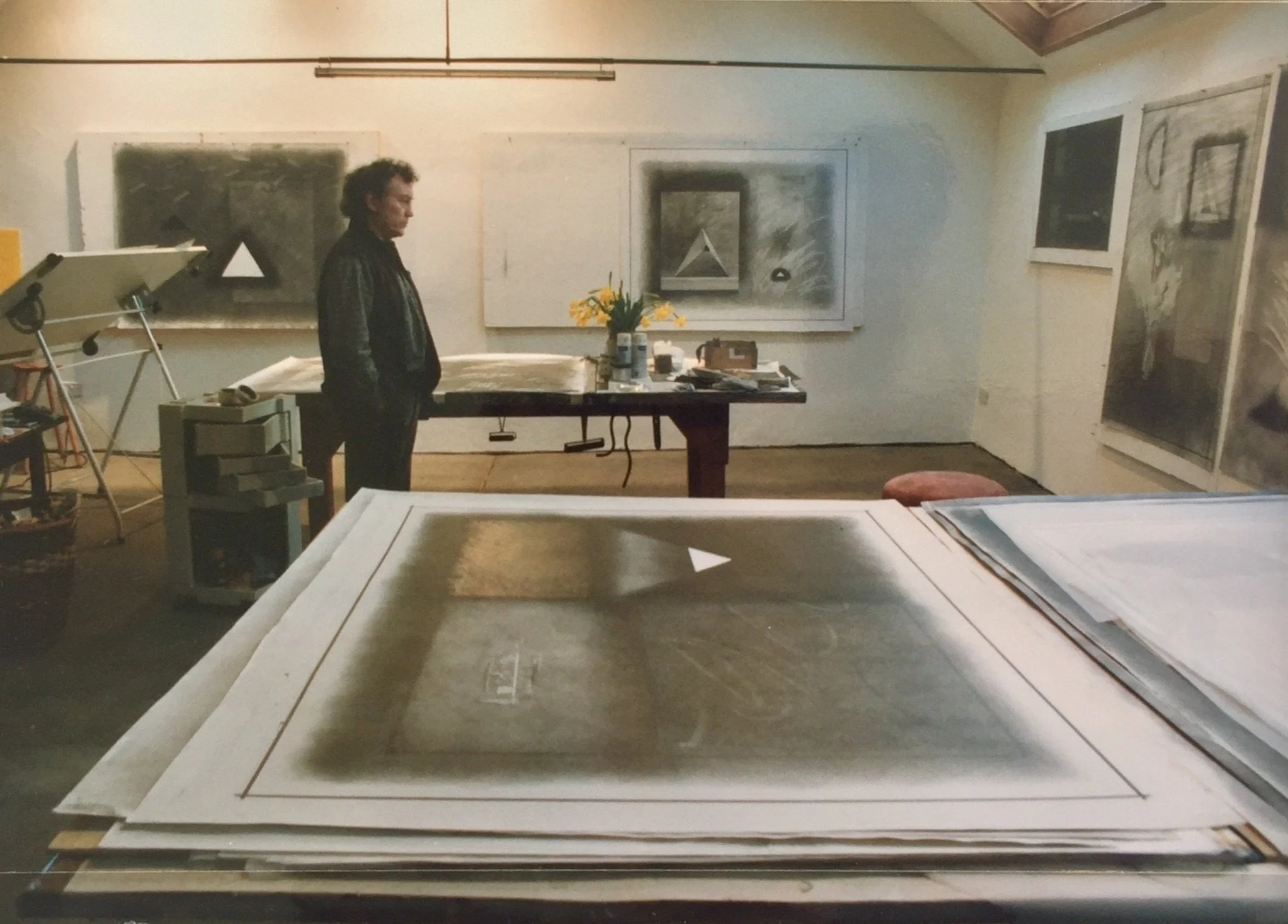
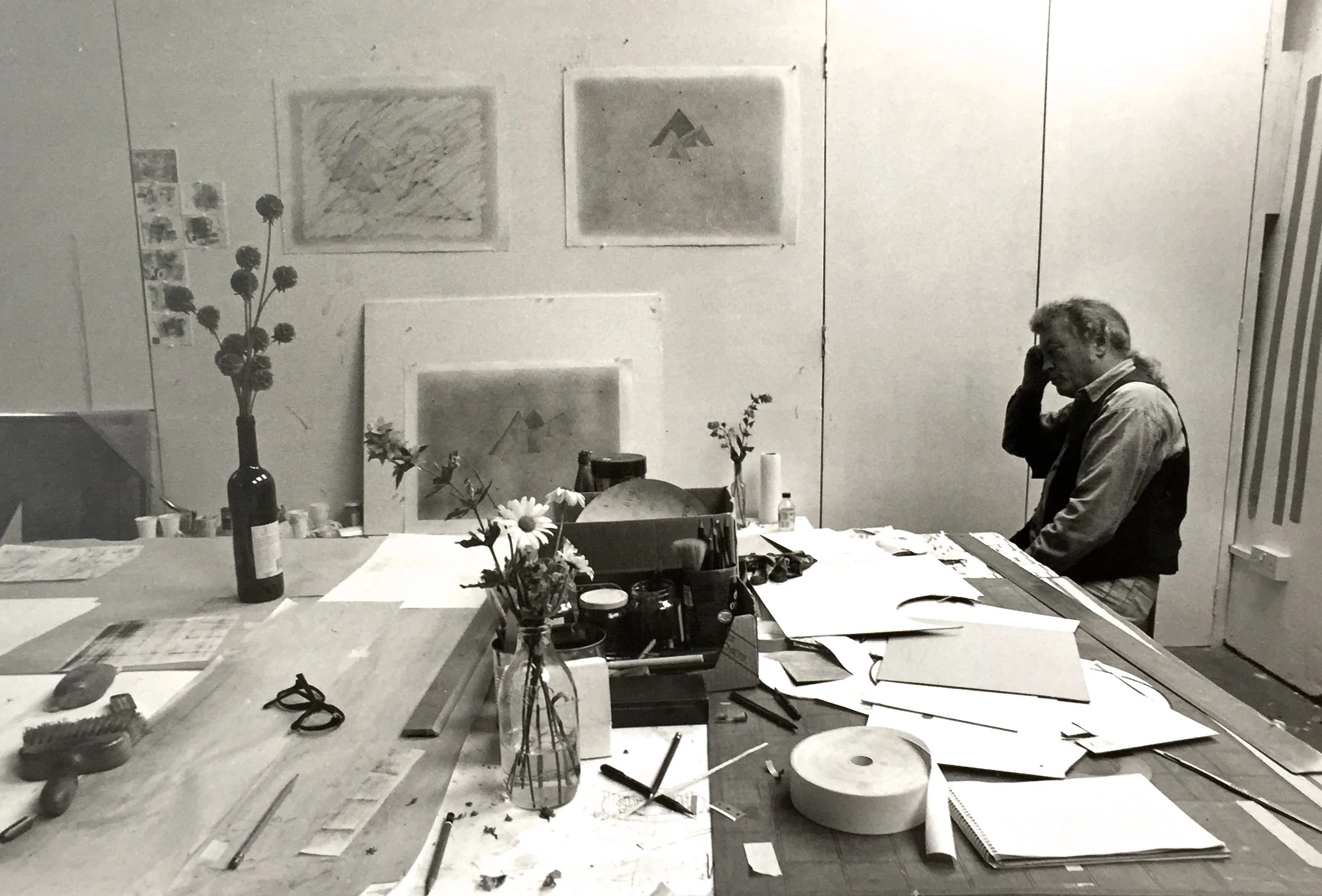
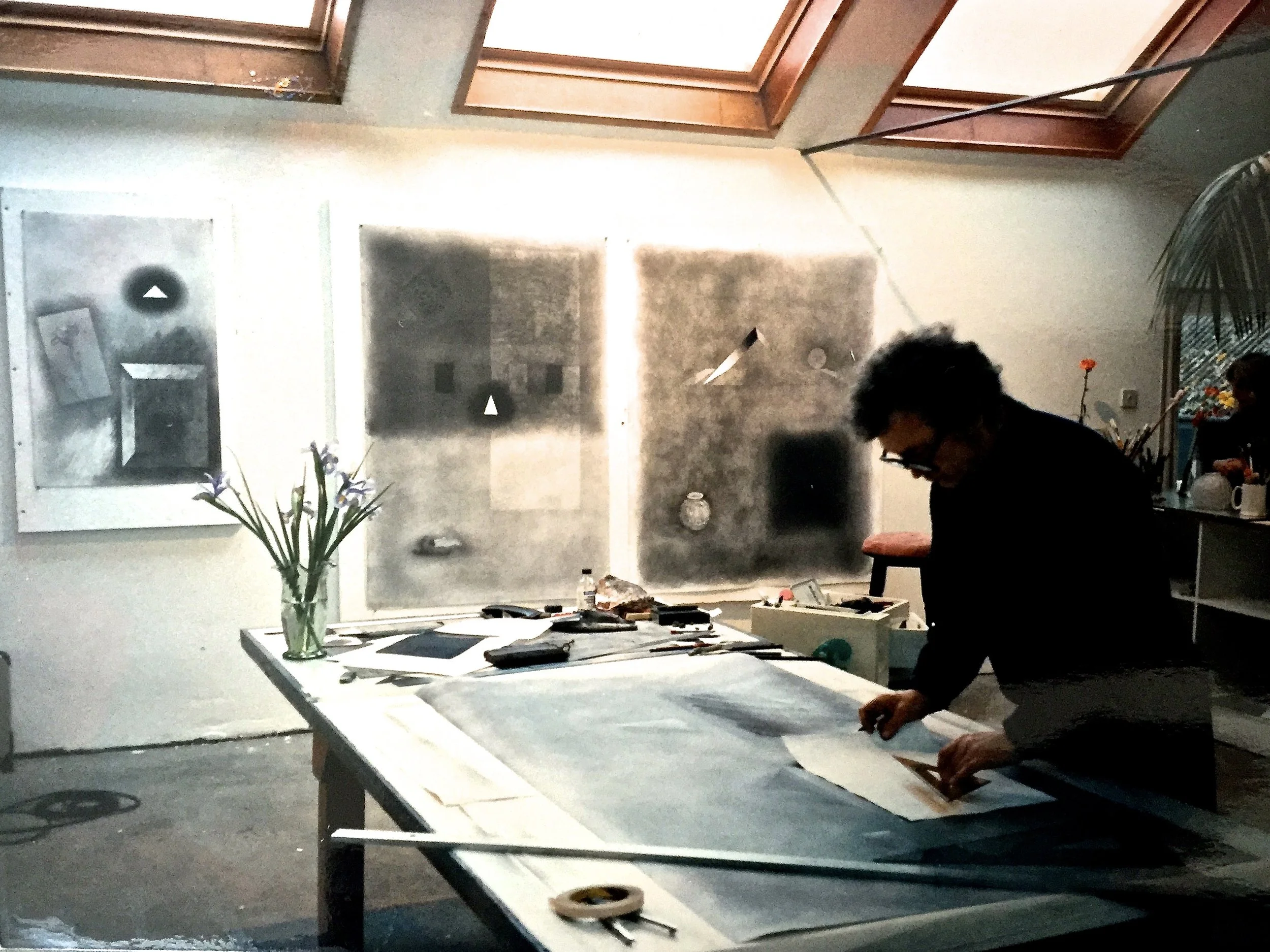
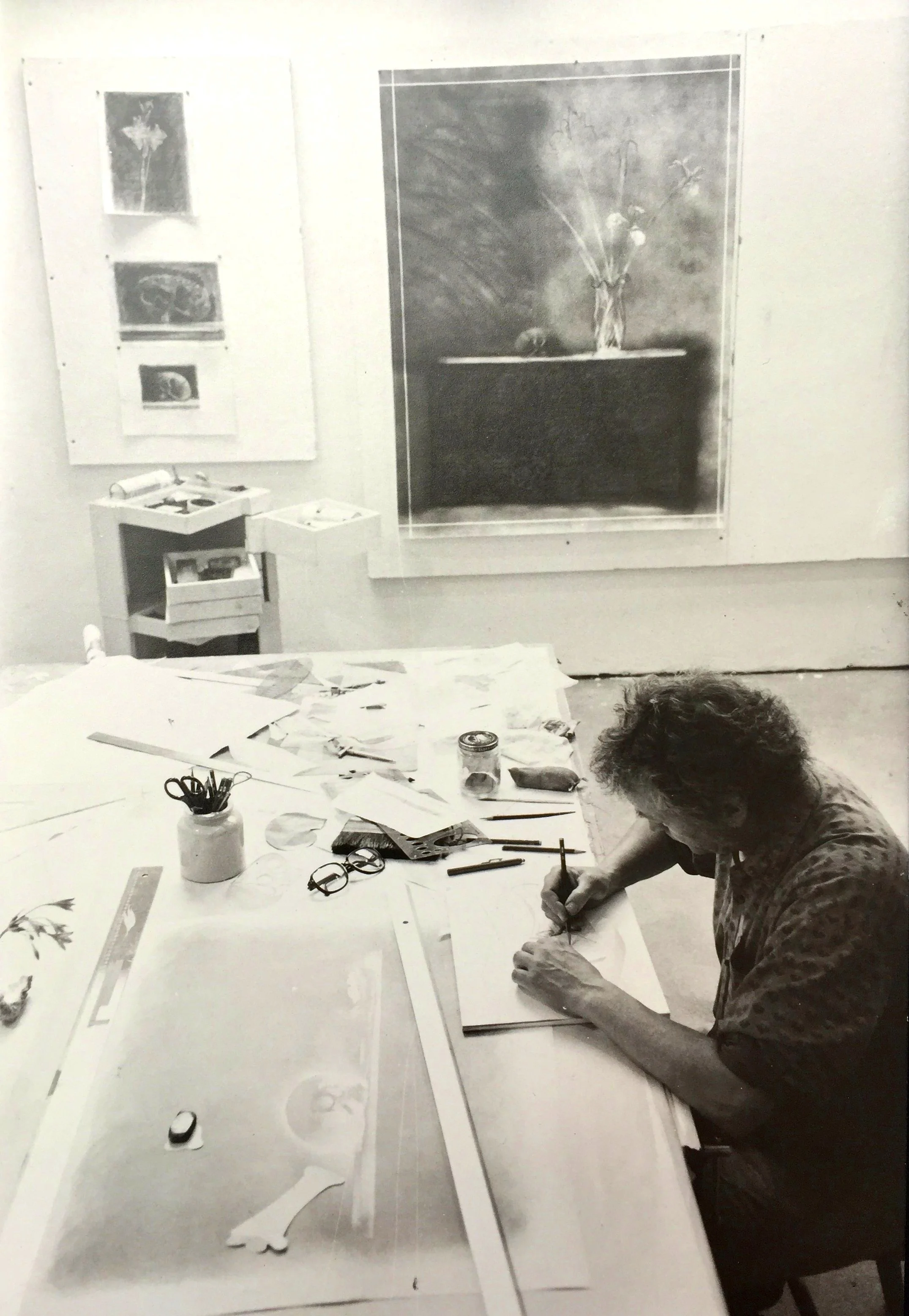
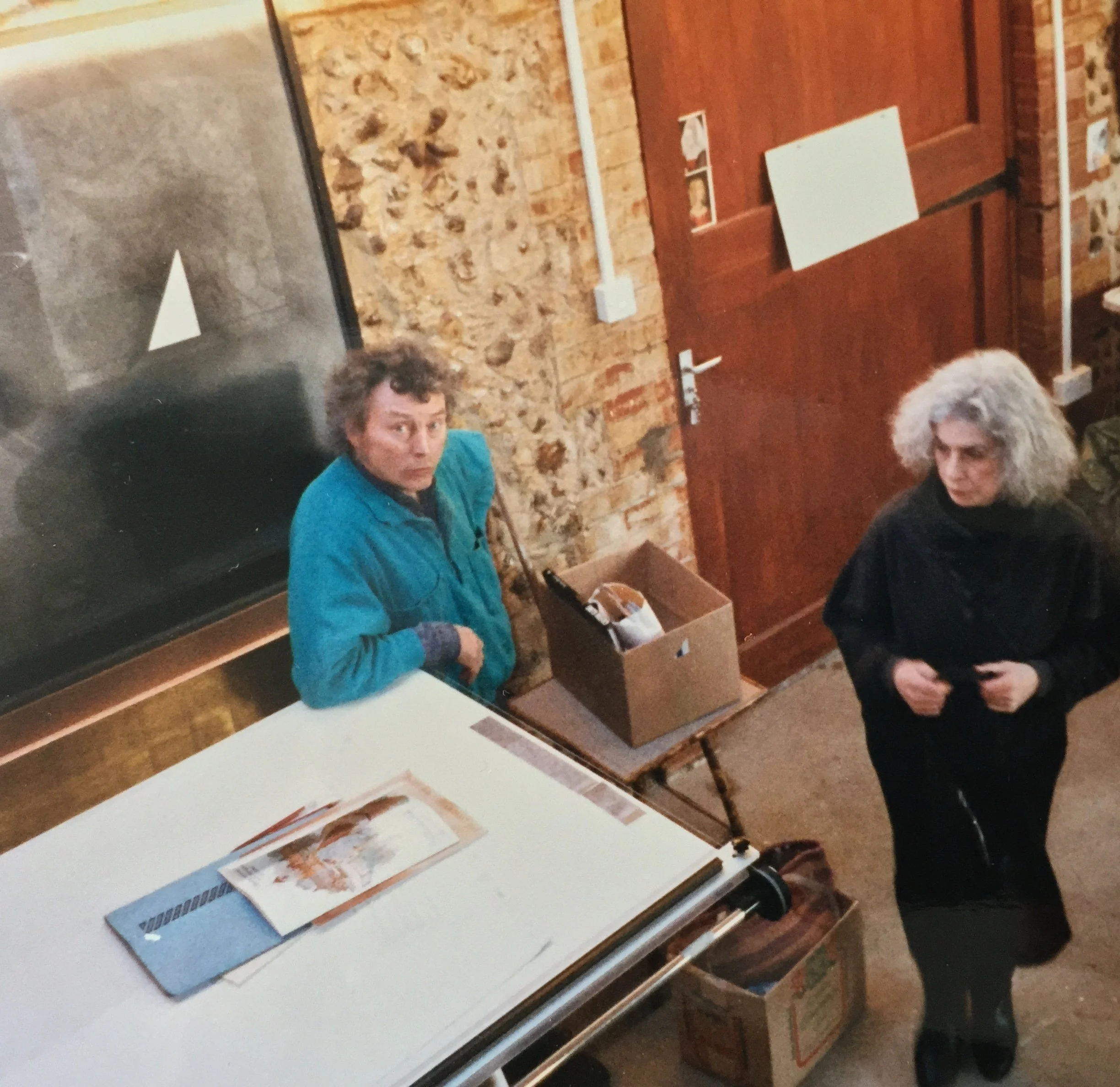
Benjamin’s studio, Lowes Farm, Holt, Norfolk
Image on the table: 'Magic Swirlin’ Ship’, 1989
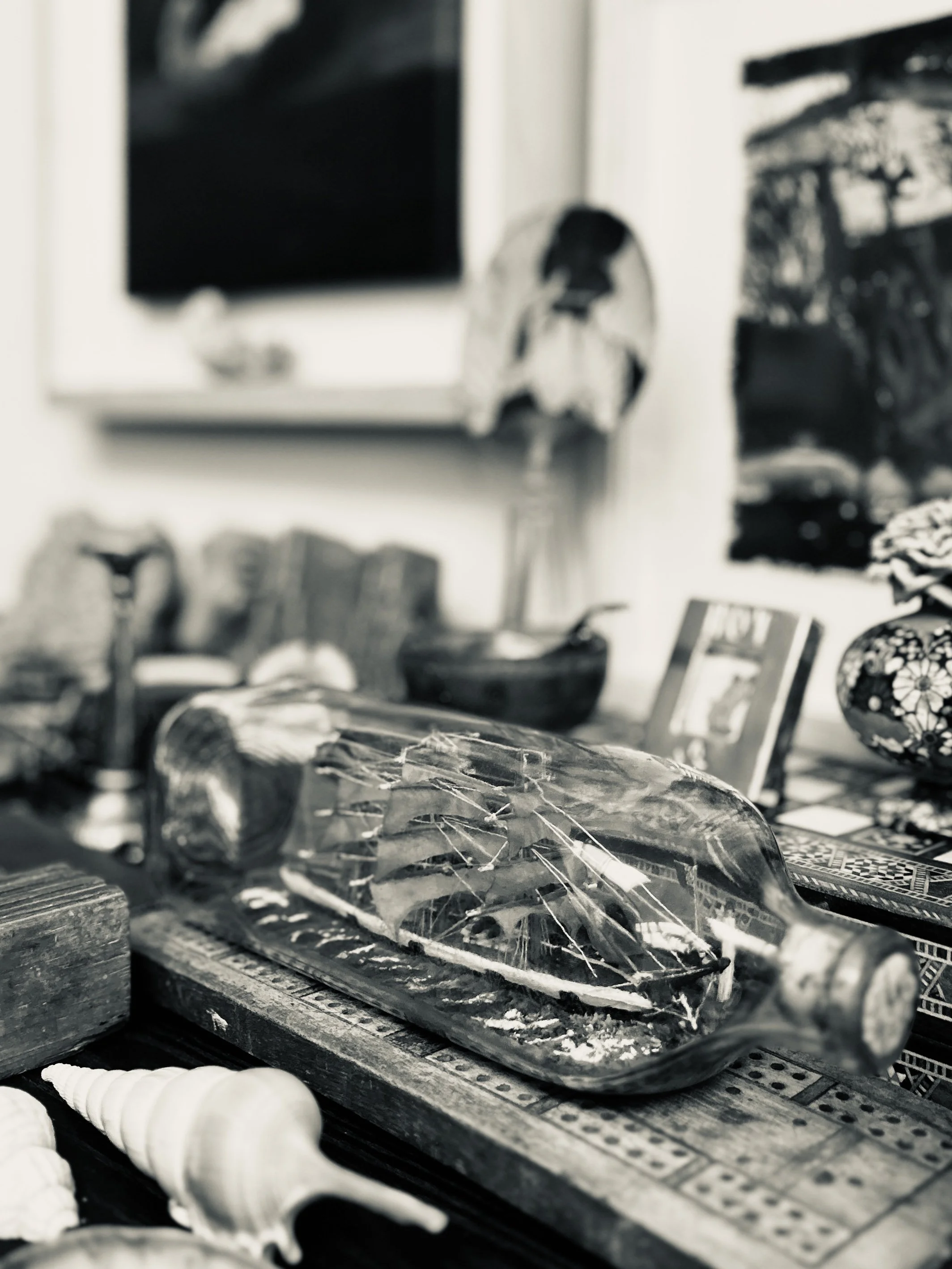
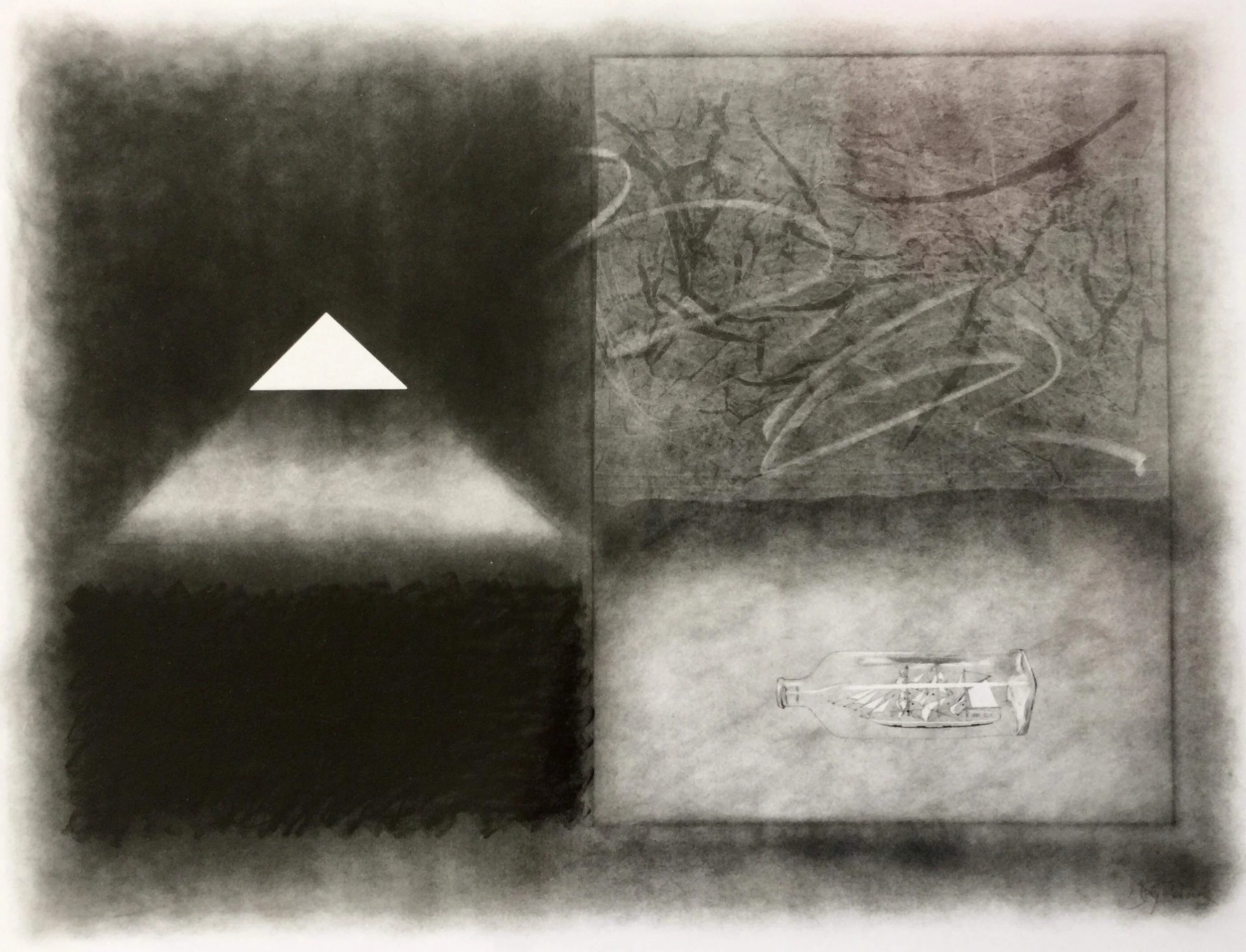
" Magic Swirlin' Ship"
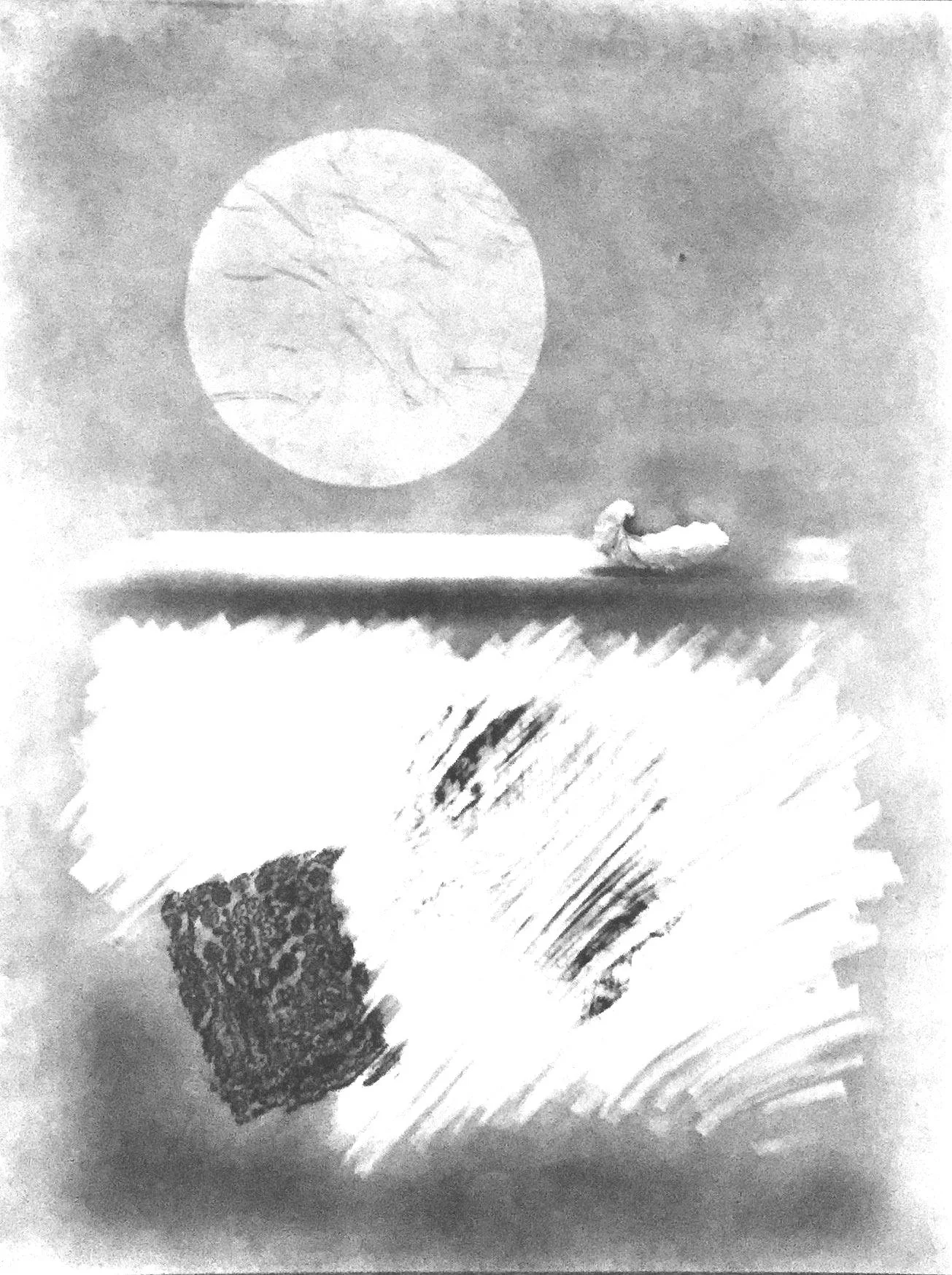
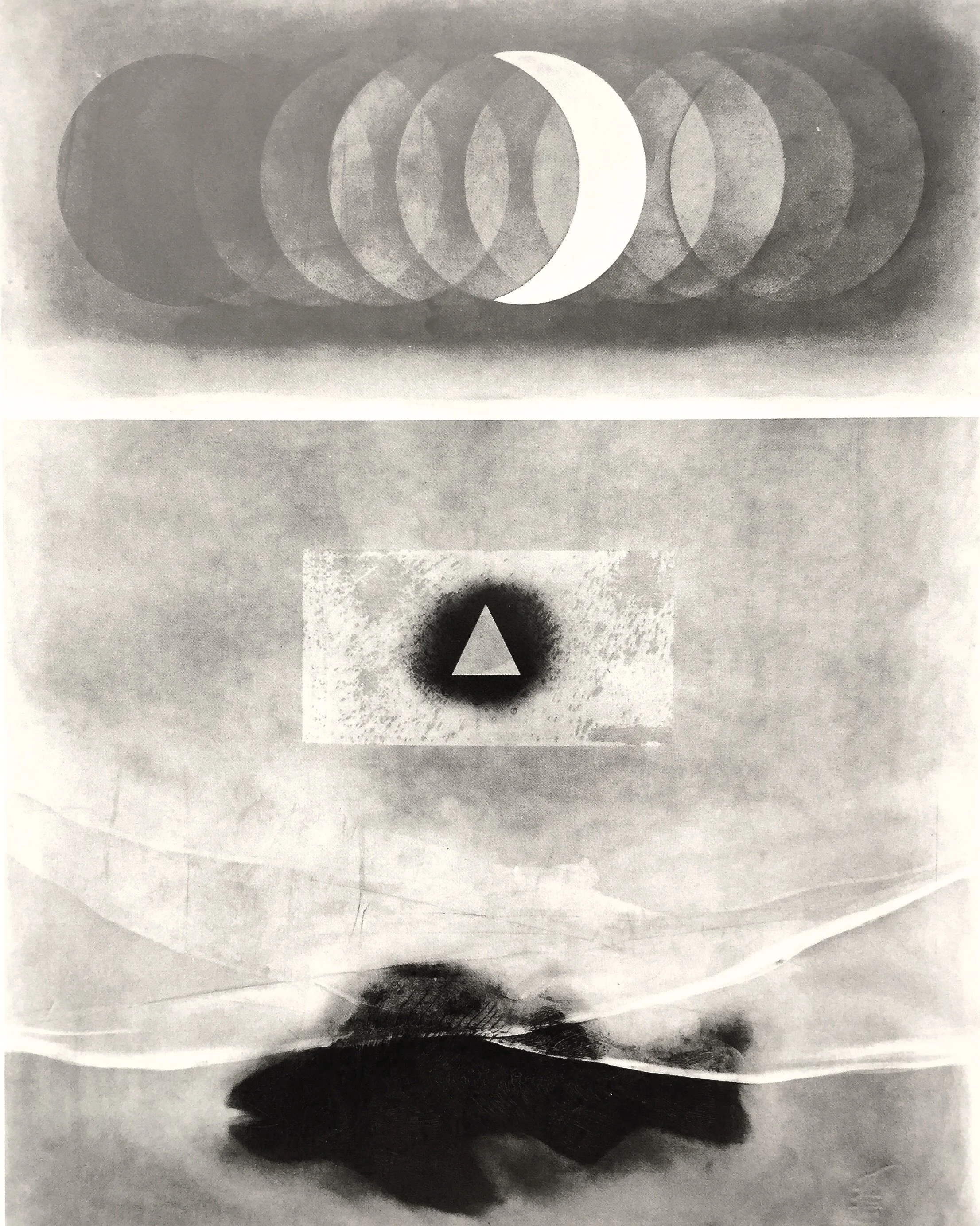
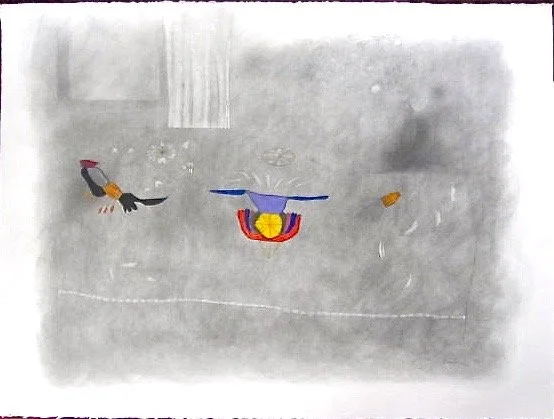
An oyster shell picked up at Moreston Key reminded him of forms found in Baroque art. It was used in several works, as well as other spiralling seashells collected from local beaches. He used Indian wooden printing blocks for frottage textures and very complex masking techniques to make the starkly white triangles which sometimes refer to engineering processes, and other times to pyramids. The mysterious ‘Blackbird Singing…’ image is defined by an elusive, deeply inscribed pencil line, that is barely visible until the viewer takes the time to look more closely into the ‘Dead of Night’.
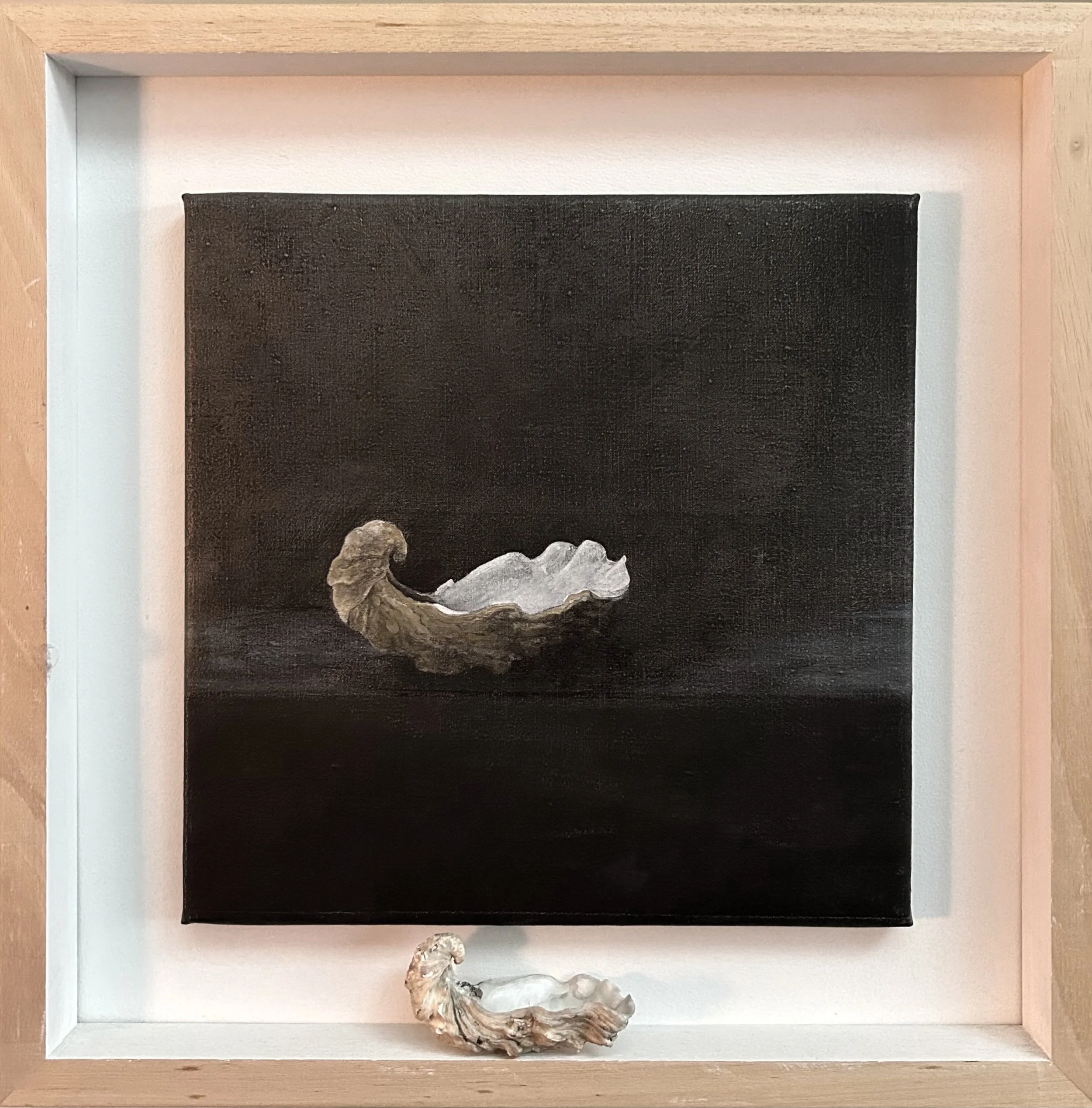
Oyster Shell , acrylic on canvas, 1990
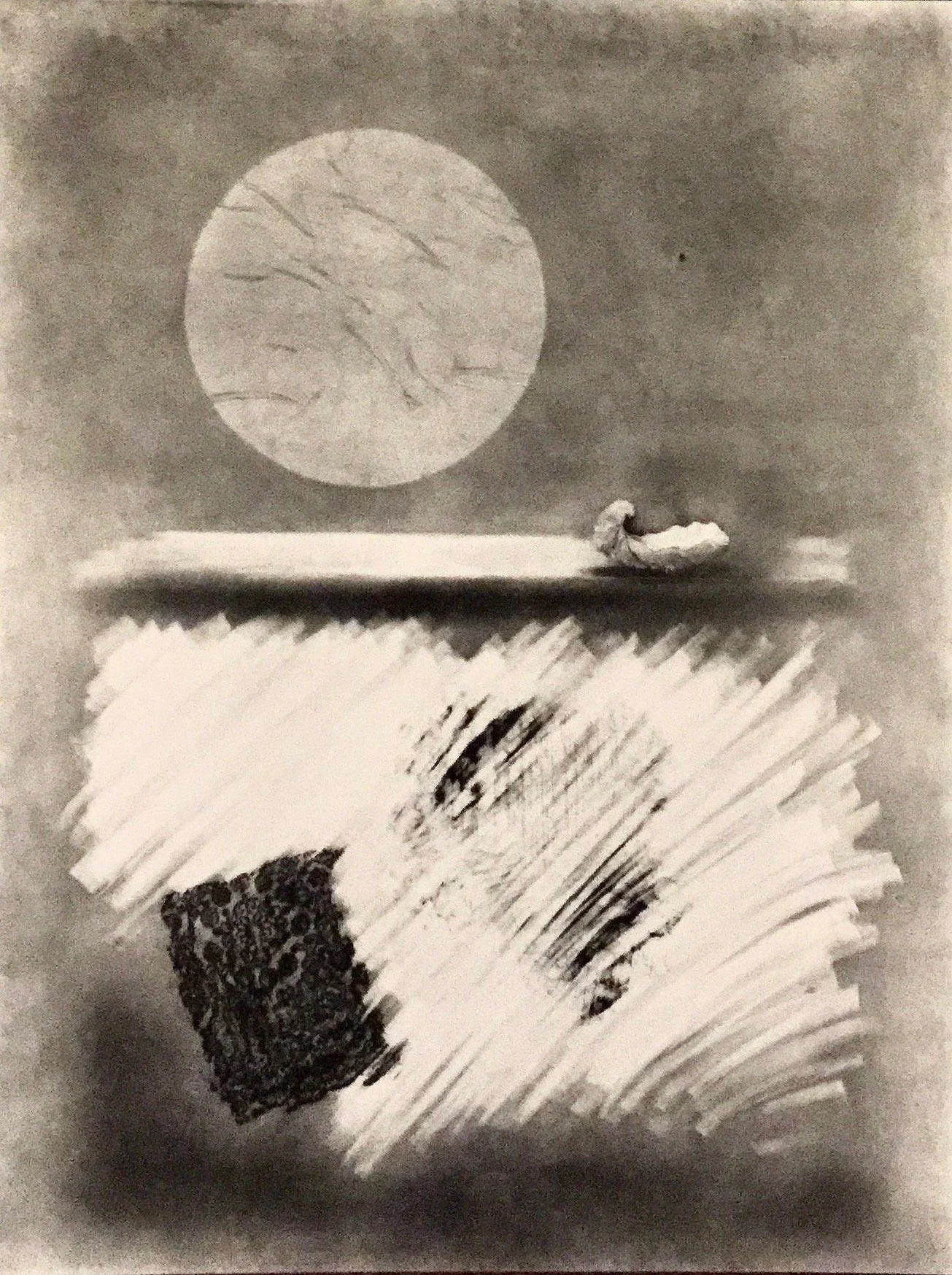
Oyster Shell, pencil and graphite on paper -1989
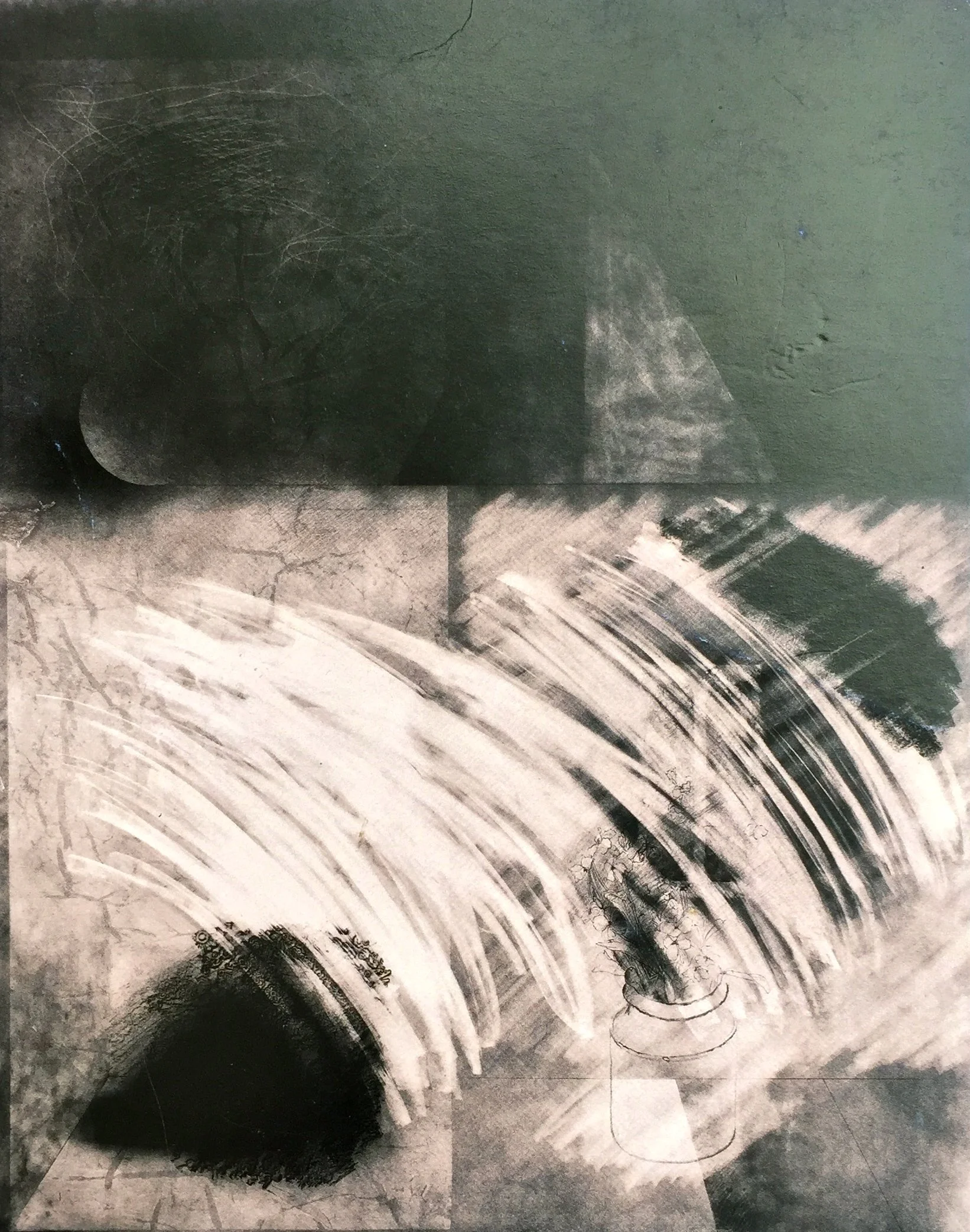
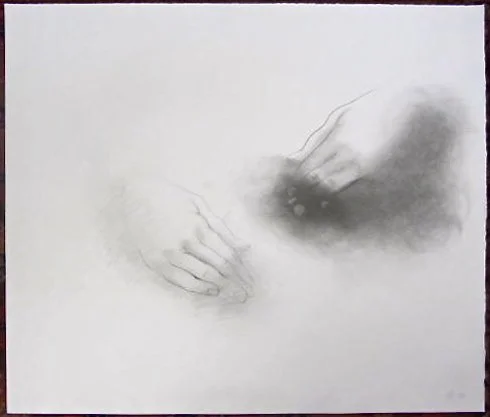
Reincarnation and life-cycles were central to Benjamin’s practise. He was obsessed with certain objects, some which he used time and again; as a true recycler, nothing was wasted and everything had a future life. In these works, the sensuous and just-there images of his family of objects, dance with energetic swathes of lines. He also used the process which we now understand was to lead him straight to his next series of paintings; at first glance the large scale drawings, and the paintings could not be more different, but the pointers are there - in the line, the colour, the understanding of his obsession with surface pattern, form and mostly, process.
Photographer, Miki Slingsby, referred to the works as - "Painting in Pencil" ; they were shown to acclaim at Gimpel Fils, London,1990 and 1994, and the Rhok Institut, Brussels, and as part of - Three Norfolk Artists, with Derrick Greaves and Roger Ackling. at the King's Lynn Art Centre and the Castle Museum, Norwich, who purchased one for the permanent collection.
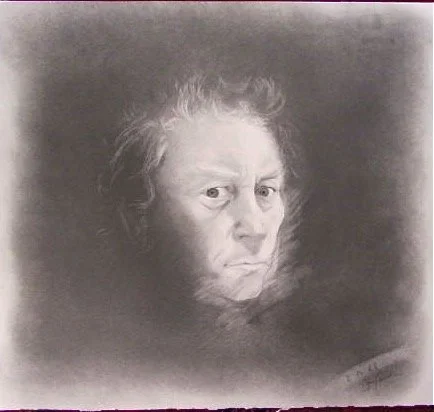
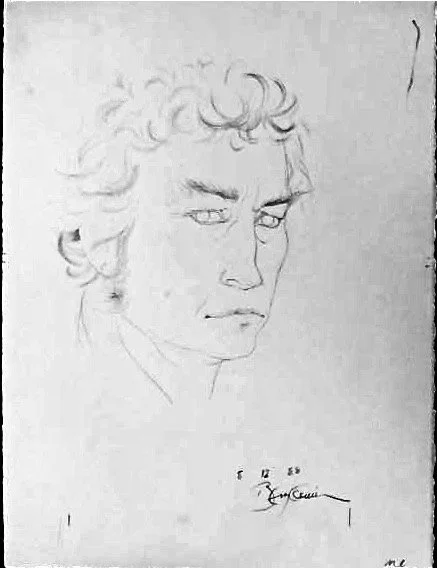
Benjamin also produced some fine full figure portraits, that included the architect, Will Alsop and the art dealer, Micheal Bellis.
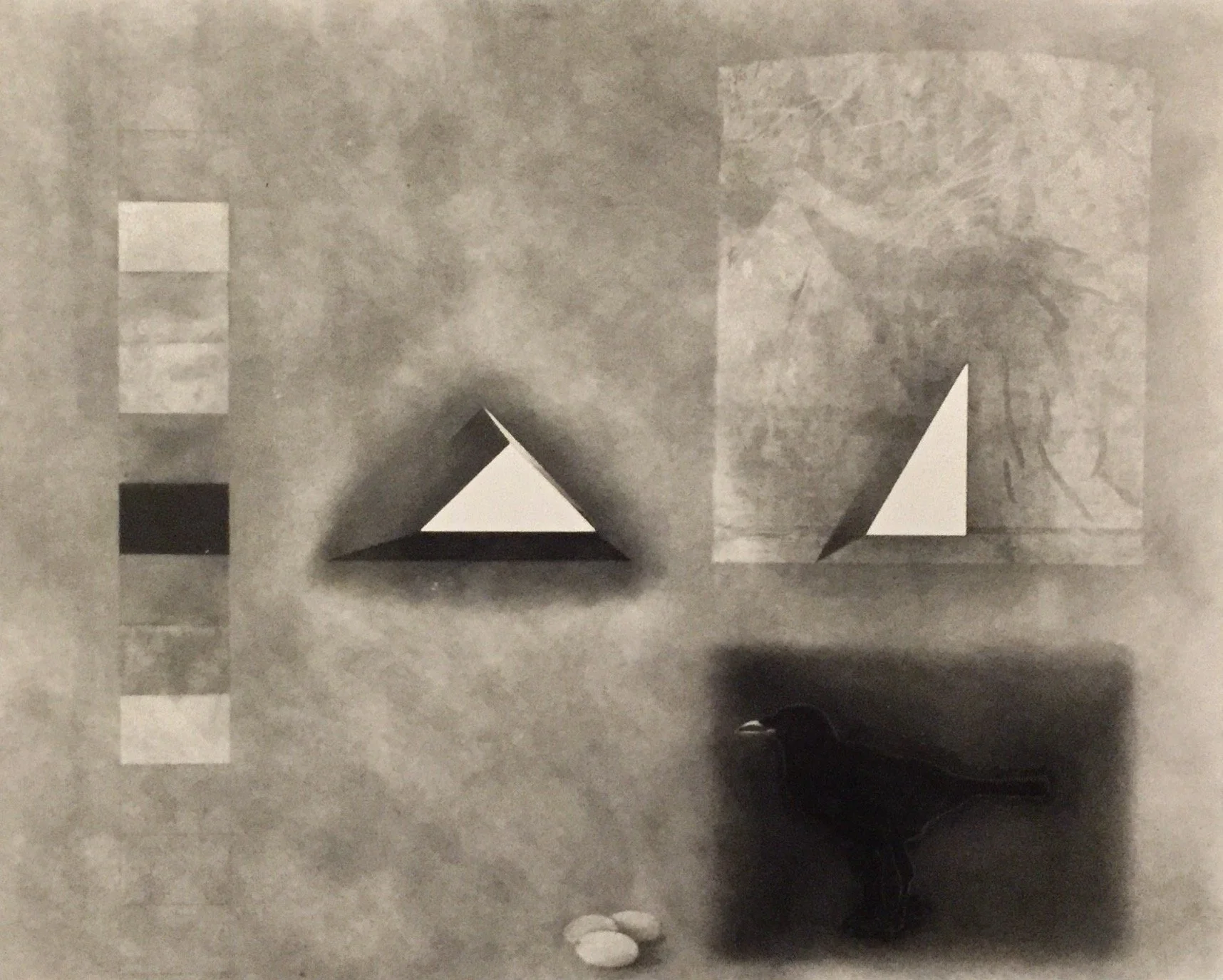
Blackbird Singing in the Dead of Night, pencil and graphite, 1988
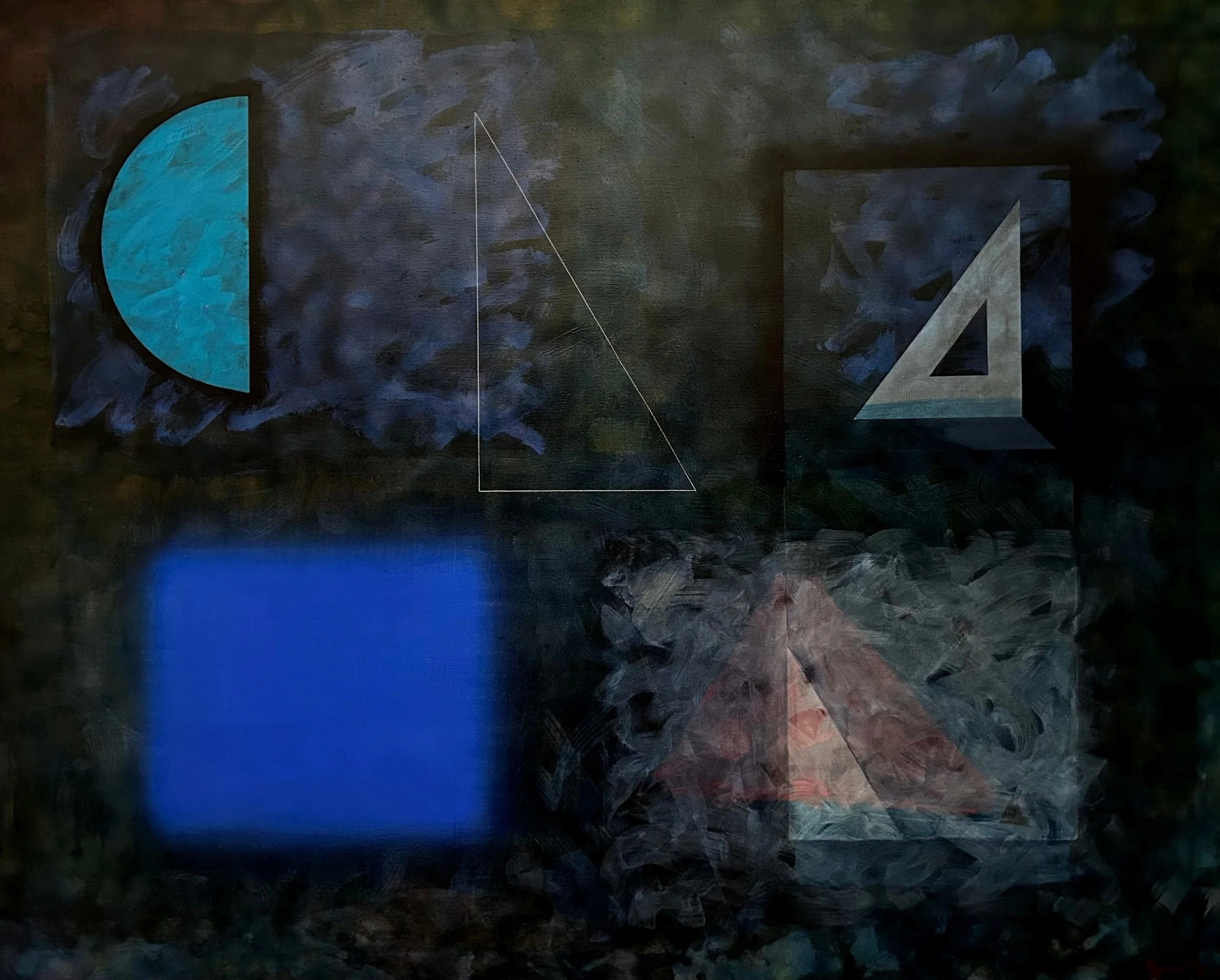
Untitled, acrylic on canvas, 1987
This painting is a continuity of the imagery he was using in his graphite Painting in Pencil works; however, the limited, but effective use of colour reminded him that he missed using the full spectrum. Although he was still engrossed in the endless possibilities of the sublime world of Black and White, and his obsession with simple geometric forms and the significant objectshe had collected… he started experimenting with colour again…this painting was a bridge into the vibrant Rainbow World that waited just over the studio horizon.